CERN: What Is Fact, What Is Fiction, and What Don't We Know?
What does CERN really do? Explore the science behind the Large Hadron Collider, separate facts from conspiracy theories, and discover what physicists still don't know.
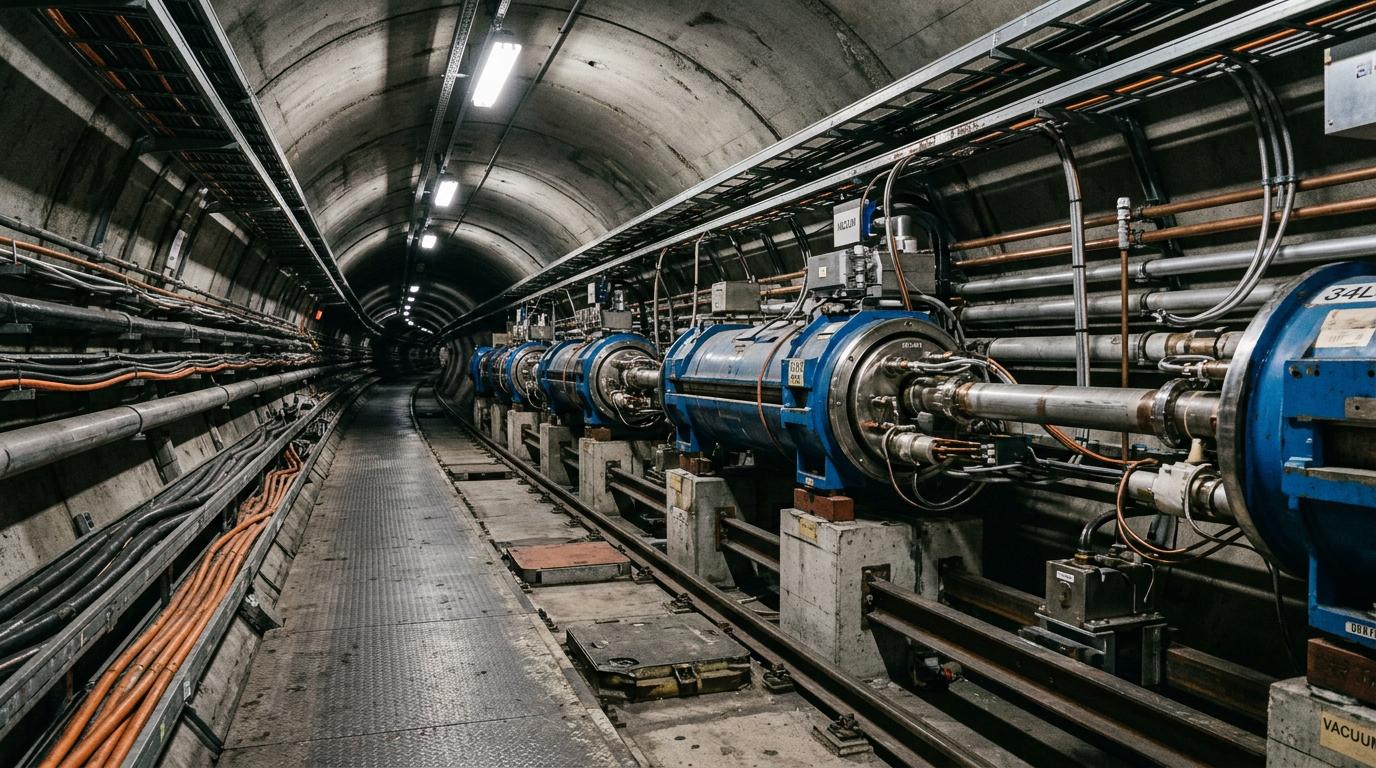
CERN attracts claims about black holes, portals, changing reality and the destruction of the world. Some borrow genuine scientific terms and combine them with speculation until it becomes difficult to tell where the science ends and the story begins.
A better approach is to ask questions. Separate what we know from what we think we know, and separate both from what we simply do not know yet.
CERN is home to advanced experiments in fundamental physics, including the Large Hadron Collider. Its discoveries have transformed our understanding of nature, while some of the biggest questions remain unanswered. I have also visited CERN, and a follow-up video will share what I saw and learned when the published video is available.
1. What Is CERN Actually Doing?
CERN, the European Organization for Nuclear Research, is an international scientific organisation near Geneva on the border between Switzerland and France. Its mission is fundamental research: investigating the basic constituents of matter and the forces through which they interact.
The Large Hadron Collider is a particle accelerator in a circular tunnel approximately 27 kilometres in circumference, around 100 metres underground. It accelerates protons or heavy ions to high energies before bringing beams into collision. Detectors record the particles and energy produced.
These collisions let physicists test predictions, investigate known particles and search for phenomena that current theories do not explain. CERN is not recreating the entire Big Bang or creating a second universe. It is investigating specific physical processes relevant to the early cosmos.
Read CERN's explanation of the Large Hadron Collider.
2. What Have Scientists Actually Discovered?
The W and Z bosons, discovered at CERN in 1983, provided crucial confirmation of electroweak theory and help explain the weak nuclear force.
In July 2012, the ATLAS and CMS experiments announced a particle consistent with the Higgs boson. The Higgs mechanism explains the masses of fundamental particles such as electrons and quarks, but it does not explain all ordinary mass: most proton and neutron mass comes from the energy of the strong interaction binding quarks and gluons.
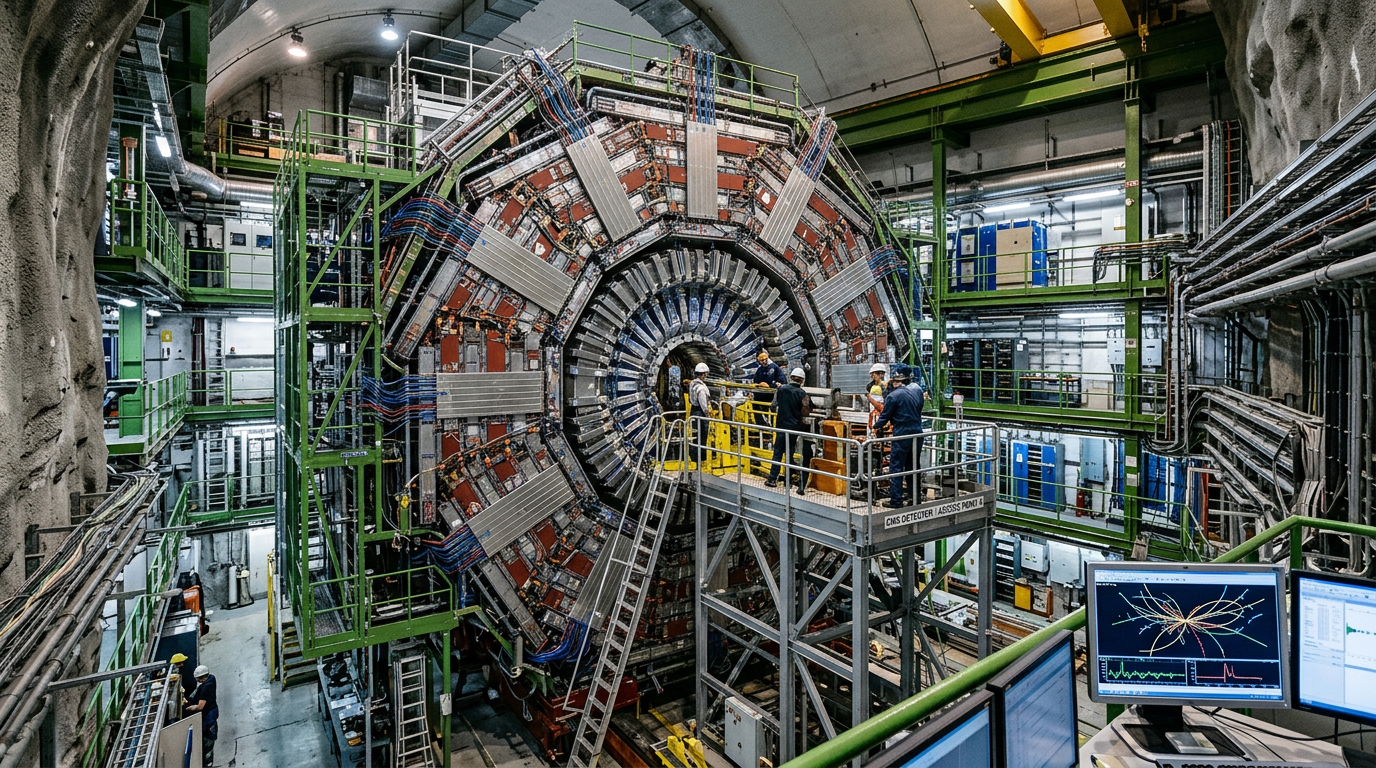
CERN also creates and studies antimatter. One of the largest unanswered questions in physics is why the observable universe contains much more matter than antimatter. These are genuine discoveries and genuine questions; they do not need exaggeration.
Explore CERN's resources on the Higgs boson and antimatter.
3. The Questions Scientists Still Cannot Answer
The Standard Model has survived enormous experimental testing, but it does not explain everything.
- Dark matter: strong astronomical evidence points to unseen matter, but its identity remains unknown.
- Matter and antimatter: known differences do not fully explain why matter dominates the universe.
- Neutrino mass: neutrinos change flavour, implying mass, but the simplest Standard Model treats them as massless.
- The Higgs field: additional Higgs-like particles or links to dark matter remain possible research questions.
- Quantum physics and gravity: there is no complete, experimentally confirmed framework unifying them.
Not knowing the answer is not the same as having no knowledge. Sometimes science advances by identifying exactly where a theory stops working and what evidence is needed next.
4. CERN and the Black Hole Question
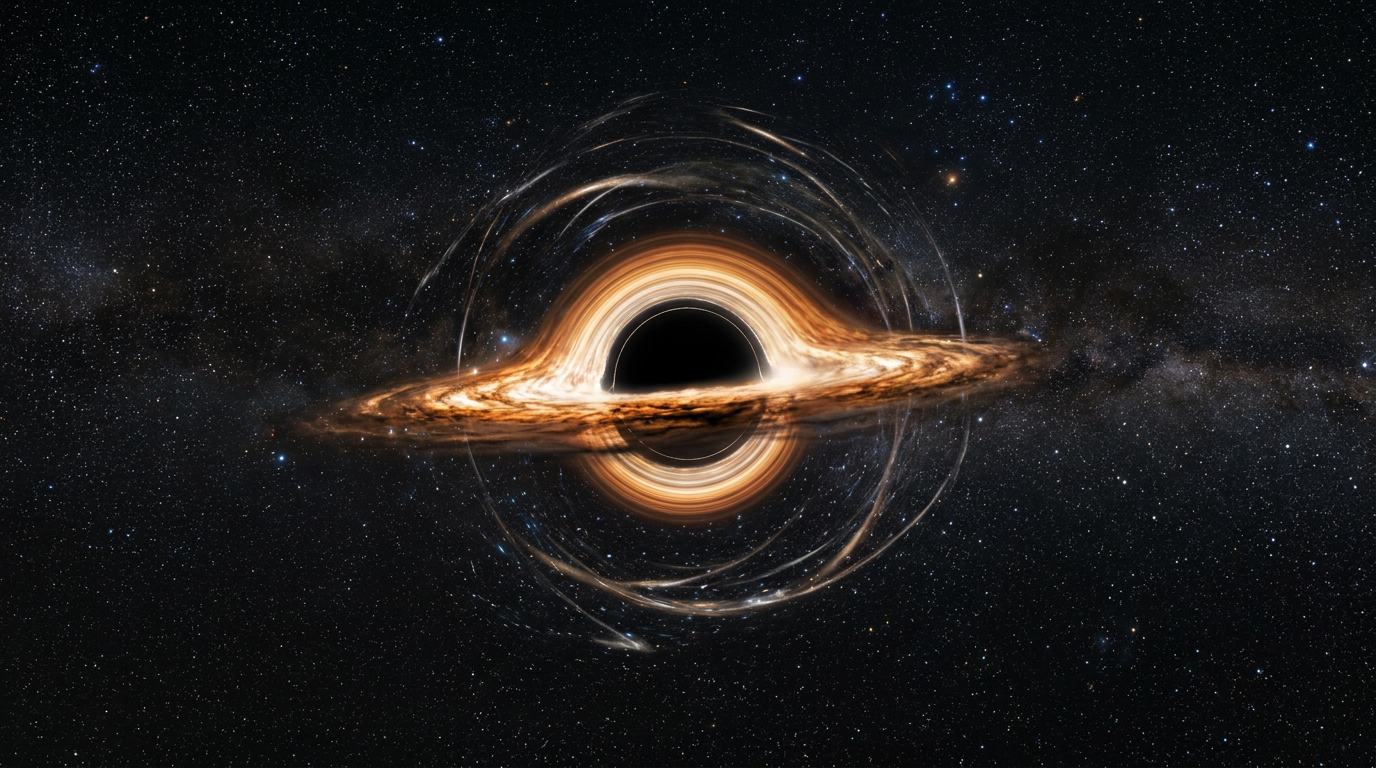
Could the LHC create a black hole that destroys Earth? Black holes are real astronomical objects, and speculative theories involving extra dimensions have suggested microscopic black holes might be possible at accelerator energies.
There is no evidence that the LHC has created a dangerous black hole, and CERN's safety assessments conclude that its collisions pose no such threat.
Cosmic rays naturally strike Earth and other astronomical bodies at energies exceeding those reached in accelerators. Nature has therefore conducted high-energy particle interactions for billions of years. CERN's assessments have considered the relevant hypothetical processes and do not find a credible catastrophic risk.
Science does not usually prove an absolute negative about every imaginable scenario. It evaluates specific possibilities against theory, evidence and risk assessment. The evidence does not support the claim that CERN threatens to destroy the planet.
5. What About Portals, Other Dimensions and Changing Reality?
Some theoretical models propose extra spatial dimensions. These are mathematical possibilities that can be investigated for observable consequences, not proof of literal doorways into other worlds.
There is no established evidence that CERN is opening portals to other universes, allowing travel between dimensions or rewriting history. Particle collisions produce measurable physical effects, but that is very different from changing the timeline or macroscopic reality.
When a claim uses words such as quantum, energy, dimension or field, ask: what specific process is being described? What evidence demonstrates it? Has it been independently tested? Does the conclusion follow from the evidence?
6. Why Do Conspiracy Theories Surround CERN?
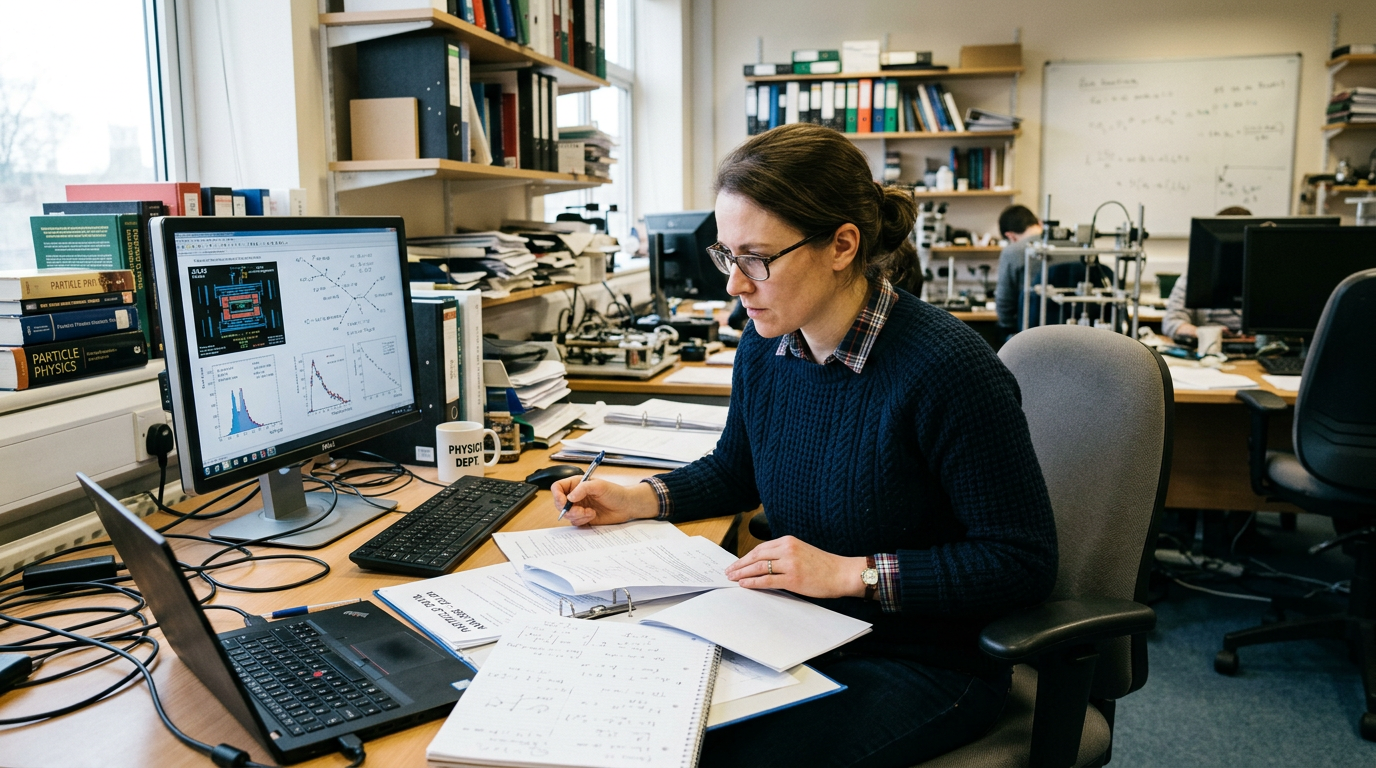
CERN works with difficult subjects: particles smaller than atoms, antimatter, quantum fields, black holes and the early universe. These ideas are easy to remove from context.
Unanswered questions can also invite speculation. Not knowing the identity of dark matter does not make a particular conspiracy theory correct. Technical language has precise meanings in physics but is often used loosely in popular culture.
Institutional distrust can be discussed on its merits. Scientific institutions should be accountable and communicate clearly, but distrust alone does not establish an accusation. Healthy scepticism applies to official explanations and extraordinary accusations alike.
7. Fact, Hypothesis, Possibility, Unknown, Belief and Fiction
The most useful habit is to identify the evidential status of a statement.
Fact
The Higgs boson was discovered in 2012 by the ATLAS and CMS collaborations. This is an established result supported by experimental evidence.
Hypothesis
A proposed explanation that can be investigated, such as a candidate particle for dark matter. Scientific formulation does not make it automatically true.
Possibility
Something predicted by a theory but not observed. Possibility is not proof.
Unknown
A question not yet established, such as the fundamental identity of dark matter.
Belief and fiction
Personal beliefs and imaginative stories can inspire questions, but should not be presented as experimentally established facts without supporting evidence.
8. What Science Can Tell Us — and What It Cannot Yet Tell Us
Science formulates hypotheses, makes predictions, conducts experiments, analyses evidence and revises explanations. Its incompleteness is not evidence that knowledge is worthless; it is evidence that knowledge can improve.
We do not know everything about the universe. That does not mean every claim is equally plausible. Some explanations have extensive support, others are speculative, some conflict with observations and some are not defined clearly enough to test.
When scientists say “we do not know yet”, they are identifying a limit. When someone claims to know the answer to a major mystery, ask: What evidence supports that conclusion?
9. What Might CERN Discover Next?
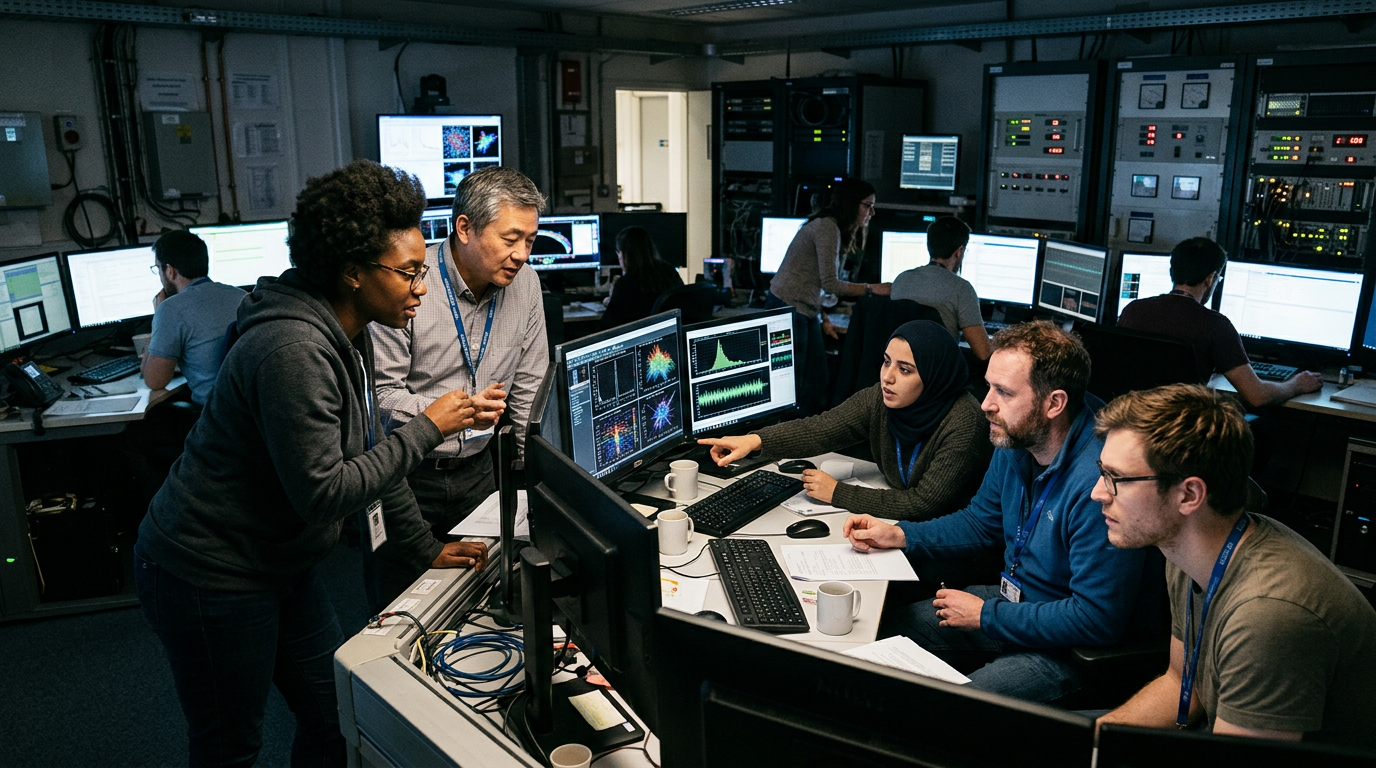
CERN continues to investigate possible dark-matter particles, matter-antimatter differences, the Higgs boson and evidence of new particles or interactions. The High-Luminosity LHC is designed to collect more collision data and study rare processes in greater detail.
More data does not guarantee a dramatic discovery. It may reveal a new particle, an unexpected result or stronger limits on theories without experimental support. All of these outcomes are scientifically valuable.
The purpose of an experiment is not to confirm what we want to believe. It is to find out what the evidence can tell us.
10. I've Visited CERN — What Comes Next?
Visiting a place does not make someone an authority on its research, but it can create a personal reason to explore the questions more closely. In a future video I will share what I saw, what I learned and what questions came to mind.
CERN brings together curiosity, critical thinking, the limits of knowledge and the importance of questioning assumptions. The real world is already full of extraordinary discoveries. We do not need to invent answers before examining the questions.
11. The Real Mystery Is How Much We Still Don't Understand
We can use uncertainty as an excuse to believe whatever appeals to us, dismiss questions because they sound unusual or investigate them carefully. We can acknowledge scientific achievements without pretending science has reached the end of its journey.
The most useful questions are simple: What do we actually know? What is the evidence? What is speculation? What remains genuinely unexplained?
Sometimes the truth is far more fascinating than the conspiracy. The most exciting thing about science may not be having all the answers, but discovering the questions we did not know we needed to ask.
The Rat Race Ends Within.
Become Who You Were Born To Be.
Trusted Sources & Further Reading
Continue Exploring
Frequently Asked Questions
What is CERN and what does it do?+
Did CERN discover the Higgs boson?+
Can CERN create a black hole?+
Is CERN opening portals to other dimensions?+
What is dark matter, and has CERN discovered it?+
How should extraordinary scientific claims be evaluated?+
This article was developed with assistance from AI tools. AI was used to help with research, organisation and/or drafting. The content was reviewed and edited before publication, and responsibility for the final article rests with Get Out Rat Race.
Find Your Spark™
You've been exploring the ideas. Now explore yourself.
The Free Spark Score is a simple starting point to help you reflect on your interests, experiences, strengths and what might genuinely matter to you.