The Freedom We Inherited: How Generations Before Us Challenged Power
Freedom is often spoken about as a feeling, a goal or a political slogan. But before it was any of those things, it was an idea that had to be invented — and then fought for, written down, defended and re-fought. The liberty we take for granted today was never granted freely. It was claimed, inch by inch, across thousands of years, by people who refused to accept that power should answer only to itself. This is the story of how that idea grew.
The Long Inheritance
We are born into freedom the way we are born into language: already inside it, already using it, rarely pausing to ask where it came from. The rights to speak, to worship, to assemble, to be judged by law rather than by the mood of a ruler — these feel natural to us because earlier generations did the unnatural work of demanding them. To understand the history of freedom is to understand that the world we inherited was not inevitable. It was built.
That building happened through documents, ideas and struggles. Some of those documents are famous — Magna Carta, the Declaration of the Rights of Man, the United States Bill of Rights. Others are nearly forgotten. Together they form a chain, each link forged in a specific moment of crisis, each one adding a new idea to the growing claim that power must be limited and the individual must matter.
The Cyrus Cylinder: The First Whisper (539 BCE)
The story begins, surprisingly, not in Greece or Rome, but in ancient Persia. In 539 BCE, Cyrus the Great captured Babylon without a battle. According to the clay cylinder now held by the British Museum, Cyrus did something unusual for a conqueror: he allowed the peoples whom earlier Babylonian kings had deported to return to their homelands, and he permitted them to worship their own gods.
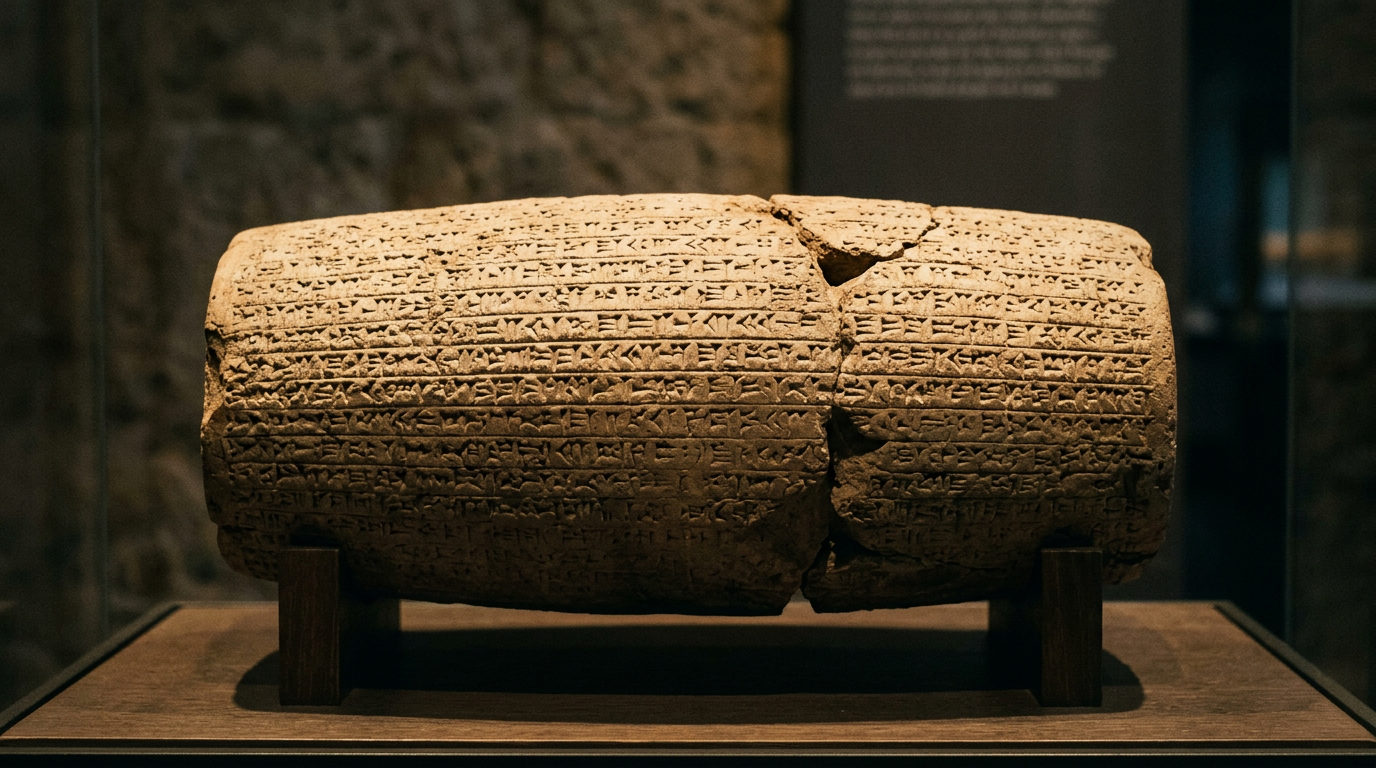
The cylinder does not use the modern word "freedom." It does not lay out a theory of human rights. But it records something remarkable for the ancient world: a ruler stating that people have a right to their own identity, their own gods and their own homes. Later writers would call this the first declaration of human rights, and while historians today are more cautious, the cylinder remains one of the earliest surviving records of a ruler limiting his own power in the name of tolerance.
What makes the Cyrus Cylinder so significant is not that it created modern freedom — it did not — but that it shows the idea of restraint on power is very old. Even in the ancient world, where empires were built on conquest, some rulers recognised that legitimacy comes not only from force but from how a ruler treats those he has conquered.
Magna Carta: The King Beneath the Law (1215)
Nearly two thousand years later, on a muddy field at Runnymede beside the Thames, a group of English barons forced their king to do something kings were not supposed to do: accept that he was subject to the law. In June 1215, King John put his seal to Magna Carta — the Great Charter — and in doing so conceded that he could not arbitrarily imprison, tax or punish his subjects.
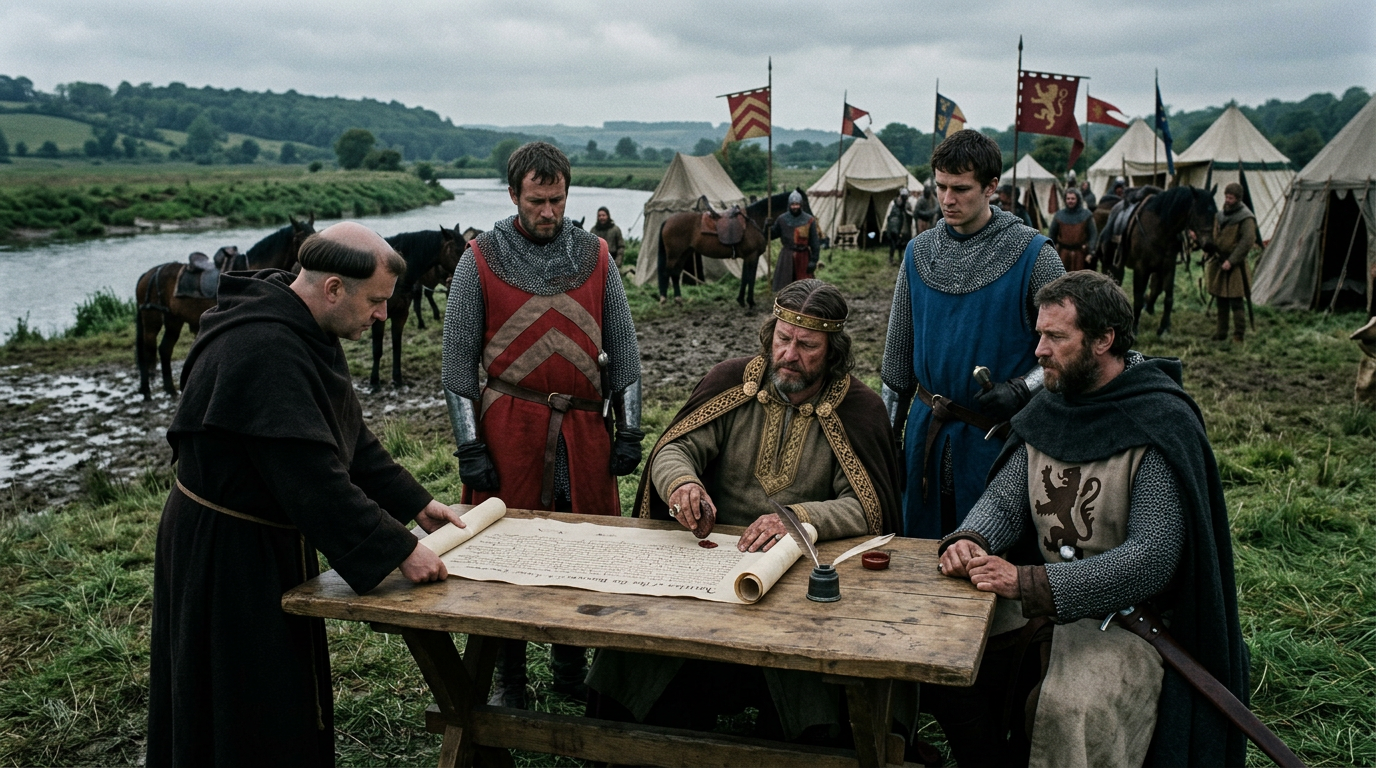
The most famous clause, Clause 39, promised that no free man would be imprisoned, dispossessed, outlawed or exiled except by the lawful judgement of his equals or by the law of the land. That single sentence became the ancestor of due process, trial by jury and the principle that justice cannot be arbitrary. The UK Parliament describes Magna Carta as the first formal document to establish that the king was bound by the law.
Magna Carta was not a democratic document. It was written by barons, for barons, in a feudal society. Most of its clauses dealt with the specific grievances of wealthy landowners. But its lasting significance lies in the principle it established: that even the most powerful person in the realm answers to something higher than himself. Once that principle existed, it could be expanded. Over the centuries that followed, it was.
The English Bill of Rights: Power Belongs to the People's Representatives (1689)
The next major link in the chain came in 1689, when the English Bill of Rights established that the power to govern belongs to the people's representatives, not to the crown alone. After the upheaval of the Glorious Revolution, Parliament codified a set of limits on royal authority: elections must be free, Parliament must meet regularly, and members of Parliament must be able to speak freely without fear of the crown.
The English Bill of Rights also prohibited cruel and unusual punishment and declared that there should be no standing army in peacetime without Parliament's consent. These ideas — that government requires consent, that representatives must be free to speak, and that punishment must be proportionate — would travel across the Atlantic and across the English Channel in the century that followed.
The Declaration of the Rights of Man: Freedom as a Universal Birthright (1789)
In August 1789, in the heat of the French Revolution, the National Constituent Assembly adopted the Declaration of the Rights of Man and of the Citizen. Its first article was a sentence that would echo for centuries: "Men are born and remain free and equal in rights."
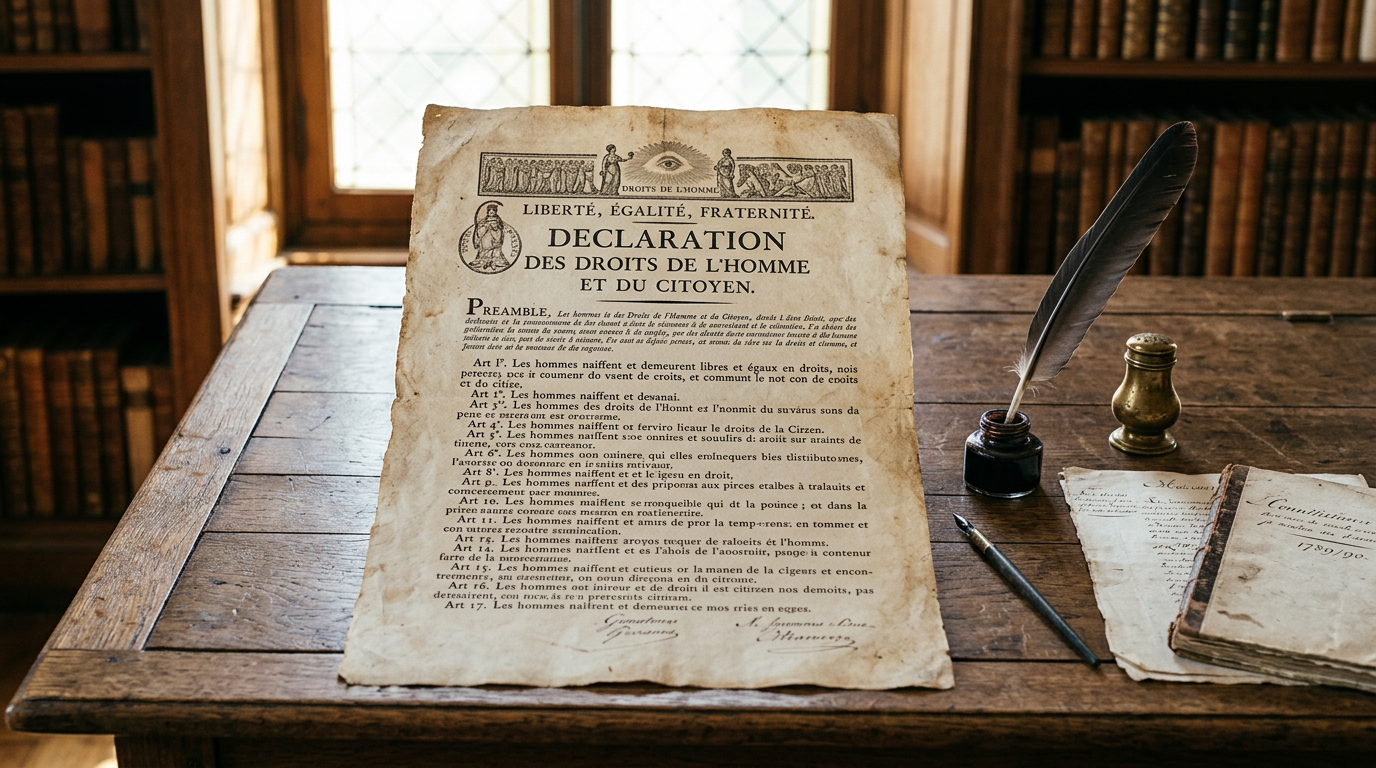
The declaration did not ask the king for concessions, as Magna Carta had. It did not balance the powers of crown and Parliament, as the English Bill of Rights had. It did something more radical: it claimed that freedom is not a gift of government but a birthright of every person, and that government exists only to protect rights that people already possess.
The declaration listed those rights: liberty, property, security and resistance to oppression. It stated that law is an expression of the general will, that all citizens are equal before the law, and that no one may be accused, arrested or detained except in cases determined by law. It was, and remains, one of the most powerful statements ever made that power derives its legitimacy from the people it governs.
It was also, like every document before it, incomplete. It used the word "men" rather than all people. Women would have to fight for decades — and in many places, for more than a century — to be recognised as full holders of the rights the declaration named. But the principle itself, once written, could not be un-written. It could only be expanded.
The United States Constitution and the Bill of Rights: Government of Limited Powers (1787-1791)
Two years before the French declaration, and two years after it, another experiment in limited government was taking shape across the Atlantic. The United States Constitution, drafted in 1787 and ratified in 1788, created a federal government whose powers were few, defined and divided among three branches intended to check and balance one another.
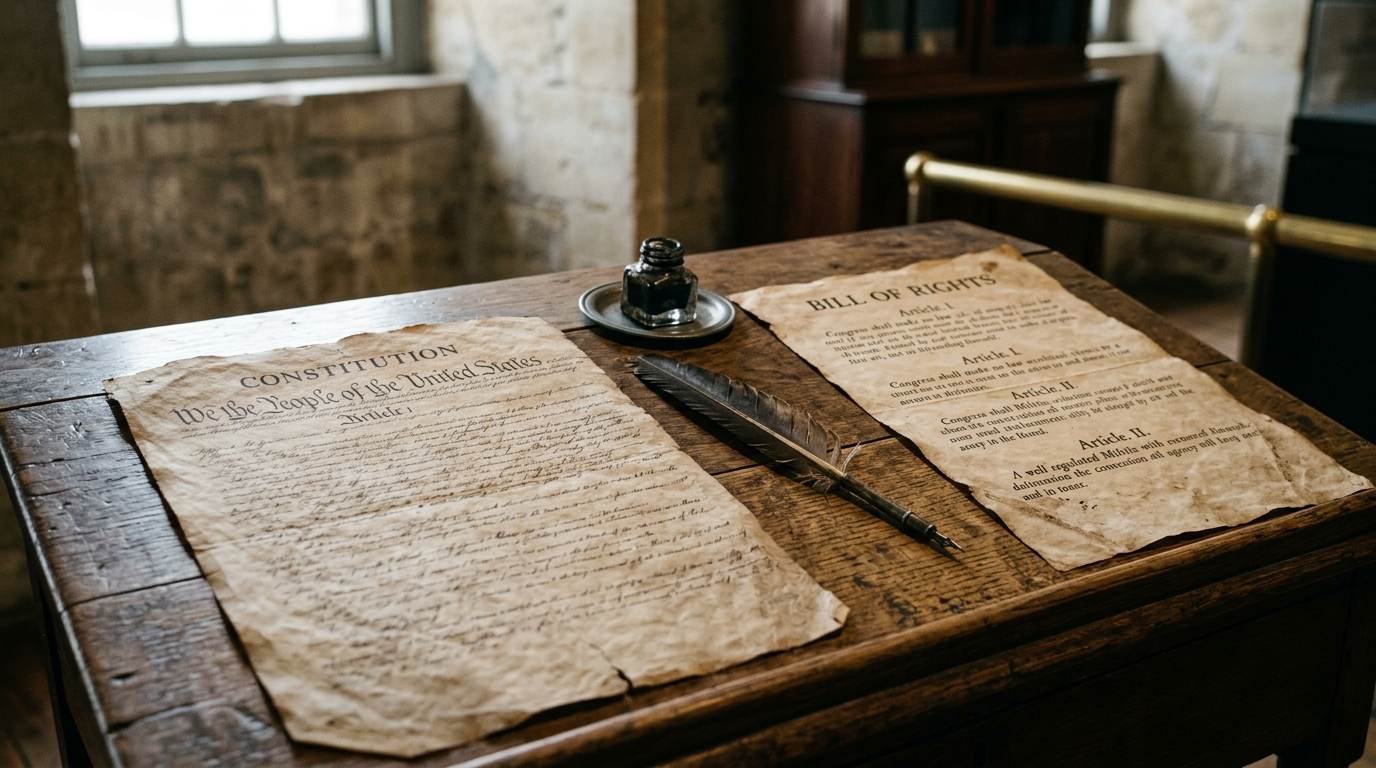
But many of the framers believed that a written constitution was not enough on its own. They demanded explicit protections for individual liberty, and in 1791 the first ten amendments — the Bill of Rights — were ratified. Together they protected freedom of speech, freedom of religion, freedom of assembly, freedom of the press, the right to keep and bear arms, protection against unreasonable search and seizure, the right to due process and the right to a jury trial.
The US National Archives holds the original Constitution and Bill of Rights as foundational documents of the American republic. Together they established a principle that would become central to modern freedom: government holds only those powers the people have granted, and the rest belong to the people.
The Incomplete Promise
It would be dishonest to tell this story without acknowledging that every one of these documents was limited by the standards and assumptions of its age. The Cyrus Cylinder recorded tolerance for conquered peoples but did not imagine political equality. Magna Carta protected barons, not peasants. The English Bill of Rights protected Protestants from a Catholic monarchy. The 1789 Declaration spoke of men, not women. The early United States excluded women, enslaved people and Native peoples from the protections it promised.
Freedom, in other words, was never delivered whole. It was claimed by some and withheld from others, and the work of extending it — through abolition, suffrage, civil rights, decolonisation and equal protection — is part of the same story. Each expansion was a new link in the chain, forged by people who pointed to the principle and said: if this right is real, it must apply to us too.
The YouTube Conversation
We have been exploring these ideas in video form as well. If you prefer to watch and listen rather than read, you can find our growing collection of conversations on history, freedom, power and human flourishing on our YouTube channel.
A companion video for this article will be published soon. In the meantime, subscribe to our YouTube channel so you do not miss it.
Why This History Still Matters
It is tempting to treat the history of freedom as a finished story — something that happened, that is now behind us, that we can safely take for granted. But every right earlier generations secured can be narrowed, weakened or lost. The documents described here were not answers that settled the question of freedom. They were arguments — arguments that power must be limited, that the individual must matter, that law must bind even the mighty.
Those arguments must be made again in every generation, because power never stops testing the limits placed on it. Understanding this history is not an exercise in nostalgia. It is a form of inheritance. When we know how something was built, we are better equipped to maintain it — and to extend it to those who were originally left out.
Freedom and the Life You Choose
There is a direct line from these historical documents to the personal freedom we write about elsewhere on this site. The political freedoms — to speak, to assemble, to be judged by law — create the space in which personal freedom becomes possible: the freedom to choose your work, to build a life around your passion, to ask what it means to live well, and to resist the pressure of the rat race that keeps so many people too busy to ask whether the life they are living is the one they actually chose.
When people feel empty despite success, one reason is that they are exercising a personal freedom they have never been taught to use. The political freedoms were won for us. The personal freedoms — to direct your own life, to choose meaning over mere achievement, to balance wisdom against power — still have to be claimed, one person at a time.
Trusted Sources
- The British Museum — The Cyrus Cylinder
- UK Parliament — Magna Carta
- UK Parliament — The 1689 Bill of Rights
- US National Archives — The Constitution
- US National Archives — The Bill of Rights
Continue Exploring
Timeline of Freedom
Frequently Asked Questions
What is the history of freedom?+
What did the Cyrus Cylinder say about freedom?+
Why is Magna Carta important to the history of liberty?+
What was the Declaration of the Rights of Man and of the Citizen?+
How does the US Constitution protect freedom?+
Did everyone get freedom immediately after these documents?+
Why does the history of freedom still matter today?+
The History of the Rat Race: How Did We Get Here?
Where did the rat race come from? Explore the 200-year story of work, productivity, consumption and identity.
NewsUK Conscription: Who Has the Right to Ask Us to Die?
Who has the right to ask us to die? Explore conscription, war and individual freedom through Smedley Butler's lens.
PhilosophyWisdom vs Power
Power and wisdom have always been in tension. Explore why true freedom comes from wisdom, not control.
This article was developed with assistance from AI tools. AI was used to help with research, organisation and/or drafting. The content was reviewed and edited before publication, and responsibility for the final article rests with Get Out Rat Race.
Find Your Spark™
You've been exploring the ideas. Now explore yourself.
The Free Spark Score is a simple starting point to help you reflect on your interests, experiences, strengths and what might genuinely matter to you.