If Power Rules the World, Can Humanity Ever Flourish? Wisdom vs Power
Who should hold power \u2014 the strongest, the richest, the smartest, or the wisest? Explore Machiavelli, Plato, Kant and Socrates on political power, leadership, institutions and the question of whether humanity can flourish when power rewards ambition rather than wisdom.

Every society, every civilization and every generation has faced the same difficult question:
Who should hold power?
- The strongest?
- The richest?
- The smartest?
- The most popular?
- The most ambitious?
- Or the wisest?
History is filled with extraordinary leaders.
It is also filled with terrible ones.
Some inspired nations.
Others created unimaginable suffering.
So perhaps before asking who deserves power, we should ask a deeper question:
What kind of person should possess it?
And perhaps an even more difficult one:
If power rewards ambition rather than wisdom, can humanity ever truly flourish?
What Is Power?
When we hear the word power, many of us immediately think about governments.
- Presidents.
- Prime ministers.
- Kings.
- Political parties.
- Military leaders.
But power exists everywhere.
- Parents have power.
- Teachers have power.
- Business owners have power.
- Scientists have power.
- Journalists have power.
- Technology companies have power.
- Institutions have power.
- Even ideas can have power.
Power can influence the opportunities people receive, the education they experience, the laws they live under and the future they inherit.
That means power isn\u2019t simply something possessed by politicians.
It is woven throughout human society.
And that leads to an important distinction:
Power itself isn\u2019t necessarily the problem.
The deeper question is: How should power be used?
Is Power Good or Bad?
It is tempting to think of power as inherently dangerous.
But power is better understood as a capacity.
- The ability to influence.
- The ability to make decisions.
- The ability to allocate resources.
- The ability to shape behaviour.
- The ability to change circumstances.
That capacity can be used constructively.
A doctor can use knowledge to save a life.
A teacher can use authority to help a child learn.
A business owner can create employment.
A government can provide public services.
A scientist can use knowledge to solve problems.
A parent can use authority to protect a child.
The same capacity can also be abused.
A leader can suppress criticism.
A company can exploit workers.
A government can remove freedoms.
A powerful individual can manipulate people.
How do we develop the wisdom and institutions necessary to use power responsibly?
Why Does Power Matter?
Power shapes the conditions in which people live.
It can determine:
This is why political philosophy has spent thousands of years asking questions about authority, justice and leadership.
- Who should rule?
- Why should they rule?
- What gives political authority legitimacy?
- What limits should exist on power?
- What happens when leaders become corrupt?
How do we prevent power from becoming its own justification?
Machiavelli: What Happens When Power Comes First?
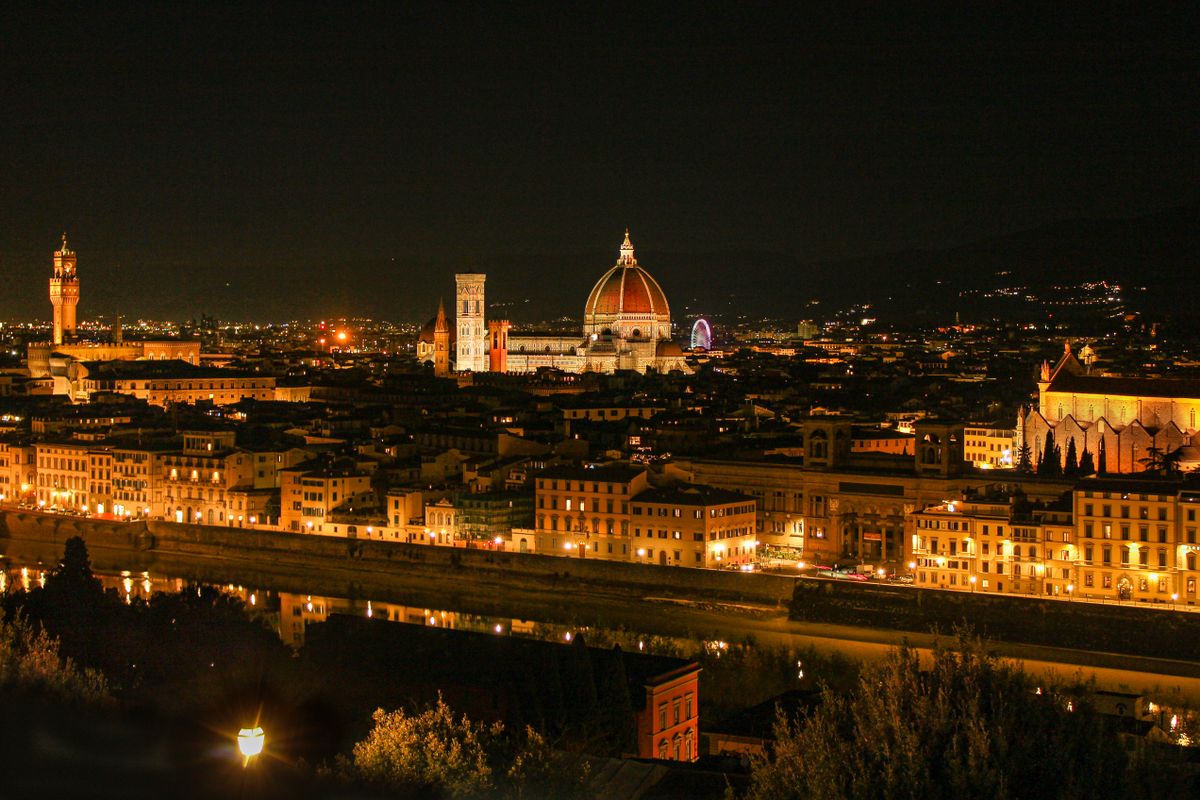
More than 500 years ago, the Italian political thinker Niccol\u00f2 Machiavelli confronted an uncomfortable reality.
- Politics isn\u2019t always moral.
- People can be self-interested.
- Political circumstances can be unpredictable.
- Leaders can face threats that cannot simply be solved by behaving according to ordinary moral expectations.
In The Prince, Machiavelli challenged the traditional idea that political rulers could simply rely on conventional moral goodness if they wanted to maintain power. His analysis focused heavily on the practical realities of acquiring and maintaining political power and preserving the state.
This created one of the most controversial questions in political philosophy.
Was Machiavelli saying: \u201cThis is how politics should work\u201d?
Or: \u201cThis is how politics often works\u201d?
That distinction matters.
Machiavelli\u2019s work is frequently simplified into the idea that \u201cthe ends justify the means.\u201d
His actual political thought is considerably more complicated.
But he forces us to confront an uncomfortable possibility: What happens when morality and political survival come into conflict?
Was Machiavelli Wrong?
Perhaps the more interesting question is whether we can reject his observations simply because we dislike their implications.
Imagine a leader who wants to remain completely morally pure.
- They refuse to compromise.
- They refuse to deceive.
- They refuse to use force under any circumstances.
- They refuse to make difficult decisions when every option has consequences.
What happens if their opponents don\u2019t follow the same rules?
This is the problem Machiavelli forces us to confront. Politics doesn\u2019t take place in a perfect world.
But there is another danger. If we accept political realism without moral limits, we can begin justifying almost anything in the name of survival.
- Cruelty becomes necessary.
- Deception becomes strategic.
- Oppression becomes stability.
- Power becomes its own justification.
Recognising how power works isn\u2019t the same as saying everything done in pursuit of power is morally acceptable.
Plato Had a Very Different Idea
Centuries before Machiavelli, another philosopher approached the question from almost the opposite direction.
Plato was deeply concerned with the relationship between knowledge, justice and political leadership.
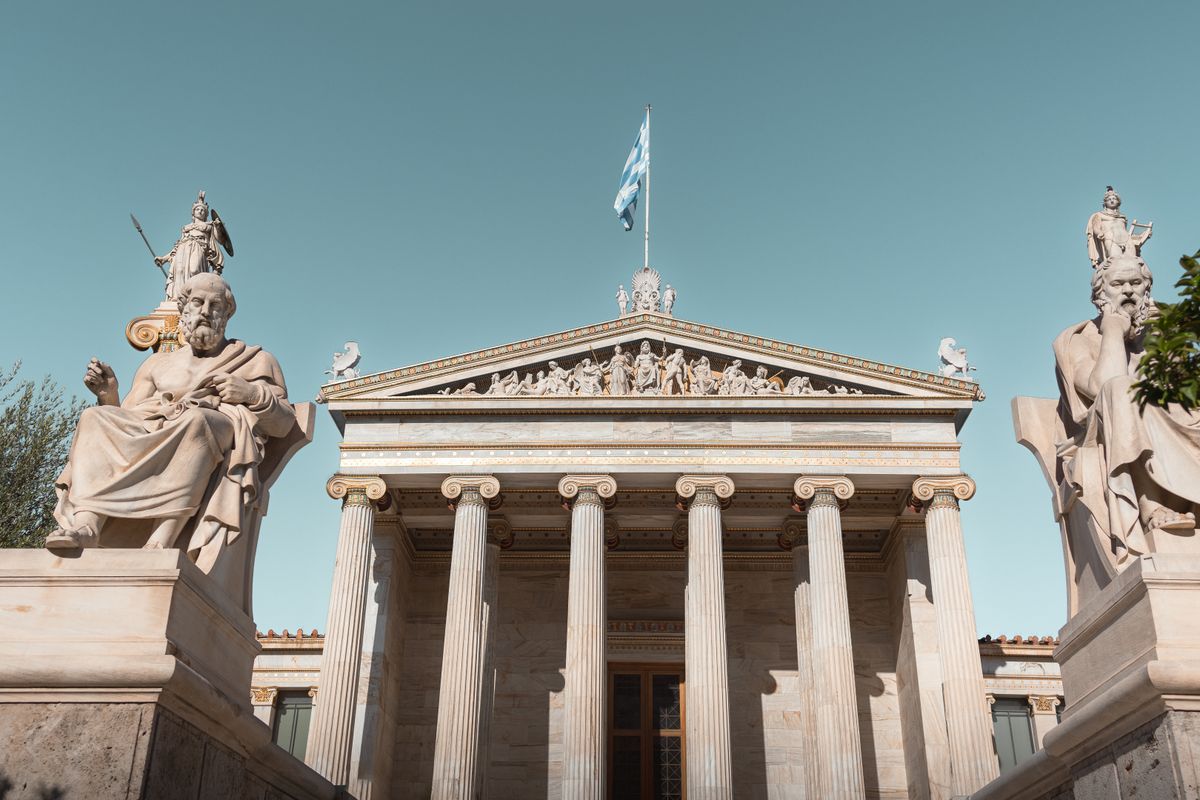
In The Republic, Plato explored the question of what makes a just society and argued for the controversial idea of the philosopher-king \u2014 a ruler whose education and understanding of justice would prepare them to govern.
What if leadership shouldn\u2019t be a prize? What if it should be a responsibility requiring extraordinary preparation?
Plato didn\u2019t imagine the ideal leader as someone who simply wanted power. He imagined someone who had spent years developing knowledge, discipline and an understanding of justice.
The best person to possess power might be the person least interested in possessing it for its own sake.
The Philosopher King: Wisdom Before Power
Plato idea raises an uncomfortable question.
Who would you rather have making decisions that affect millions of people?
Someone who desperately wants power
Someone who has spent decades developing wisdom
The answer seems obvious.
But Plato\u2019s solution creates another problem.
- Who decides who is wise enough to rule?
- And who prevents the \u201cwise\u201d rulers from becoming corrupt?
- What if they believe they know what is best for everyone?
- What if their definition of wisdom is wrong?
- What if ordinary people disagree with them?
Power requires competence. But competence alone may not be enough.
Kant: Can Morality Guide Political Power?
Centuries later, Immanuel Kant approached political philosophy from another direction.
For Kant, political authority could not simply abandon morality for convenience. His political philosophy connected law, justice and freedom with the moral status of human beings.
He argued for a political order in which people\u2019s freedom could coexist under universal laws.
This creates a different challenge.
If human beings are imperfect, how do we prevent those who possess power from abusing it?
Kant\u2019s answer wasn\u2019t simply: Find perfect leaders. It was also to build systems of law and political institutions capable of protecting freedom.
Why Strong Institutions Matter
- No leader should need to be perfectly wise.
- No politician should need to be morally flawless.
- No business owner should be assumed to be incapable of abusing authority.
- No institution should be trusted without accountability.
This is why societies create mechanisms such as:
These systems don\u2019t exist because humanity is hopeless.
They exist because humanity is human.
- We make mistakes.
- We have biases.
- We pursue self-interest.
- We misunderstand situations.
- We become emotionally attached to our beliefs.
- We can become corrupted by incentives.
What happens if the leader isn\u2019t good?
That may be one of the most important questions any political system can ask.
The Danger of Thinking We Already Know Enough
There is another problem that becomes particularly dangerous when people hold power.
Overconfidence.
- What happens when someone believes they understand a complex problem better than they actually do?
- What happens when they stop listening?
- What happens when disagreement becomes evidence of other people\u2019s stupidity rather than a reason to reconsider their own assumptions?
This is where psychology becomes relevant.
What Is the Dunning-Kruger Effect?
The Dunning-Kruger effect comes from research by psychologists Justin Kruger and David Dunning.
Their original 1999 research examined how people can struggle to accurately assess their own performance in areas such as humour, grammar and logic. Lower-performing participants tended, in those studies, to overestimate their performance, partly because the knowledge required to perform well can also be needed to recognise mistakes.
The idea has since become extremely popular. But it is also frequently oversimplified.
\u201cExperts are always humble.\u201d
Later research has challenged how broadly and how strongly the effect should be interpreted. Some researchers argue that statistical and methodological factors can account for part of the famous pattern.
The deeper lesson is therefore not a meme. It is metacognition \u2014 our ability to recognise the limits of our own knowledge.
Why Overconfidence Is Dangerous in Leadership
Imagine possessing enormous power while believing: \u201cI already understand everything.\u201d
- You stop listening.
- You stop asking questions.
- You stop seeking criticism.
- You surround yourself with people who agree with you.
- You interpret disagreement as disloyalty.
- You become increasingly certain.
But the world remains complicated. The consequences of your decisions remain real. And your mistakes affect other people.
Wisdom requires something more. The ability to recognise what you don\u2019t know.
Socrates and the Wisdom of Knowing Your Limits
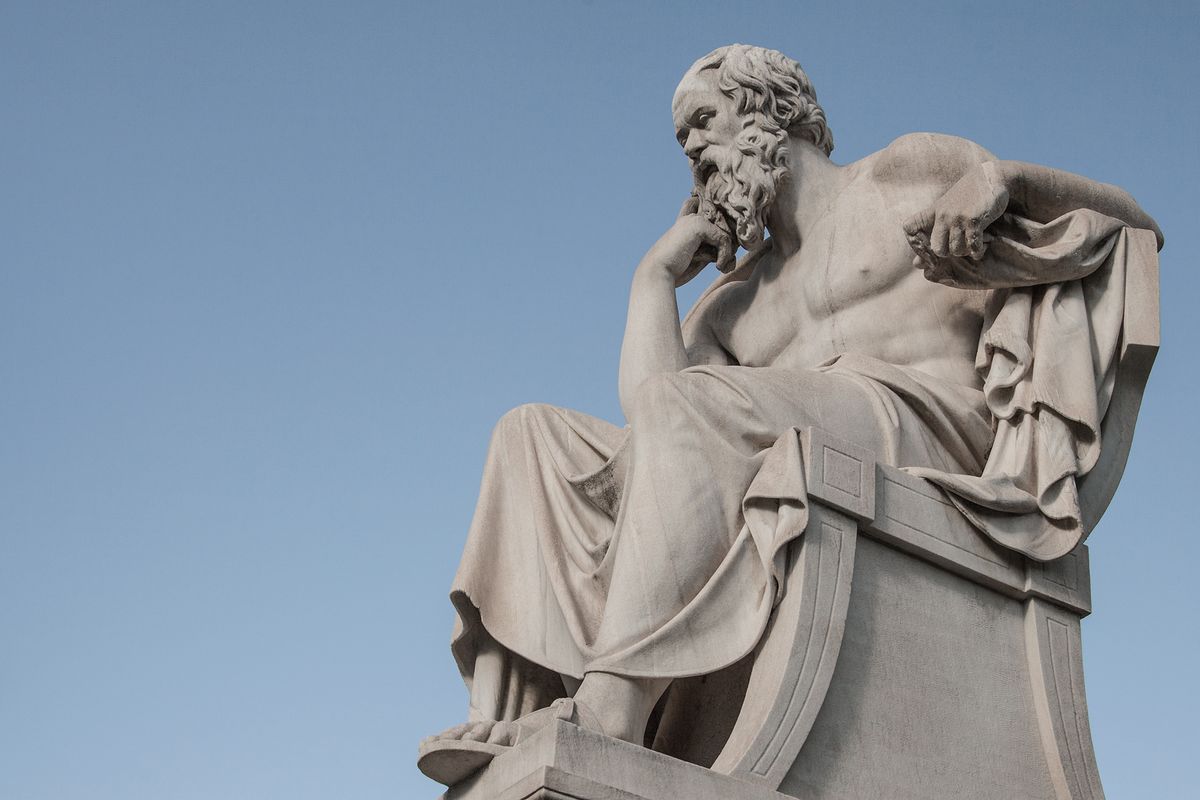
More than 2,000 years before psychologists studied metacognition, Socrates was exploring a similar idea.
The famous story describes the Oracle at Delphi declaring Socrates the wisest man in Athens. Socrates was puzzled.
He questioned politicians, poets and craftsmen. What he discovered was that many people possessed genuine knowledge in particular areas but also believed they knew more than they actually did.
\u201cI know that I know nothing.\u201d
\u2014 Socrates
The willingness to know that you might be wrong. That may be one of the foundations of wisdom.
Is Wisdom More Important Than Intelligence?
This is another distinction worth making.
- Intelligence can help us solve problems.
- Knowledge can help us understand information.
- Expertise can help us perform tasks.
But wisdom involves something broader.
It can involve knowing what matters, understanding consequences, recognising uncertainty, balancing competing values and deciding how knowledge should be used.
- You can be highly intelligent and make terrible decisions.
- You can have enormous knowledge and lack compassion.
- You can be extremely successful and have poor judgement.
- You can possess tremendous power and still not understand what that power should be used for.
Who has the wisdom to use what they know responsibly?
Power Without Wisdom
Imagine giving enormous power to someone with high intelligence, high ambition, high confidence \u2014 but little humility, little empathy, little self-control, little concern for consequences.
Now imagine someone with knowledge, competence, humility, integrity, curiosity, compassion, self-control and a sense of responsibility.
Would they necessarily make perfect decisions? Of course not. Human beings remain fallible.
A wise person with power may create extraordinary good. An irresponsible person with power may create extraordinary harm.
Power magnifies capability. It can also magnify character.
The Problem With Searching for Perfect Leaders
At this point, it may seem that the answer is simple. Find wise leaders. Give them power. Let them govern.
But history gives us reasons to be cautious.
- Who decides who is wise?
- Who evaluates their character?
- Who monitors their decisions?
- Who removes them if they become corrupt?
- Who decides when they are wrong?
We need people capable of wisdom. But we also need systems capable of limiting human error.
Can Democracy Solve the Problem of Power?
Democracy is often described as government by the people.
But democracy doesn\u2019t eliminate power. It distributes and structures it.
- Citizens vote.
- Politicians compete.
- Institutions make decisions.
- Businesses influence policy.
- Media shapes attention.
- Interest groups advocate.
- Technology platforms influence information.
Power still exists.
If citizens are easily manipulated, unwilling to listen, unable to distinguish evidence from propaganda or convinced that everyone who disagrees with them is evil, democratic institutions can struggle. This is why civic education and intellectual humility matter.
Perhaps the Wisest Society Isn\u2019t the One With the Wisest Leader
This may be the central idea of the entire article.
We often focus on leaders. Who should become president? Who should run the company? Who should govern the country?
But perhaps the deeper question is:
What kind of citizens make a healthy society possible?
Citizens who can think critically.
Citizens who can tolerate disagreement.
Citizens who are willing to change their minds.
Citizens who understand systems.
Citizens who care about people beyond their own interests.
Citizens who recognise complexity.
Citizens who can distinguish confidence from competence.
Citizens who value evidence.
Citizens who possess humility.

What Does Human Flourishing Have to Do With Power?
This is where the question connects directly to the wider Get Out Rat Race philosophy.
We can spend enormous amounts of time debating political systems.
But perhaps we can ask another question alongside them:
What kind of system helps human beings flourish?
Does it protect human dignity?
Does it allow people to develop their abilities?
Does it provide security?
Does it allow meaningful participation?
Does it encourage contribution?
Does it protect freedom?
Does it provide opportunities?
Does it limit abuses of power?
Does it allow people to disagree without becoming enemies?
Power Is Not the Enemy
Perhaps we have made a mistake by treating power itself as something inherently evil.
Power is a tool. Like fire, it can create or destroy. Like technology, it depends partly on how it is designed and used. Like money, it can amplify human intentions.
- Power can protect.
- Power can build.
- Power can organise.
- Power can coordinate millions of people.
- Power can also oppress.
How do we make power accountable to something greater than itself?
Wisdom vs Power
This brings us back to the central tension.
Power asks
Can I?
Wisdom asks
Should I?
Power asks
How much can I control?
Wisdom asks
What should I be responsible for?
Power asks
How do I win?
Wisdom asks
What outcome is worth pursuing?
Power asks
How do I get people to follow me?
Wisdom asks
Why should they?
Power without wisdom can become destructive. Wisdom without the capacity to act can become powerless idealism.
Perhaps humanity needs both.
What Qualities Should We Look for in Leaders?
There is no perfect checklist. But history and philosophy repeatedly point toward certain qualities.
Wisdom
The ability to recognise complexity and consequences.
Humility
The willingness to acknowledge what you don’t know.
Integrity
Consistency between principles and behaviour.
Curiosity
The desire to keep learning.
Compassion
The ability to take other people’s wellbeing seriously.
Self-Control
The ability to resist using power simply because you can.
Courage
The willingness to make difficult decisions when necessary.
Accountability
A willingness to accept scrutiny and consequences.
Service
Seeing leadership as responsibility rather than entitlement.
What If the Greatest Danger Is Certainty?
Perhaps the greatest danger isn\u2019t simply ignorance. It may be believing we already know enough.
- A leader who knows they don\u2019t understand everything may seek advice.
- A leader who believes they understand everything may stop listening.
- A politician who knows they can be wrong may investigate.
- A politician who believes they cannot be wrong may suppress criticism.
- A scientist who knows their model has limits keeps testing.
- A person who believes their worldview is complete stops asking questions.
Intellectual humility matters because we should recognise the difference between: \u201cI believe this\u201d and \u201cI cannot possibly be wrong about this.\u201d
Can Humanity Ever Flourish If Power Rules the World?
Perhaps.
But only if power remains a means rather than an end.
- Power can help build institutions.
- It can protect people.
- It can create opportunities.
- It can solve enormous problems.
But when acquiring power becomes the primary goal, something changes.
- People begin serving the system rather than the people.
- Leaders protect their position rather than the public.
- Organisations protect themselves rather than their mission.
- Ideologies become more important than human beings.
And perhaps that is where power becomes dangerous.
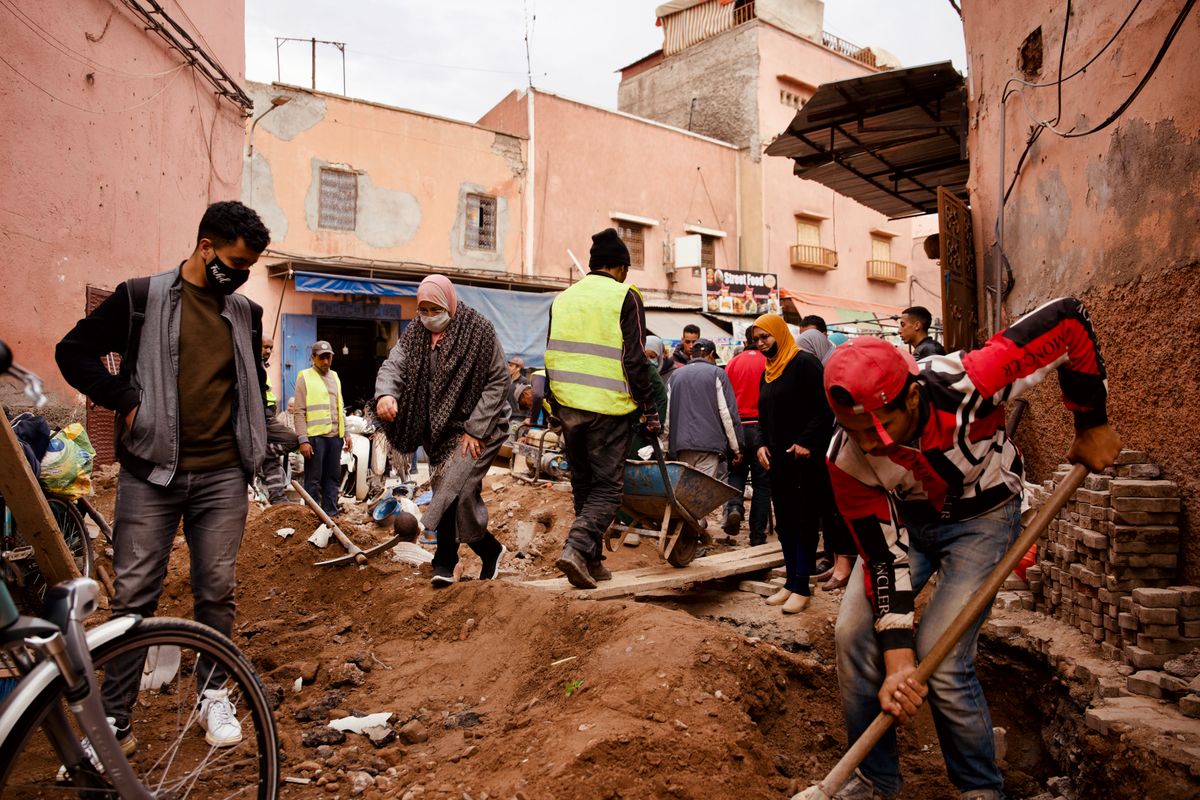
The Question Isn\u2019t Who Should Dominate
This channel isn\u2019t interested in asking which philosophy wins or who should dominate the conversation.
Instead, we can ask: What helps people flourish?
- Explore different perspectives.
- Listen to criticism.
- Acknowledge uncertainty.
- Search for common ground.
- Challenge our own assumptions.
- Change our minds when evidence demands it.
Intellectual progress often begins when we\u2019re willing to ask better questions.
What Can We Learn From Machiavelli, Plato, Kant and Socrates?
These thinkers disagree profoundly.
Machiavelli
Forces us to confront the realities of political power.
Plato
Challenges us to consider the importance of wisdom and character in leadership.
Kant
Reminds us that political power must be constrained by principles of freedom and justice.
Socrates
Reminds us that recognising our own ignorance can be the beginning of wisdom.
- Power without realism is naive.
- Power without morality is dangerous.
- Power without wisdom is reckless.
- Power without accountability is vulnerable to abuse.
- Power without a vision of human flourishing lacks a meaningful destination.
We don\u2019t need to choose one thinker and discard everyone else. We can learn from the questions each one forces us to confront.
A Different Way of Thinking About Power
Perhaps instead of asking: Who should have power? we should ask several questions.
Why do they want it?
Are they competent?
Are they humble enough to recognise their limitations?
Who holds them accountable?
What prevents abuse?
What values guide their decisions?
What happens when they’re wrong?
Can they listen to criticism?
Do they see leadership as service or entitlement?
Who benefits from the power they possess?
These questions can apply far beyond politics. They apply to:
The Future May Depend on Wisdom
Power will always shape the world. We probably cannot eliminate it.
But perhaps our future doesn\u2019t depend on eliminating power. Perhaps it depends on cultivating wisdom.
- Knowledge matters.
- Character matters.
- Humility matters.
- Competence matters.
- Accountability matters.
Perhaps the societies that flourish aren\u2019t necessarily those with the most powerful leaders. Perhaps they are those with the wisest citizens.
- Citizens capable of questioning power.
- Citizens capable of holding leaders accountable.
- Citizens capable of listening.
- Citizens capable of changing their minds.
- Citizens capable of seeing beyond their own interests.
If power rules the world, can humanity ever flourish? Maybe the answer isn\u2019t to eliminate power. Maybe it is to civilise it.
If Power Rules the World, Can Humanity Ever Flourish?
Power should not exist simply so someone can possess it. It should exist as a capacity to accomplish something.
And perhaps the ultimate question is: What are we trying to accomplish?
If the answer is simply:
- More power.
- More wealth.
- More control.
- More status.
Then perhaps we have lost the plot.
But if the answer is:
- Human dignity.
- Freedom.
- Security.
- Meaning.
- Opportunity.
- Justice.
- Contribution.
- Peace.
- Human flourishing.
Then power becomes a tool rather than the destination.
Power should not exist simply so someone can possess it. It should exist as a capacity to accomplish something.
Frequently Asked Questions
What is power?+
Power can broadly be understood as the capacity to influence people, decisions, behaviour or outcomes. Political power is one form, but power also exists within families, businesses, institutions, media, science and technology.
Is power inherently good or evil?+
Power itself is better understood as a capacity rather than inherently good or evil. It can be used to protect, create and organise, but it can also be abused. The important questions concern how power is acquired, constrained, exercised and held accountable.
Who should have political power?+
There is no universally accepted answer. Philosophers have proposed different solutions, including rule by the wise, democratic participation, constitutional government and institutional checks on authority. A useful modern question is not only who should hold power, but how power can be made accountable.
What did Machiavelli believe about power?+
Machiavelli challenged the idea that rulers could maintain political power simply by following conventional moral standards. In The Prince, he focused on the practical realities of acquiring and maintaining power and preserving political order. His work remains controversial because of the tension it creates between political effectiveness and conventional morality.
What was Plato’s philosopher king?+
Plato’s philosopher king was an ideal ruler in The Republic who would be educated in philosophy and prepared to govern with knowledge of justice and the good rather than simply pursuing wealth, popularity or personal power.
What did Kant believe about political power?+
Kant connected political legitimacy with freedom, law and justice. His political philosophy emphasised a lawful system in which people’s freedom could coexist with the freedom of others and rejected the idea that rulers could simply impose their own conception of happiness on citizens.
What is the Dunning-Kruger effect?+
The Dunning-Kruger effect originated in research by Justin Kruger and David Dunning examining people’s ability to assess their own performance. Their original studies found that lower-performing participants in several tasks tended to overestimate their performance. The effect is more nuanced than the popular idea that “unintelligent people think they’re intelligent,” and later research has debated its size and interpretation.
Why is humility important for leaders?+
Humility can help leaders recognise the limits of their knowledge, listen to criticism and remain open to evidence. This doesn’t mean leaders should lack confidence. It means confidence should be balanced by awareness that complex decisions can produce unexpected consequences.
Is wisdom more important than intelligence?+
They are different qualities. Intelligence can help someone learn, reason and solve problems. Wisdom involves broader judgement about what matters, consequences, values and how knowledge should be applied. Philosophical traditions have often connected wisdom with virtues such as justice, courage and practical judgement.
Can democracy eliminate the problem of power?+
No. Democracy structures and distributes power rather than eliminating it. Democratic societies still require institutions, accountability, informed citizens, independent scrutiny and protections against abuses of power.
What does power have to do with human flourishing?+
Power influences the conditions in which people live. It can either support or undermine freedom, security, opportunity, justice, relationships and human development. This makes the relationship between power and human flourishing an important question for any society.
Continue the Journey
This article is part of the Get Out Rat Race exploration of purpose, reality, human flourishing and the ideas that shape how we understand society.
Explore the three pillars:
Purpose
Understanding purpose, psychology, self-actualization, meaning, character and human flourishing.
Reality
Exploring quantum physics, consciousness, philosophy, science, technology and the nature of reality.
Build
Turning ideas, abilities and passions into something useful and valuable.
Watch the Documentary
If Power Rules the World, Can Humanity Ever Flourish? | Wisdom vs Power \u2014 This documentary explores Machiavelli, Plato, Kant, Socrates, the Dunning-Kruger effect, political power, leadership, humility, institutions and the question of whether power can ever be separated from wisdom.
Watch on YouTubeThis isn\u2019t about telling you which political philosophy is correct. It\u2019s about asking better questions.
Who should hold power?
How should power be constrained?
What makes a wise leader?
What makes a wise citizen?
Become who you were born to be.
Find Your Spark™
What kind of person are you becoming? The Free Spark Score gives you a simple starting point for reflecting on what genuinely interests you and what might matter to you.
The Free Spark Score is a simple starting point to help you reflect on your interests, experiences, strengths and what might genuinely matter to you.