The History of the Rat Race: How Did We Get Here?
Where did the rat race come from? Explore the history of work, productivity, consumption, success and the changing meaning of the phrase "rat race" — from the Industrial Revolution to the digital age.
We work, earn, spend, progress, compete and repeat.
But how did we arrive here? How did work, money, consumption, productivity, status and identity become so closely connected that we gave the whole cycle a name — the rat race?
This article investigates two connected but distinct histories: the history of the phrase "rat race" itself, and the much longer story of how the social conditions people now describe as "the rat race" developed over more than two centuries.
We will not begin by declaring that the rat race is bad. Instead, we begin with curiosity: how did this particular relationship between work, money, consumption, status and identity come into being?

What Is the Rat Race?
Before tracing the history, it helps to establish what people mean by the phrase today.
The Modern Meaning of "Rat Race"
In contemporary usage, the rat race typically describes a way of life involving repetitive, competitive work — often in pursuit of money, status, security or advancement — that can feel endless or without a lasting sense of fulfilment. It carries connotations of pressure, repetition and a perceived lack of escape.
Is the Rat Race the Same as Having a Job?
No. This distinction matters.
Employment can provide income, security, purpose, relationships, skills, contribution and personal development. Many people find deep meaning in their work. The rat race describes the conditions under which work becomes experienced as an endless cycle — not employment itself.
This article investigates those conditions rather than assuming that having a job automatically constitutes being in a rat race.
Why Does the Metaphor Resonate?
The metaphor captures something many people recognise: a sense of repetitive competition, of movement without arrival, of pressure without clear resolution. These feelings are real and widely reported. But they are also historically specific. They did not always exist in the form we know them, and understanding how they developed requires looking at how work, time, production, consumption and identity changed over time.
Where Did the Term "Rat Race" Come From?
The Literal Rat Race
A 1848 account describes a "rat race" which it places around 1811. This appears to be the earliest documented use of the phrase, referring to a literal event involving rats. It is important to note that this does not establish 1811 as the origin of the modern metaphor — it simply records that the phrase existed in a literal sense at that time.
The 1931 Aviation Use
By the early 1930s, "Rat Race" appeared as US Army Air Corps aviation jargon for a twisting, turning follow-the-leader manoeuvre. This use is documented in publications connected to Selfridge Field. However, the original jargon glossary has not been located, so this should be presented as the earliest verified primary-source aviation use currently established by the research — not necessarily the origin of the expression.
1939: The Phrase Enters the Human-Life Metaphor
Christopher Morley's novel Kitty Foyle (1939) contains what the Oxford English Dictionary cites as the first metaphorical use of "rat race" to describe human life. This marks the transition from a literal or technical term to a metaphor about the experience of living.
The Meaning Develops During the 1940s
During the 1940s, the phrase carried several overlapping meanings — hectic activity, competition, struggle, human life and aviation. Evidence suggests that the modern competitive meaning becomes clearer around 1947, though the precise trajectory is difficult to establish with certainty. Linguist Benjamin Fortson's discussion on the Linguist List provides useful context for this development.
Did the Rat Race Come From Laboratory Rats?
A popular explanation holds that the phrase comes from laboratory rats running through mazes. This is a commonly repeated explanation, but it is not established by the evidence currently researched. The documented history of the phrase runs through literal events, aviation jargon and literary metaphor — not through behavioural science laboratories. The maze explanation may be plausible, but it should not be presented as established fact.
Before the Rat Race: How Did People Work?
Work Before Industrialisation
Before industrialisation, most work was agricultural, domestic or craft-based. People worked according to tasks, seasons and daylight rather than measured clock time. Work was often embedded in family life and community obligation.
It would be a mistake to romanticise this period. Pre-industrial life could be harsh, precarious and physically demanding. But the organisation of work was fundamentally different from what came later.
The Industrial Revolution Changes the Organisation of Work
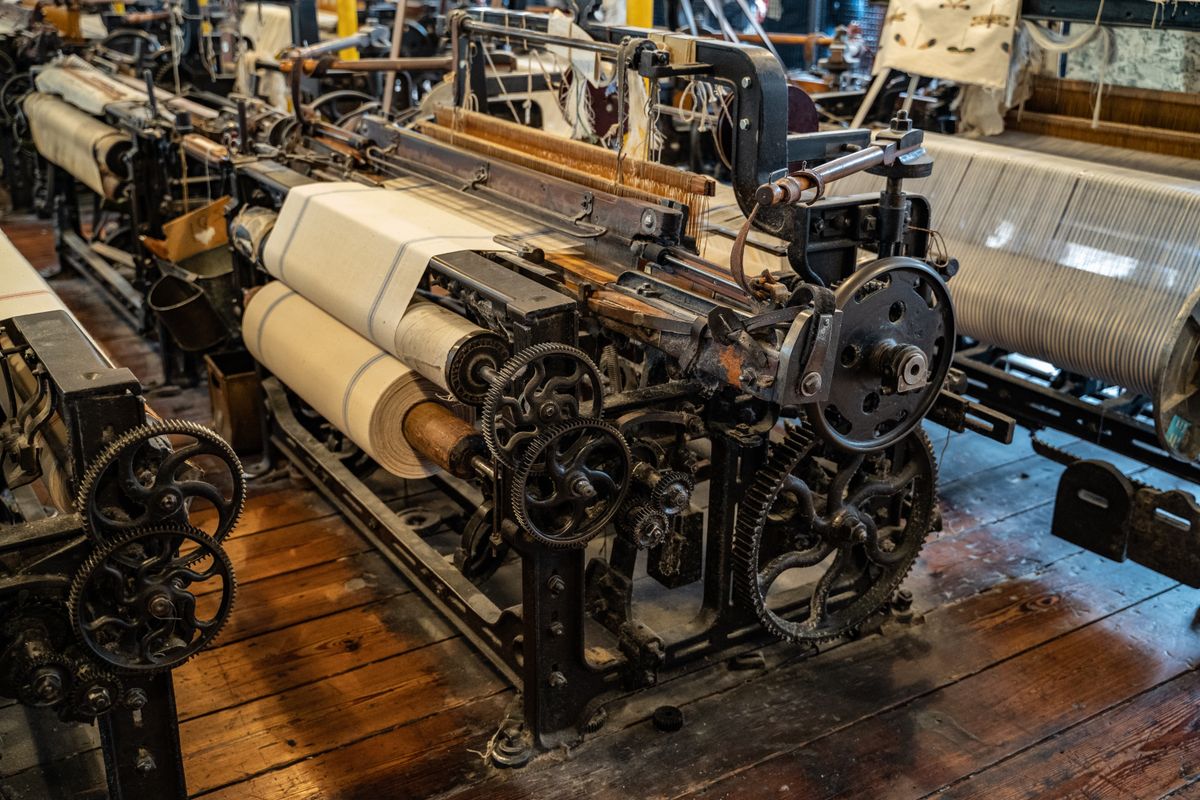
The Industrial Revolution introduced factories, mechanisation, wage labour, specialisation and industrial discipline. Work moved out of the home and into purpose-built workplaces. Production increased dramatically, but so did the regimentation of working life.
This transformation did not create "the rat race" in a single moment. But it did change the foundations upon which later developments would build.
From Task Time to Clock Time
A critical shift occurred when work became increasingly organised around measured time rather than completed tasks. The factory clock became a regulator of human activity in a way that agricultural and craft work had not been.
This raises a central question: what changed when human work became increasingly organised around the clock?
When Time Became Money

Factory Hours and Regulation
The regulation of working time developed gradually. The 1802 Health and Morals of Apprentices Act, the 1833 Factory Act, and the 1847 Ten Hours Act all addressed the hours and conditions of industrial labour. Later reforms continued to shape the relationship between working time, health and economic production. The eight-hour movement further developed the idea that working time should be bounded.
The Rise of Productivity
Productivity — producing more output per unit of input — became increasingly important to industrial organisation. As factories grew and competition intensified, the pressure to produce more efficiently became structural rather than optional.
Scientific Management and Taylorism
Frederick Winslow Taylor and the scientific management movement sought to analyse, measure and optimise work with unprecedented precision. Taylorism attempted to increase efficiency by breaking tasks into component movements, studying them scientifically and reorganising work accordingly.
It would be simplistic to reduce Taylorism to a story of exploitation. Taylor genuinely believed his methods would benefit workers and employers alike. But the implications were profound: work became something that could be measured, analysed and optimised in ways that previous generations had not imagined. The question of how much of a human being's energy and time should be devoted to optimised production had become explicit.
When We Learned to Produce More
Mass Production
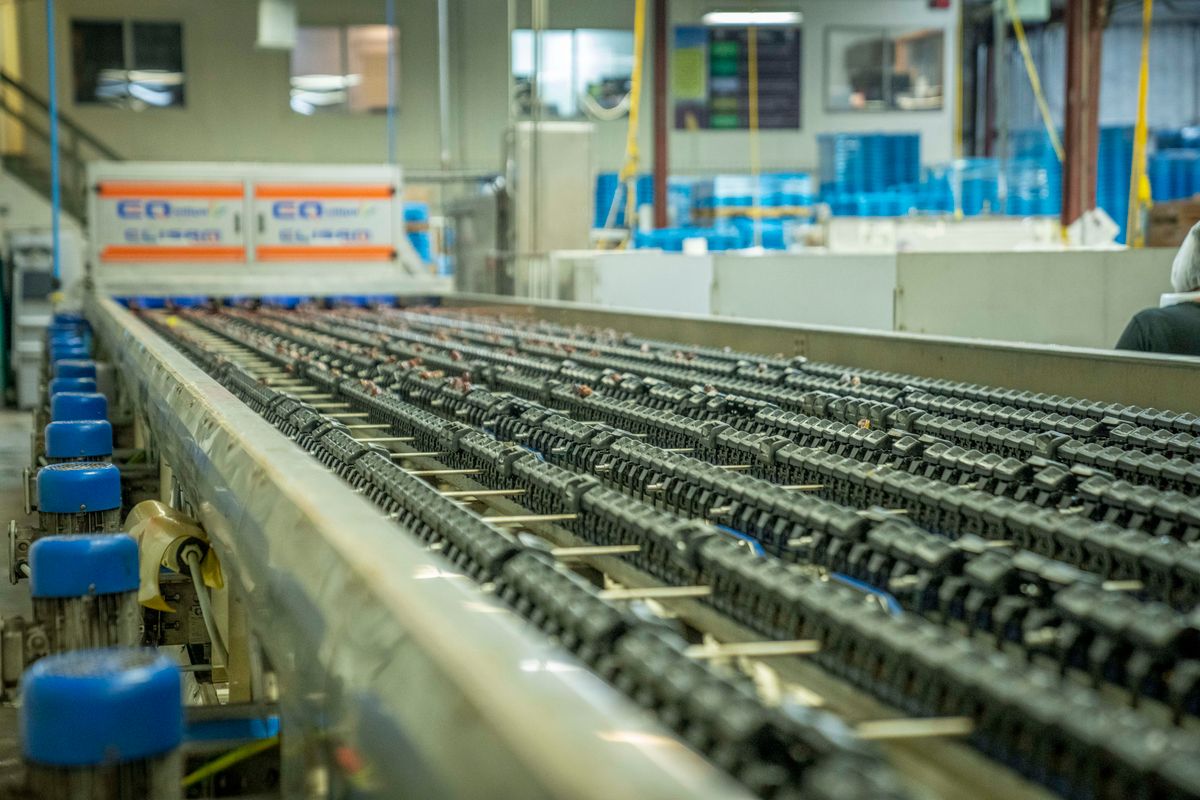
Mass production — assembly lines, standardisation, falling production costs, increased output — transformed the relationship between labour, time and goods. Products that had once been made individually could now be produced in quantities and at prices that made them accessible to far more people.
Ford and the Assembly Line
Henry Ford's application of the moving assembly line to automobile production is one of the most significant examples of this transformation. Fordism dramatically reduced the time and cost of producing a car, while also reorganising the experience of work itself — the line set the pace, not the worker.
But Who Buys All the Products?
Mass production created a new question: if factories can produce vast quantities of goods, who will buy them? The relationship between production, markets and consumption became increasingly important to the functioning of industrial economies.
It would be inaccurate to claim that mass production created consumerism from nothing. Consumption existed long before twentieth-century mass production. But the scale, accessibility and cultural significance of consumption changed dramatically.
From Production to Consumer Society

Advertising
Advertising expanded significantly during the twentieth century. Rather than simply informing consumers about products, advertising increasingly participated in defining what a desirable modern life looked like — associating products with aspirations, identities and lifestyles.
It would be inaccurate to claim that advertising "created" desire. Human desires existed long before modern advertising. The more defensible formulation is that advertising increasingly participated in shaping and directing desires within a mass-production economy.
Department Stores and Consumer Goods
Department stores and expanding retail networks changed how people accessed goods. Products that had been luxuries became increasingly available, and the act of shopping became a more significant part of everyday life.
Credit and Installment Buying
The expansion of credit and installment buying meant that purchasing became increasingly connected with financial commitment rather than immediate payment. This linked consumption to ongoing financial obligation — a connection that would deepen over the following decades.
Did Advertising Create Desire?
No — or at least, the evidence does not support such a strong claim. A more careful formulation: advertising increasingly participated in defining what a desirable modern life looked like. The capacity for desire is human. The specific objects, associations and lifestyle images that advertising presented were historically specific.
Post-War Prosperity: What Were People Actually Working For?

Britain After 1945
In Britain, the post-war period involved reconstruction, expanded housing provision, the development of the welfare state, social security, rising living standards, family stability and collective provision. The NHS, council housing and social insurance represented a collective investment in security and wellbeing.
America After 1945
In America, post-war prosperity took a somewhat different shape: suburbanisation, home ownership, cars, consumer goods and private consumption. As the Oxford Research Encyclopedia documents, suburbanisation became a defining feature of American life after 1945, with the owner-occupied suburban home central to the post-war American Dream. The American Dream became closely associated with material prosperity and upward mobility.
Prosperity Was About More Than Consumption
It would be reductive to describe the post-war period simply as the rise of "consumerism." Prosperity also meant security, reliable income, better housing, family stability, convenience and improved living conditions. People were working for more than possessions — they were working for lives that felt safer and better than those of the previous generation.
When Prosperity Became Visible

Television Enters the Home
Television brought images of lifestyles, products and aspirations directly into the home in a way that print and radio had not. The visual presentation of desirable living became a daily presence in millions of households.
Advertising and the Modern Household
Advertising increasingly connected products with ideas about the good life — not just what to buy, but what a successful household should look like. As historian Sean Nixon has documented in his study of British television advertising, advertising participated in shaping cultural understandings of modernity, taste and aspiration.
The Rise of Lifestyle Expectations
Cars, kitchens, household technology, consumer durables, home ownership and career advancement became part of an increasingly visible set of lifestyle expectations. The question that emerges is one that resonates across this entire history: when does having enough become having more?
The Question of "Enough"

During the 1950s and 1960s, a number of thinkers raised questions about whether increasing material prosperity was the same as increasing human wellbeing. These should be understood as documented intellectual positions — arguments made by specific people at specific times — not as objective truths that automatically settle the question. Galbraith's The Affluent Society (1958) questioned whether private wealth and public squalor could coexist; Fromm's The Sane Society (1955) asked whether a society could be materially successful yet psychologically unhealthy; and Marcuse's One-Dimensional Man (1964) argued that advanced industrial society could reduce critical thought.
John Kenneth Galbraith
The Affluent Society (1958)
Questioned whether private wealth and public squalor could coexist in a society that had become materially prosperous.
Vance Packard
The Hidden Persuaders (1957)
Investigated the methods advertisers used to influence consumer desires, raising questions about autonomy and persuasion.
Erich Fromm
The Sane Society (1955)
Asked whether a society could be materially successful yet psychologically unhealthy — and what a "sane" society might require.
Herbert Marcuse
One-Dimensional Man (1964)
Argued that advanced industrial society could reduce critical thought and create a flattened, one-dimensional experience of life.
Abraham Maslow
Self-Actualisation
Proposed that human needs extend beyond survival and security toward growth, creativity and becoming the fullest version of oneself.
These thinkers did not all agree. Some focused on the economic contradictions of affluence, others on the psychological effects of consumer culture, others on the philosophical question of what human beings actually need to flourish. What united them was a willingness to ask whether more was always better — and whether the answer to that question might be more complicated than it appeared.
Maslow proposed a theory of human motivation in his 1943 paper A Theory of Human Motivation, in which self-actualisation represented a higher-order form of human development. His concept of self-actualisation is particularly relevant here: it suggests that human needs extend beyond material security toward growth, creativity and the realisation of potential — questions that material prosperity alone may not answer.
Two Different Ideas of Prosperity
Material Prosperity
More income → better house → better car → more possessions → higher consumption → higher status
Human Prosperity
Economic security → health → housing → education → relationships → community → leisure → meaningful work → personal development → contribution
Are They Really Opposites?
No. Material prosperity can support human flourishing. Better housing, reliable income and access to goods and services genuinely improve lives. The argument is not that material prosperity is bad.
The deeper question is: when does material prosperity stop being a means and start becoming the measure? When does the pursuit of more shift from supporting a good life to replacing the question of what a good life actually is?
When Success Became Personal

From approximately 1975 to 1990, economic restructuring changed the landscape of work and success. Changing labour markets, career advancement, qualifications, employability, entrepreneurship, rising inequality, two-income households, professional identity and individual responsibility all contributed to a significant cultural shift.
The Rise of Individual Achievement
Economic success increasingly became something individuals were expected to build and manage themselves. Career progression, qualifications and personal employability became more prominent as collective security arrangements came under pressure in some countries.
This is an interpretation supported by evidence of changing labour markets and economic policy, but it should be distinguished from a claim that this shift was universal or that it affected everyone equally.
What Does "Success" Actually Mean?
The meaning of success became increasingly contested. Does it mean income? Career position? Status? Security? Achievement? Autonomy? Different people and different communities have always answered this question differently — but the period from the 1970s onwards intensified the question by making success feel more individual and more competitive.
When Work Became Knowledge

Personal Computers and the Knowledge Economy
From approximately 1980 to 2000, personal computers transformed the nature of work. The knowledge economy placed increasing value on information, skills and intellectual capabilities rather than physical labour alone.
Education, Qualifications and Employability
As economic value increasingly depended on knowledge and skills, education and qualifications became more important. Employability — the ongoing capacity to remain valuable in a changing labour market — became a personal responsibility in a way it had not been for previous generations.
Global Competition
Globalisation meant that workers were increasingly competing not just with people in their own city or country, but with workers around the world. This intensified pressure on wages, skills and conditions in some sectors while creating new opportunities in others.
A central question emerges: when economic value increasingly depends on knowledge and skills, does the individual become responsible for continually increasing their own economic value?
Housing, Credit and the Cost of Modern Life

Rising Housing Costs
From approximately 1990 to 2008, housing costs rose significantly in many parts of the UK and elsewhere. ONS data shows that the median house-price-to-earnings ratio in England and Wales rose from approximately 3.6 in 1997 to 7.6 in 2016, while median property prices rose 259% and median individual annual earnings rose 68%. Rising housing costs created a mechanism that connected the cost of living to the pressure to earn.
Financial Commitments
A historical mechanism can be observed: higher housing costs created a need for higher income, which led to career progression, dual incomes or borrowing, which created greater financial commitments, which in turn created a continued need for income. This is not a conspiracy — it is a structural pattern.
Does Economic Progress Create New Obligations?
The careful formulation is this: economic progress can create obligations as well as freedoms. A mortgage is simultaneously an achievement of home ownership and an ongoing financial commitment that requires sustained income. It would be wrong to imply that mortgages or home ownership are inherently part of the rat race — many people find security and meaning in owning a home. But the structural relationship between housing costs and the need to earn is part of the historical picture.
When Work Became Digital

Email, Personal Computers and the Internet
From approximately 1990 to 2008, the spread of email, personal computers and the internet transformed communication and work. Information could travel instantly. Collaboration could happen across distances. New categories of work emerged.
Remote Work and Knowledge Work
Technology created the possibility of working from anywhere. But it also created the possibility of being available everywhere. The central question is: did technology give us more freedom, or did it simply make us available everywhere?
It is important to distinguish between possibility and experience. Technology created the possibility of continuous connectivity. That does not prove that everyone worked continuously. But the boundary between work and non-work became more porous for many people.
The Digital Rat Race

Comparison Became Continuous
From approximately 2008 to 2020, smartphones and social media platforms amplified comparison, visibility, status competition, lifestyle presentation and personal branding. Where status once depended largely on your local community, it could now be measured against a global standard presented in real time.
It would be inaccurate to claim that social media "created" the rat race. Comparison and status competition existed long before social media. What changed was the scale, immediacy and continuity of comparison.
The Rise of the Side Hustle
Side hustles, the gig economy, platform work and the creator economy emerged from a combination of economic pressure, technological possibility and cultural change. For some, a side hustle was a path to independence. For others, it was a necessary response to wages that hadn't kept pace with living costs.
Entrepreneurship: Escape or Another Race?
It is worth comparing the structures rather than making a verdict:
Employment
boss → workplace → fixed hours
Entrepreneurship
customers → laptop → content → sales → administration → repeat
A central distinction: autonomy is not necessarily the same as fewer working hours. Running your own business can provide genuine freedom and meaning. It can also recreate pressure, competition and long hours in a new form. The structure changes; the experience of pressure may not.
The Pandemic Changes the Question

Remote Work, Hybrid Work and the End of the Commute?
From 2020 onward, the pandemic accelerated changes in working patterns that had been technologically possible for years. Remote work and hybrid arrangements became far more widespread. The commute — a daily ritual that had structured working life for generations — was suddenly absent for many.
Work-Life Boundaries and Flexibility
ONS data shows that in April 2020, 46.6% of people in employment did some work from home, with 86% of those homeworkers saying they did so because of COVID-19. The same data found that homeworkers were roughly split between working fewer and more hours than usual — preventing the simplistic claim that working from home automatically means working less. For some, remote work brought genuine improvement — more time with family, less commuting, greater autonomy. For others, it blurred the boundary between work and home in ways that increased pressure.
It would be wrong to claim that remote work is universally better or universally worse. The effects depend on circumstances, personality, household composition and the nature of the work itself.
What Is Productivity Actually For?

This is one of the most important questions in the entire history. If productivity increases — if we can produce more with less human time — who receives the benefit?
The potential benefits include:
- Higher wages for workers
- Higher profits for employers
- Lower prices for consumers
- More consumption
- Shorter working hours
- More leisure time
- Or some combination of the above
The broader question is: how should societies divide the benefits of increasing productivity between consumption, income and time? This is not merely an economic question. It is a philosophical and political one. Different societies have answered it differently at different points in history — and the answer has profound implications for the experience of working life. Recent experiments, such as the UK four-day week pilot studied by the University of Cambridge, have examined whether shorter working hours can coexist with organisational performance — offering practical evidence rather than theoretical argument.
AI and the Next Version of the Rat Race

Artificial intelligence raises questions that echo throughout this entire history. Will AI automate tasks, augment human capabilities, or both? Will it increase productivity in ways that benefit workers, employers, consumers or society as a whole? The International Labour Organization's research on generative AI distinguishes between automation, augmentation, job transformation and job quality — allowing a more nuanced discussion than either "AI will take all our jobs" or "AI will free everyone."
It would be irresponsible to predict that AI will either destroy employment or liberate humanity. The evidence is still developing. What can be said is that AI is the latest in a long line of technologies that have transformed the organisation of work — and that the question of who benefits from increased productivity is as relevant now as it was during the Industrial Revolution.
The central question is the same one that has run through this entire history: if technology allows us to produce more with less human time, will society use the gain for more output or more human freedom?
How the Rat Race Changed Over Time
Industrial Revolution
Work for survival
Mass Production
Work + productivity
Post-War Prosperity
Work for security + a better life
Affluent Society
Work + consumption + status
Late 20th Century
Work + individual achievement
Knowledge Economy
Work + employability + continuous development
Digital Economy
Work + connectivity + personal branding
Present
Work + flexibility + autonomy + meaning
This framework is an interpretation derived from the historical investigation — not a literal historical taxonomy. The rat race changes form as society changes. Each era builds on what came before rather than replacing it entirely.
Four Versions of the Rat Race

Version 1
Survival Rat Race
I work because I need money to survive.
Version 2
Prosperity Rat Race
I work so my family can have a better life.
Version 3
Achievement Rat Race
I keep progressing because I don't want to fall behind.
Version 4
Identity Rat Race
I keep achieving because achievement has become part of who I am.
These four versions are presented as a conceptual framework developed from the evidence — not as established historical definitions. The fourth version, where achievement becomes part of identity, connects most closely with the Get Out Rat Race philosophy, but it should not be treated as a definitive historical category.
The Six Questions Behind the Rat Race

Time is the final question because it connects all six. Whatever we think about work, money, consumption, status, security and identity, the ultimate constraint is the finite time we have to live. What does it mean to live well within that constraint?
So, What Are We Actually Racing Towards?

Looking across more than two centuries of history, a possible progression emerges:
Survival → Security → Prosperity → Consumption → Achievement → Identity → Meaning
This is not a universal trajectory. Not everyone moves through these stages, and the stages do not necessarily replace one another. But it suggests a pattern: as material security increases, the questions shift from survival toward identity and meaning.
After two centuries of increasing productivity and material prosperity, what are we actually racing towards?
If economic activity is a means rather than an end, what should the end actually be?
This is not a question with a single correct answer. It is a question that each person and each society must answer for themselves. But asking it — seriously, honestly, with awareness of the history that brought us here — is perhaps the first step toward an answer.
Conclusion
The rat race did not suddenly appear. It developed over more than two centuries as work, time, production, consumption, prosperity, competition and technology changed — and as the relationship between work and personal identity shifted.
The phrase itself has a history: from a literal event in the early nineteenth century, through aviation jargon, to a literary metaphor, to the modern expression of competitive, repetitive working life.
The social conditions have a much longer history: from the Industrial Revolution's transformation of work, through the rise of mass production, consumer society, post-war prosperity, the question of "enough," the individualisation of success, the knowledge economy, the digital revolution, and now the age of AI.
Work is not inherently bad. Money is not inherently bad. Capitalism, technology and entrepreneurship are not inherently good or bad. The deeper question is not how we escape work, but what work is ultimately for — and what we are choosing to do with the time that productivity gives us.
This article has tried to distinguish between what happened, how we interpret what happened, and what we argue it means. Where evidence is contested, we have said so. Where something is a philosophical argument, we have identified it as such. Where something is a hypothesis, we have labelled it as a hypothesis.
Become Who You Were Born To Be.
The Rat Race Ends Within.
Sources & Further Reading
Primary & Historical Sources
- Oxford English Dictionary — "rat race" — key linguistic source for the documented history of the expression
- Christopher Morley — Kitty Foyle (1939) — primary literary source behind the OED's 1939 citation
- UK Parliament — The 1833 Factory Act — primary institutional evidence on factory regulation
- UK Parliament — Later Factory Legislation — the 1844 and 1847 Ten Hours Act and continuing reform
- John Kenneth Galbraith — The Affluent Society (1958) — primary intellectual source questioning affluence
- Abraham Maslow — A Theory of Human Motivation (1943) — primary source for the hierarchy of needs and self-actualisation
- Erich Fromm — The Sane Society (1955) — a documented intellectual argument on society and psychological wellbeing
- Herbert Marcuse — One-Dimensional Man (1964) — philosophical analysis of advanced industrial society
Academic Research
- Nicolaides & Wiese — Suburbanization in the United States after 1945, Oxford Research Encyclopedia — academic study of post-war suburbanisation and the American Dream
- Sean Nixon — Life in the Kitchen, University of Essex — research on British television advertising and domestic modernity 1955–1969
- Benjamin Fortson — Linguist List discussion of "rat race" — useful for the development of the phrase's meaning
Official & Contemporary Evidence
- ONS — Housing Affordability in England and Wales: 1997 to 2016 — quantitative data on house-price-to-earnings ratios
- ONS — Coronavirus and Homeworking in the UK: April 2020 — data on the pandemic's transformation of work
- University of Cambridge — Four-day week research — experimental evidence on shorter working hours
- International Labour Organization — Generative AI and Jobs — global analysis of AI's potential effects on job quantity and quality
Frequently Asked Questions
What is the rat race?
The rat race is a common metaphor for a way of life involving repetitive, competitive work — often in pursuit of money, status, security or advancement — that can feel endless or without a lasting sense of fulfilment. Crucially, the rat race is not the same as employment itself. Many people find purpose, security and meaning through work. The phrase describes the experience of feeling trapped in a cycle rather than simply having a job.
Where did the term "rat race" come from?
The expression has a documented but tangled history. A literal "rat race" is recorded in 1848, referring to an event placed around 1811. By the 1930s, "Rat Race" appeared as US Army Air Corps aviation jargon for a twisting follow-the-leader manoeuvre. The phrase entered metaphorical use describing human life by the late 1930s, and by the late 1940s the modern competitive meaning was becoming clearer.
When was "rat race" first used?
Different forms of the expression appear at different points in the historical record. A literal use dates to 1848, aviation jargon to the 1930s, and the human-life metaphor to the late 1930s. No single date establishes the "origin" of the modern metaphor — the meaning developed over time.
Why do we call it the rat race?
The metaphor captures the sense of repetitive, competitive movement — going round and round without necessarily arriving anywhere. The popular explanation involving laboratory rats running through mazes is commonly repeated but is not established by the historical evidence currently researched.
Did the Industrial Revolution create the rat race?
Industrialisation transformed the organisation of work, time and production, but the modern concept of the rat race developed through a much longer combination of changes — involving work, productivity, consumption, status, security and identity — across more than two centuries.
This article was developed with assistance from AI tools. AI was used to help with research, organisation and/or drafting. The content was reviewed and edited before publication, and responsibility for the final article rests with Get Out Rat Race.
Find Your Spark™
You've been exploring the ideas. Now explore yourself.
The Free Spark Score is a simple starting point to help you reflect on your interests, experiences, strengths and what might genuinely matter to you.
Related Articles
Why Do People Feel Empty? Understanding the Rat Race, Purpose and Fulfilment
Explore why external success doesn't always bring meaning, and how the rat race connects to purpose and self-actualisation.
Was Abraham Maslow Right About Success? Self-Actualization and the Meaning of a Successful Life
What if success isn't the problem — our definition of success is? Explore Maslow's hierarchy and what makes a meaningful life.
Maslow's Pyramid & The Rat Race: Why Most People Can't Even Begin to Think About Fulfilment
How the rat race keeps people stuck at the base of Maslow's pyramid, and why securing the basics matters before higher fulfilment becomes possible.
What Does It Mean to Live Well? Understanding Human Flourishing
Explore eudaimonia, human flourishing, and the ancient question of what constitutes a good life.
Did You Choose This Life? How to Find Yourself Again
What if the life you're living isn't actually the life you chose? Explore inherited expectations and how to begin building a life that belongs to you.
Breaking Free: Why the Traditional Career Path is Broken
Discover why the 9-to-5 model is outdated and how it keeps you trapped in a cycle of trading time for money.