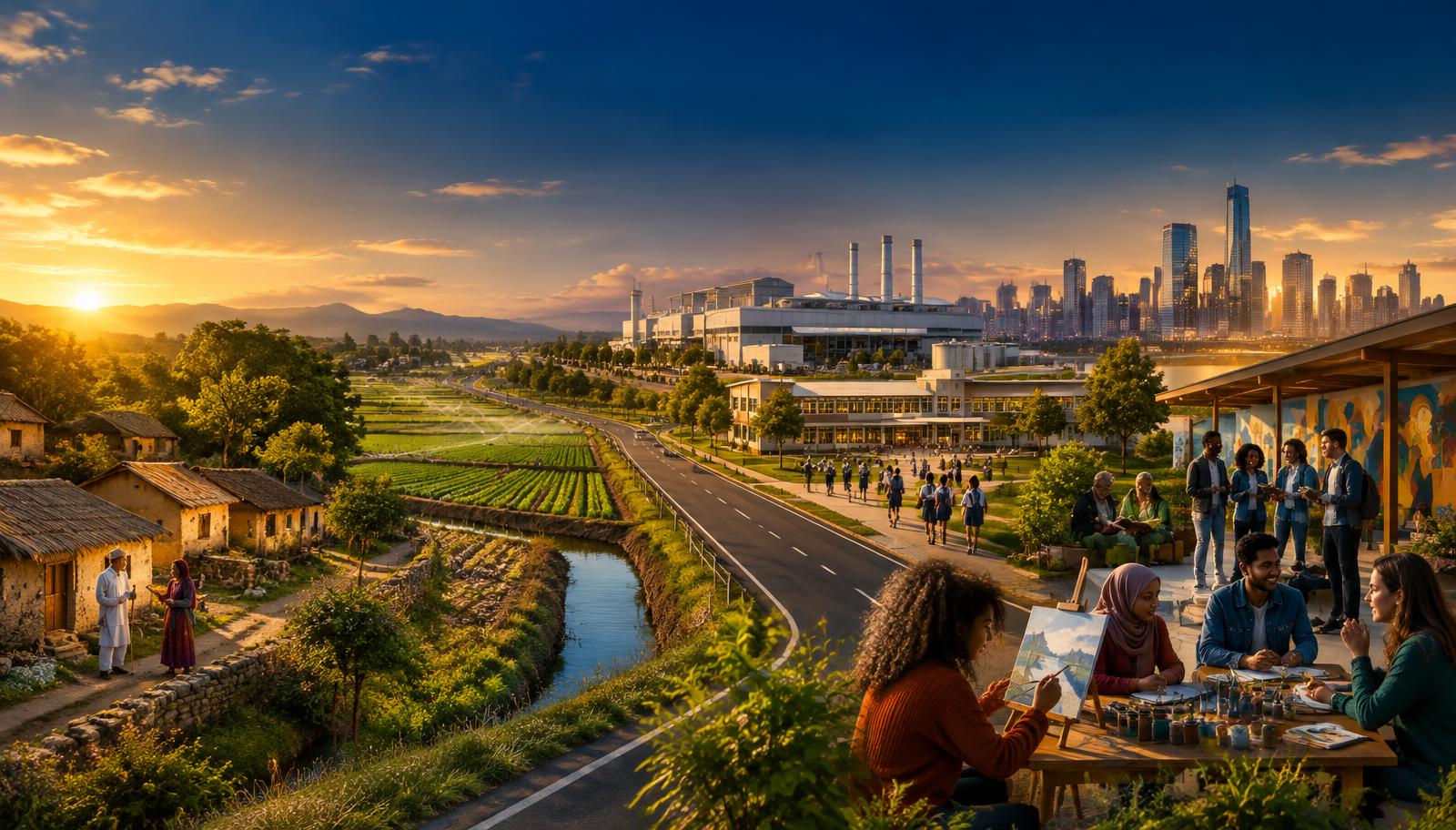
Introduction: What Does It Actually Mean for Humanity to Progress?
Imagine waking up every morning with one overriding concern: whether you will have enough food to feed your family.
You may have ambitions, interests, talents and ideas about the person you would like to become. But when your immediate concern is finding clean water, securing shelter or earning enough to eat, those ambitions can become difficult to pursue.
Now imagine a different situation.
You have a secure home, sufficient food, access to healthcare and education. You have some financial stability and the opportunity to develop skills, explore interests, build relationships and make meaningful choices about your future.
Both people possess human potential. But their circumstances provide very different opportunities to realise it.
This is where the subject of poverty becomes much bigger than economics.
It connects directly to psychology, education, political systems, international development and one of the central questions behind Get Out Rat Race:
What conditions allow human beings to become who they were born to be?
China offers an extraordinary case study.
Over approximately four decades, the country lifted close to 800 million people out of extreme poverty by international measures. It is one of the most significant poverty-reduction achievements in modern history.
But the story is not simply that China became richer.
Its transformation involved agricultural reform, industrialisation, infrastructure, education, international trade, economic incentives and targeted poverty programmes. It also involved serious policy failures, including the catastrophic famine associated with the Great Leap Forward, as well as continuing challenges concerning inequality, political freedoms, employment and quality of life.
Meanwhile, millions of people in other countries continue to struggle with hunger, poverty and inadequate access to basic services.
The United Nations' 2026 global food security report estimated that approximately 645 million people experienced hunger in 2025. Around 2.1 billion experienced moderate or severe food insecurity.
Humanity has developed extraordinary technologies, productive capacity and scientific knowledge. Yet the basic conditions required for survival are still unavailable to many.
That contradiction deserves serious attention.
This article explores five connected questions:
- What do we actually mean by poverty, and how is it measured?
- How did China achieve such a dramatic reduction in extreme poverty?
- Why do other countries continue to face severe poverty and food insecurity?
- What progress have international hunger campaigns such as Band Aid and Live Aid actually achieved?
- Should the ultimate objective of economic development be wealth, or the creation of conditions in which people can flourish?
This is not an argument that China has the perfect economic or political system. Nor is it an argument that other countries should simply copy its model.
It is an investigation into what worked, what failed, what can be learned and how we should evaluate progress.
Because getting people out of poverty is not the same as giving them the opportunity to flourish.
But without addressing poverty, flourishing becomes much harder.
What Does Poverty Actually Mean?
Before examining China's transformation, we need to establish what we mean when we talk about poverty.
It is easy to assume that poverty has one universal definition. In reality, researchers and governments use different measurements depending on what they are trying to understand.
Two particularly important concepts are absolute poverty and relative poverty.
They measure different aspects of deprivation, and confusing them can lead to misleading comparisons between countries.
Absolute poverty: The struggle to meet basic needs
Absolute poverty refers to a condition in which people lack the resources to meet fundamental material needs.
These may include:
- Sufficient food and nutrition.
- Clean drinking water.
- Basic shelter.
- Essential clothing.
- Sanitation.
- Access to basic healthcare.
- Other necessities required for survival and basic living.
Someone living in extreme poverty may have very little protection against illness, drought, food shortages, economic shocks or the loss of employment.
In some circumstances, a single event can push an already vulnerable household into a crisis from which recovery is extremely difficult.
This is the type of deprivation that international extreme-poverty measures are designed to help track.
Relative poverty: Living standards and participation
Relative poverty is measured in relation to the typical income or living standards within a particular society.
A household may have access to food and shelter but still lack the financial resources required to participate in ordinary social and economic life.
For example, in the United Kingdom, relative poverty may involve difficulties affording:
- Adequate heating.
- Transport to work or education.
- Suitable clothing.
- Internet access where it is important for participation.
- Essential social activities.
- Opportunities available to the wider population.
Relative poverty is important because living standards are not determined by survival alone.
Someone may be physically surviving but still experience exclusion, insecurity and restricted opportunities.
Does the West only measure relative poverty?
No. This is an important distinction.
It would be inaccurate to suggest that Western countries only define poverty through relative living standards.
The World Bank also measures absolute extreme poverty internationally. Individual countries use their own national poverty lines, and international organisations use different indicators to compare conditions across countries.
The measures answer different questions.
- Absolute poverty asks whether people can meet basic material needs.
- Relative poverty asks whether people have substantially fewer resources than others in their society.
- Multidimensional poverty examines overlapping disadvantages, which may include health, education and living conditions.
All three perspectives can provide valuable information.
The World Bank's international poverty line
In June 2025, the World Bank updated its international extreme-poverty line from $2.15 to $3.00 per person per day, expressed in 2021 purchasing power parity (PPP) international dollars.
This update followed the release of new purchasing power parity data.
PPP is important because the cost of living differs between countries. Three dollars converted directly into local currency does not necessarily buy the same amount of goods and services in different places.
The international poverty line attempts to make comparisons more meaningful by adjusting for these differences.
The World Bank also makes clear that national poverty lines remain important for understanding poverty within individual countries.
This matters when comparing China with other countries.
China's 2020 declaration that it had eliminated extreme poverty referred to its own national rural poverty standard. It should not be interpreted as meaning that every form of poverty had disappeared or that all Chinese households had achieved financial security.
A country can eliminate extreme poverty under one measurement and still have substantial poverty and inequality under higher thresholds.
That distinction is essential to understanding China's achievement honestly.
Absolute poverty vs relative poverty
The two measure different things and should not be compared as if they were the same.
Trusted sources:
- World Bank — June 2025 Update to Global Poverty Lines
- World Bank — Poverty Overview
- United Nations Development Programme — Global Multidimensional Poverty Index
How China Lifted Nearly 800 Million People Out of Extreme Poverty
China's economic transformation is one of the most significant development stories of modern history.
According to a joint World Bank and Chinese research report, the number of people living below China's national rural poverty standard fell from approximately 770 million in 1978 to around 5.5 million in 2019.
Using the World Bank's historical international poverty measure of $1.90 a day in 2011 PPP terms, the reduction was close to 800 million people.
These figures are based on historical poverty thresholds. The World Bank subsequently updated its international poverty lines, so they should not be treated as if they were calculated using today's $3.00 threshold.
Nevertheless, the scale of the transformation is extraordinary.
How did it happen?
The answer is not one policy, one leader or one economic ideology.
It was a long process involving changes to agriculture, industry, investment, infrastructure, education, trade and government policy.
To understand it properly, we need to look at the historical timeline.
The historical background: 1949 onwards
The People's Republic of China was established in 1949 under the leadership of the Chinese Communist Party.
At that time, China was a predominantly rural society facing enormous development challenges.
Agriculture was central to the economy, industrial capacity was limited compared with the major industrial powers, and large parts of the population experienced serious material deprivation.
The new government introduced major changes to land ownership, agriculture, industry and economic organisation.
These changes created a very different economic system from the one that had existed before 1949.
However, the early decades also included policies that produced catastrophic consequences.
The Great Leap Forward (1958–1962): A devastating failure
The Great Leap Forward was launched in 1958 as an ambitious attempt to accelerate China's industrialisation and transform agricultural production.
The campaign involved the creation of large people's communes, collectivisation, ambitious production targets and attempts to increase industrial output rapidly.
The policy failed disastrously.
Agricultural production was disrupted, unrealistic targets encouraged false reporting, and political pressure made it difficult for accurate information to reach decision-makers.
The resulting famine was one of the deadliest in modern history.
Estimates of excess deaths vary substantially between researchers, partly because of limitations in historical records and differences in methodology.
It is important to acknowledge this period because the history of China's development is not a simple story of successful central planning.
It demonstrates how ambitious national objectives can become dangerous when political pressure, poor information and a lack of accountability prevent mistakes from being recognised and corrected.
This is a central lesson for any country.
Economic systems need mechanisms for learning, transparency and correcting failure.
1978 onwards: The reform and opening-up period
A major turning point came in 1978, when China began a period of economic reform associated with Deng Xiaoping.
The reforms did not simply replace socialism with capitalism.
Instead, China gradually introduced market mechanisms and economic incentives while retaining extensive state involvement and Communist Party political control.
The approach evolved over time.
The aim was to increase agricultural productivity, encourage enterprise, attract investment, expand industrial production and connect China more closely with international markets.
The period following 1978 was particularly important to China's extraordinary reduction in poverty.
Six major drivers of China's transformation
1. Agricultural reform
A large proportion of China's population lived in rural communities and depended on agriculture.
One of the most important changes was the household responsibility system.
Under this arrangement, farming households gained greater control over production decisions and were able to benefit more directly from increases in output after meeting agreed obligations.
This strengthened incentives and contributed to increased agricultural productivity.
The wider lesson is that agricultural development is not simply about having land. Farmers also need incentives, knowledge, tools, water, transport, storage and access to markets.
2. Industrialisation and manufacturing
China expanded manufacturing on an enormous scale.
Factories created employment opportunities for millions of people who had previously depended on low-productivity agriculture.
Industries included:
- Textiles and clothing.
- Electronics.
- Machinery.
- Steel and other materials.
- Consumer goods.
- Components used in international manufacturing supply chains.
Industrialisation helped increase productivity, create jobs and expand export earnings.
It also supported the movement of labour from rural agriculture into manufacturing and urban employment.
This transition was not without costs. Rapid industrialisation created environmental pressures, labour challenges and regional inequalities.
But it was a major part of the country's poverty-reduction story.
3. International trade and foreign investment
China gradually opened parts of its economy to international trade and foreign investment.
Special Economic Zones became important experiments in attracting investment, developing businesses and creating employment.
Shenzhen is perhaps the most recognisable example.
Once a relatively small settlement near Hong Kong, Shenzhen developed into a major industrial and technology centre.
Its transformation illustrates the potential impact of investment, infrastructure, industrial policy and access to international markets.
China became increasingly integrated into global supply chains, allowing domestic firms to produce goods for international markets.
The expansion of exports supported industrial growth and created employment opportunities.
4. Infrastructure investment
China invested heavily in infrastructure.
This included:
- Roads and highways.
- Railways.
- Ports.
- Electricity generation and distribution.
- Water infrastructure.
- Telecommunications.
- Schools and hospitals.
Infrastructure is particularly important because economic opportunity depends on connectivity.
A farmer may produce a surplus of food, but without roads, storage facilities and reliable transport, getting that food to market can be difficult or expensive.
A business may have the potential to expand, but without electricity, communications and transport, productivity is restricted.
Infrastructure connects people to economic opportunities.
5. Education and human capital
Development requires people who can participate in the economy.
China expanded access to education and improved aspects of its health and social infrastructure.
Education helped create a workforce capable of moving into manufacturing and, over time, more technically advanced industries.
Human capital is not simply a phrase used by economists. It represents people's knowledge, skills, health and capacity to participate productively in society.
Without investment in people, economic growth can remain concentrated in a relatively narrow part of the population.
6. Targeted poverty alleviation
As general economic growth reduced poverty, China increasingly focused on households and regions that had not benefited sufficiently.
The government identified poor households, assessed their circumstances and directed support towards particular needs.
China's national poverty criteria included access to adequate food and clothing, compulsory education, basic healthcare and safe housing.
This is particularly interesting because the strategy was not solely about providing cash.
It also involved trying to improve the conditions that would allow households to maintain better living standards.
The approach has been debated, and questions remain about measurement, implementation, long-term sustainability and the extent to which official targets shaped reporting.
Nevertheless, targeted support for communities left behind is an important part of the wider development experience.
What made the combination important?
The most significant lesson is that China did not rely on one solution.
Agricultural reform supported rural incomes.
Industrialisation created employment beyond subsistence farming.
International trade expanded markets.
Infrastructure connected businesses and communities.
Education increased people's ability to participate.
Targeted poverty programmes addressed households and regions that remained disadvantaged.
These policies developed over decades and interacted with one another.
The World Bank's research on China's poverty reduction identifies the importance of both broad-based economic transformation and targeted support for disadvantaged populations.
This gives us a useful question:
Rather than asking whether capitalism or socialism is better in the abstract, why not examine which particular policies actually improve human living conditions?
No economic system should be exempt from that examination.
Rural agricultural reform: Rural reform let farming households keep more of what they produced. AI-generated illustration. (1 of 4)
China's poverty-reduction timeline
- 1949 — Establishment of the People's Republic of China.
- 1958–1962 — Great Leap Forward and catastrophic famine.
- 1978 — Beginning of reform and opening-up.
- 1980s — Agricultural reform, rural enterprises and Special Economic Zones.
- 1990s–2000s — Manufacturing, exports, urbanisation and infrastructure expansion.
- 2012–2020 — Intensified targeted poverty alleviation.
- 2020 — China declares the elimination of extreme poverty under its national rural poverty standard.
China's development began before 1978, but the reform period was particularly important to its rapid poverty reduction.
Trusted sources:
The Uncomfortable Side of China's Success
If we are going to evaluate China's experience from a human flourishing perspective, we cannot examine only the successes.
The country has achieved extraordinary economic development and poverty reduction.
But it has also experienced severe policy failures and continues to face important social, economic and political challenges.
A balanced examination needs to recognise both.
The Great Leap Forward
The famine associated with the Great Leap Forward remains one of the clearest examples of the devastating consequences of failed policy.
Collectivisation, unrealistic production targets, distorted reporting and political pressure contributed to a situation in which agricultural failure became a humanitarian catastrophe.
This raises an important question about economic planning:
What happens when a government sets ambitious targets but people are afraid to report that those targets are not being achieved?
The ability to correct mistakes is essential to successful development.
Political repression and individual freedoms
China's political system is highly centralised, with the Communist Party retaining extensive control over political institutions and public life.
Restrictions on political opposition, freedom of expression, civil society and independent media raise serious human rights concerns.
A country's economic achievements do not automatically resolve questions about individual freedom, political participation or accountability.
These are separate dimensions of human development.
Inequality between rural and urban populations
China's rapid economic transformation has not benefited every region and household equally.
There are significant differences in income, opportunity and public services between some rural and urban communities.
The household registration system, known as hukou, has historically affected access to public services for people moving from rural areas to cities.
Although reforms have taken place, migrant workers can still face disadvantages in areas such as education, healthcare and social protection.
Environmental consequences
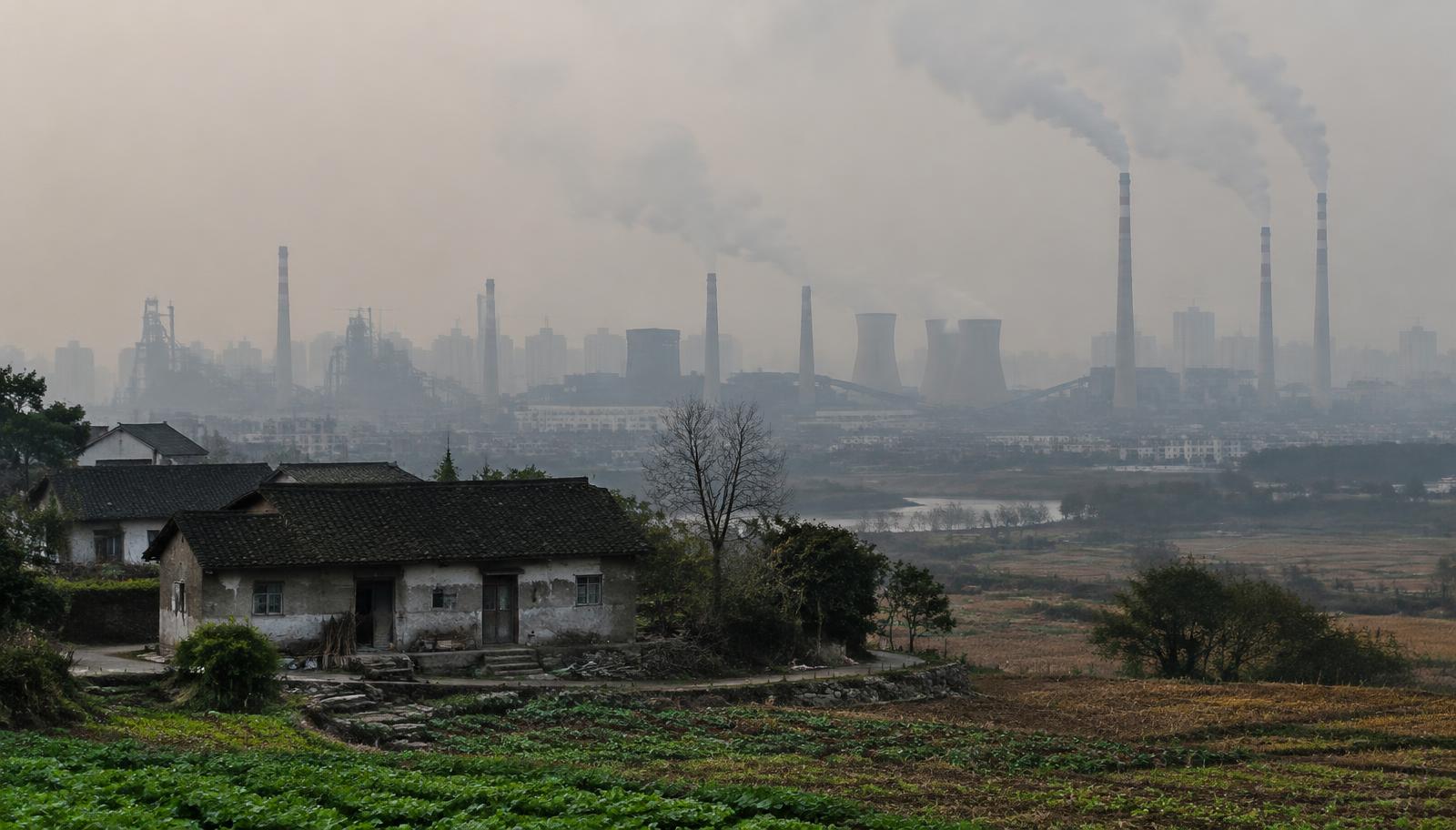
Rapid industrialisation has also created serious environmental pressures.
China has experienced air pollution, water pollution, industrial contamination and substantial carbon emissions.
The country has also become a major investor and producer in renewable energy and electric vehicles.
Both realities matter.
It is possible to recognise China's progress in clean-energy technology while examining the environmental costs associated with its industrial development.
Extreme poverty is not the same as all poverty
China's 2020 declaration of eliminating extreme poverty under its national rural poverty standard did not mean that every person had become financially secure.
It did not mean that relative poverty had disappeared.
It did not mean that inequality had been resolved.
It did not mean that housing, employment, healthcare and retirement security were no longer concerns.
The World Bank's higher international poverty benchmarks illustrate why a country can make extraordinary progress against extreme poverty while continuing to face significant deprivation under broader measures.
What should we conclude?
China's experience demonstrates that economic development can transform living conditions on an enormous scale.
It also demonstrates that growth, state capacity and poverty reduction do not automatically produce every condition required for human flourishing.
A country can improve access to food, housing and employment while still facing challenges involving political freedom, inequality, environmental sustainability and personal wellbeing.
We should be able to recognise a major achievement without treating the system responsible for it as beyond criticism.
Equally, recognising political or social problems should not require us to dismiss the material improvements experienced by hundreds of millions of people.
This is what objective evaluation should look like.
Trusted sources:
- World Bank — Four Decades of Poverty Reduction in China
- Human Rights Watch — World Report: China
- World Bank — China Overview
Why Do Other Countries Continue to Experience Extreme Poverty?
China's experience raises another important question.
If a country can reduce poverty on such an extraordinary scale, why have other countries not achieved similar transformations?
There is no single answer.
Countries have different histories, geographical conditions, political institutions, economic structures, population patterns and relationships with international markets.
Some face prolonged conflict. Others have weak infrastructure, high debt, limited industrial capacity or vulnerability to climate shocks.
Some have enormous natural resources but struggle to translate that wealth into better living conditions for ordinary citizens.
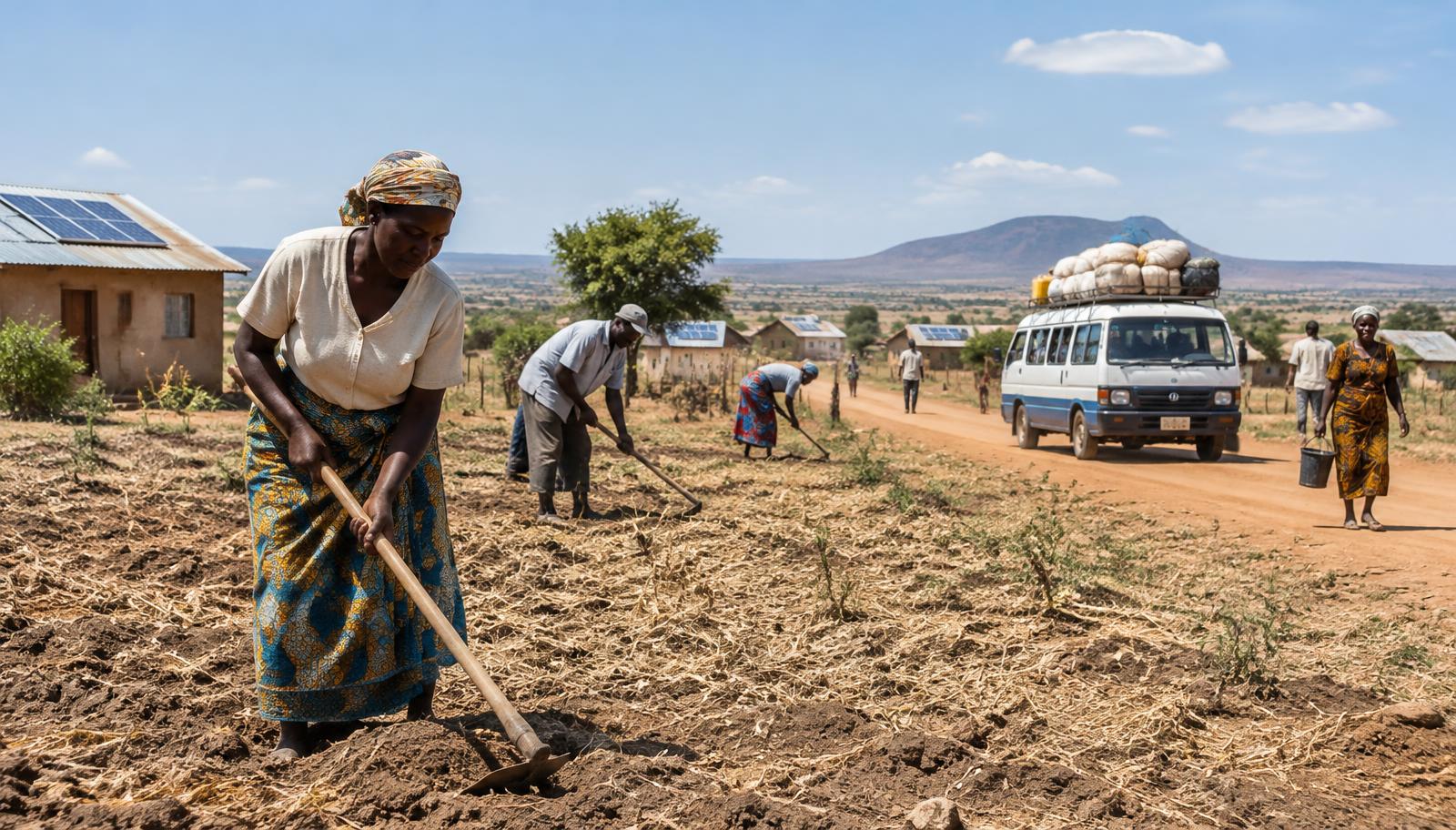
It would be misleading to suggest that every country facing poverty has the same problem or that all have made no progress.
Several countries have improved education, healthcare, agricultural production and living standards, even while continuing to face serious deprivation.
The purpose of examining these examples is not to rank countries morally.
It is to understand the different barriers to development.
Democratic Republic of Congo
The Democratic Republic of Congo possesses enormous natural resources, including copper, cobalt, gold and other minerals.
It also has substantial agricultural potential and a large population.
Yet parts of the country experience severe poverty, food insecurity and humanitarian crises.
The reasons are complex.
They include armed conflict, displacement, infrastructure limitations, governance challenges and the difficulty of turning natural resource wealth into broad-based development.
The eastern regions have experienced prolonged insecurity involving armed groups and regional dynamics.
Conflict disrupts farming, trade, education and access to healthcare.
The presence of valuable minerals does not automatically create prosperity for the population.
This illustrates an important distinction:
Natural resources are not the same as productive capacity, and national wealth is not the same as household wellbeing.
Mozambique
Mozambique has significant agricultural potential, natural resources and access to the Indian Ocean.
However, many communities continue to experience poverty and vulnerability.
Challenges include rural infrastructure, access to services, climate-related shocks and insecurity in parts of the country, particularly in Cabo Delgado.
Cyclones, flooding and drought can disrupt agriculture and damage infrastructure.
The existence of natural gas and other resources has not automatically translated into broad-based improvements in living standards.
Development requires more than resource discoveries. It requires the institutions, infrastructure, investment and public services that allow people to benefit from them.
Nigeria
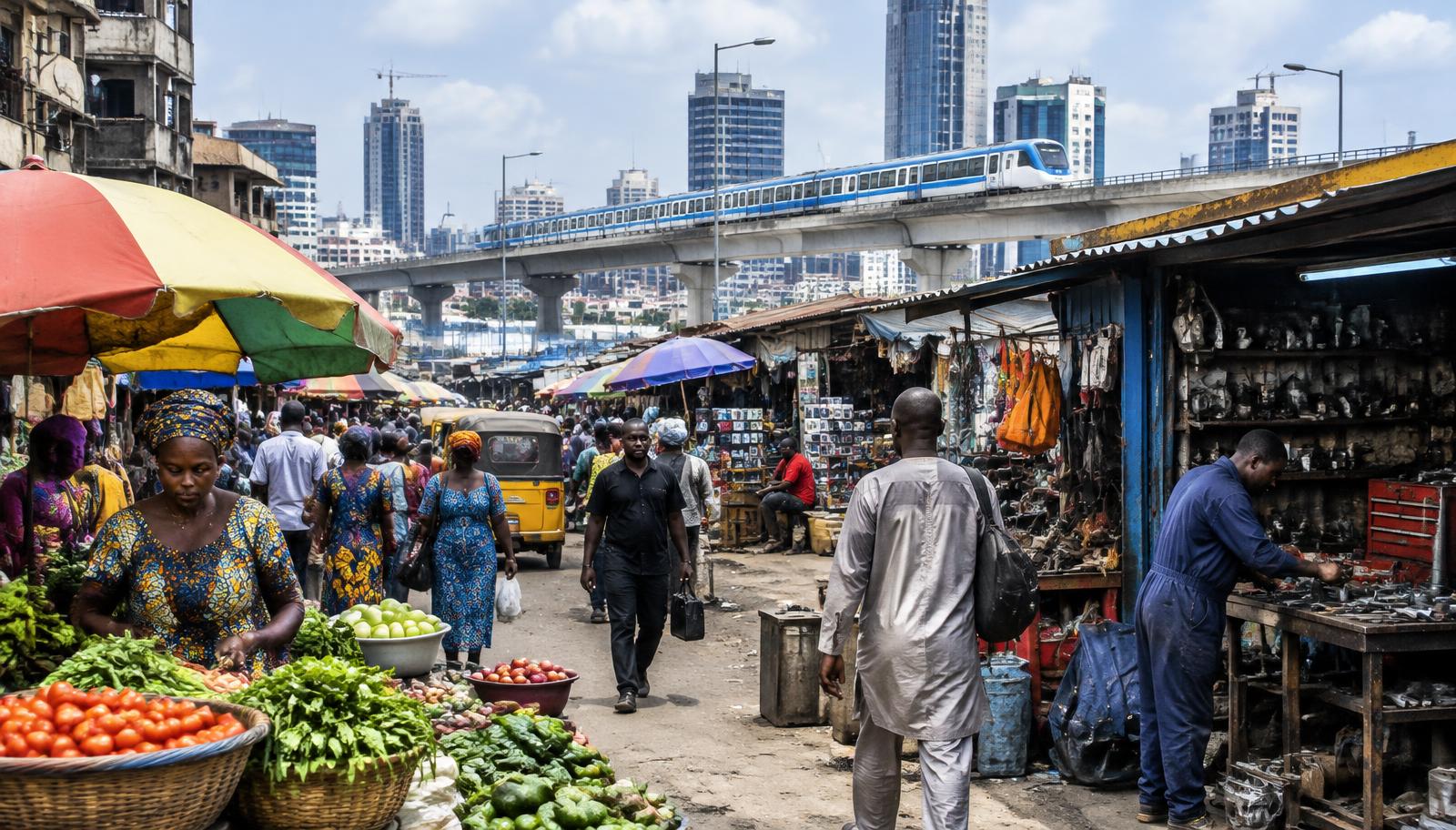
Nigeria is one of Africa's largest economies and has considerable oil, gas, agricultural and human resources.
Yet millions of people experience poverty and food insecurity.
The country faces several interconnected challenges:
- Dependence on oil revenue and exposure to international price fluctuations.
- Infrastructure deficits, including unreliable electricity.
- Insecurity and conflict in different regions.
- Uneven access to education and healthcare.
- Governance and corruption concerns.
- Agricultural productivity and distribution challenges.
- Inflation and currency pressures.
- Regional differences in economic opportunity.
Nigeria also has significant strengths, including entrepreneurship, a large domestic market, a young population, creative industries and agricultural potential.
It should not be portrayed as a country without progress or opportunity.
The more useful question is why its considerable economic potential has not translated into more consistent improvements in living standards for everyone.
South Sudan and Somalia
South Sudan and Somalia illustrate how conflict and instability can undermine development.
In South Sudan, independence in 2011 was followed by serious political conflict, displacement and economic disruption.
Dependence on oil revenue, weak infrastructure and insecurity have made development difficult.
Somalia has experienced prolonged instability, drought and displacement.
These conditions disrupt agriculture, livelihoods, trade and public services.
Even when humanitarian assistance is available, communities can remain vulnerable because the underlying systems required for stable livelihoods are weak or disrupted.
Niger and Ethiopia
Niger faces challenges associated with landlocked geography, low agricultural productivity, climate vulnerability, rapid population growth and political instability.
Ethiopia has made important development investments and experienced periods of economic growth, but conflict, displacement, drought and regional differences continue to create serious challenges.
Neither country should be reduced to a single explanation.
The conditions affecting households in different regions can vary substantially.
Why development paths differ
There are several factors worth examining when comparing countries.
1. Political stability
Long-term development becomes difficult when conflict, violent changes of government or institutional breakdown interrupt economic activity.
Businesses need some degree of predictability to invest and expand.
Farmers need security to cultivate land and take produce to market.
Schools and hospitals need continuity to function effectively.
2. Governance and accountability
Public resources need to be managed in ways that benefit the wider population.
Corruption, weak institutions and poor public administration can reduce the impact of government spending and investment.
But governance problems should be examined through evidence rather than used as a blanket explanation for poverty.
3. Infrastructure
Electricity, roads, water, ports, railways and telecommunications are fundamental to economic participation.
Without reliable infrastructure, businesses face higher costs and farmers can struggle to reach markets.
4. Education and health
A healthy, educated population has greater opportunities to participate in productive economic activity.
Education alone cannot solve every development problem, but limited access to education restricts people's options.
5. Economic diversification
Countries that depend heavily on one or two commodities can become vulnerable to international price fluctuations.
Manufacturing, agriculture, services and other productive sectors can help create a more diverse economic base.
6. Population growth
Economic growth must translate into improvements per person.
A country's total GDP may increase while average living standards remain stagnant if population growth is faster than the growth in economic output.
7. International economic conditions
Debt, trade arrangements, historical colonial relationships, commodity prices and external economic shocks can affect development.
Domestic policy matters, but countries do not develop in isolation from the wider global economy.
8. Conflict and climate
War, drought, floods and changing weather patterns can destroy livelihoods and undermine food production.
These factors can interact, making recovery more difficult.
A warning against simplistic comparisons
We should not present corruption, poor leadership or culture as universal explanations for African poverty.
That would be intellectually weak.
We need to examine domestic governance, historical circumstances, international structures, geography, conflict and individual country conditions together.
The same standards should apply to every country, including China, Western nations and wealthy resource-exporting states.
Trusted sources:
- World Bank — Poverty Data
- World Bank — International Development Association
- UNDP — Human Development Reports
- World Food Programme — Countries and Regions
China and Nigeria: A Particularly Important Comparison
China and Nigeria make an interesting comparison.
Both have very large populations.
Both have significant natural and human resources.
Both have experienced major political and economic changes.
Yet their development trajectories have been very different.
China developed into a major manufacturing and export economy, investing heavily in infrastructure and industrial capacity.
Nigeria has substantial oil and gas resources, agricultural potential and a large entrepreneurial population, but has faced persistent challenges involving electricity, infrastructure, insecurity, economic diversification and the translation of resource wealth into broad improvements in living standards.
It would be too simplistic to say that China succeeded because it planned well while Nigeria failed because it did not.
The two countries have different histories, political structures, geographical conditions and relationships with the global economy.
Nevertheless, the comparison raises valuable questions.
What can Nigeria learn from China's experience?
Agricultural productivity
China's experience highlights the importance of agricultural incentives, productivity, rural infrastructure and access to markets.
Nigeria has substantial agricultural potential, but farmers face challenges involving transport, storage, finance, security and access to modern inputs.
Industrial development
Manufacturing can create employment beyond subsistence agriculture.
Nigeria's ability to expand productive industries depends partly on reliable electricity, transport, skills, finance and stable economic policy.
Infrastructure
China's infrastructure investment connected producers, workers and markets.
Nigeria's electricity and transport challenges raise important questions about how infrastructure investment can support economic participation.
Economic diversification
Dependence on oil revenue exposes Nigeria to changes in international energy prices.
A broader productive economy could help create more stable employment and income opportunities.
Education and skills
Development requires people who can participate in the industries and services a country wants to build.
Investment in education, technical skills and vocational training is therefore important.
Institutional accountability
Long-term development requires effective public institutions, transparency and the ability to evaluate and correct policy mistakes.
Should Nigeria copy China's political system?
That is not the right question to begin with.
The more useful question is which development policies are effective, under what conditions, and how they can be implemented within Nigeria's own constitutional, political and social context.
A country can learn from another country's agricultural policy without adopting its entire political system.
It can study infrastructure investment without copying every aspect of the government's approach.
It can examine industrial strategy while also considering democratic accountability, human rights and environmental sustainability.
The objective should be to identify transferable lessons, not to assume that one country's entire model can be transplanted into another.
Global Hunger in 2026: Have We Made Progress?
This is where the discussion becomes particularly important.
Over the last century, humanity has achieved extraordinary scientific and technological progress.
We can:
- Send spacecraft beyond our solar system.
- Develop increasingly sophisticated artificial intelligence.
- Produce food on a vast industrial scale.
- Build extraordinary cities and infrastructure.
- Develop medicines that previous generations could barely imagine.
- Communicate across the world almost instantly.
Yet people are still dying from hunger and malnutrition.
This contradiction deserves attention.
How many people are experiencing hunger?
The 2026 edition of The State of Food Security and Nutrition in the World, produced by five United Nations agencies, provides the latest global estimates available in November 2026.
The report measures conditions in 2025.
645 million people
Estimated to have experienced hunger in 2025.
2.1 billion people
Estimated to have experienced moderate or severe food insecurity in 2025.
309 million people
Estimated to have experienced hunger in Africa in 2025.
2.7 billion people
Estimated to have been unable to afford a healthy diet in 2025.
These figures describe different measurements and should not be added together.
The report also provides some positive news.
Global hunger declined for the third consecutive year in 2025.
The estimated number of people experiencing hunger was approximately 43 million lower than at the 2022 peak.
Food insecurity also declined.
However, the improvements remain uneven, and the world is not on course to meet the 2030 Zero Hunger target without much faster progress.
Africa remains particularly affected.
In 2025, an estimated 309 million people in Africa experienced hunger, representing around 20% of the continent's population.
The number of people experiencing hunger is not the same as the number experiencing food insecurity.
Understanding the difference matters.
Hunger versus food insecurity
Hunger is commonly used in international statistics to refer to chronic undernourishment: insufficient dietary energy over time to maintain a normal, active and healthy life.
Food insecurity is broader.
It describes a situation in which people lack reliable access to sufficient, safe and nutritious food.
Someone may not be chronically undernourished but may still experience food insecurity.
For example, a household might regularly reduce the quality of its diet, skip meals or worry about whether it can afford food next week.
This distinction helps explain why the number of people experiencing food insecurity is much higher than the number experiencing hunger.
Is the problem actually a lack of food?
This is an important question.
Hunger is not simply a question of whether the world produces enough food.
There are several interconnected problems:
- Poverty and insufficient purchasing power.
- War and political instability.
- Food distribution and transport.
- Agricultural productivity.
- Food price inflation.
- Climate change and drought.
- Food loss and waste.
- International trade restrictions and market disruption.
- Lack of storage and refrigeration.
- Displacement and the destruction of livelihoods.
A country can produce food and still have hungry people.
A country can have enormous agricultural potential but lack the infrastructure to get food from farms to consumers.
A country can have sufficient national food supplies while conflict or inequality prevents particular communities from accessing them.
This is a crucial distinction:
The existence of resources does not guarantee that people can access those resources.
Food availability, affordability, physical access and nutritional quality are all important.
The wider problem: Affordability
The 2026 UN food security report also highlights the high cost of healthy diets.
It estimates that approximately 2.7 billion people could not afford a healthy diet in 2025.
This is important because access to calories alone does not guarantee good nutrition.
People need access to varied and nutritious food, including appropriate sources of protein, vitamins and minerals.
A household may have enough money to avoid starvation but still be unable to afford a healthy diet.
This brings us back to the distinction between survival and flourishing.
The objective should not simply be to prevent people from dying of hunger.
It should be to create conditions in which people can live healthy, productive and meaningful lives.
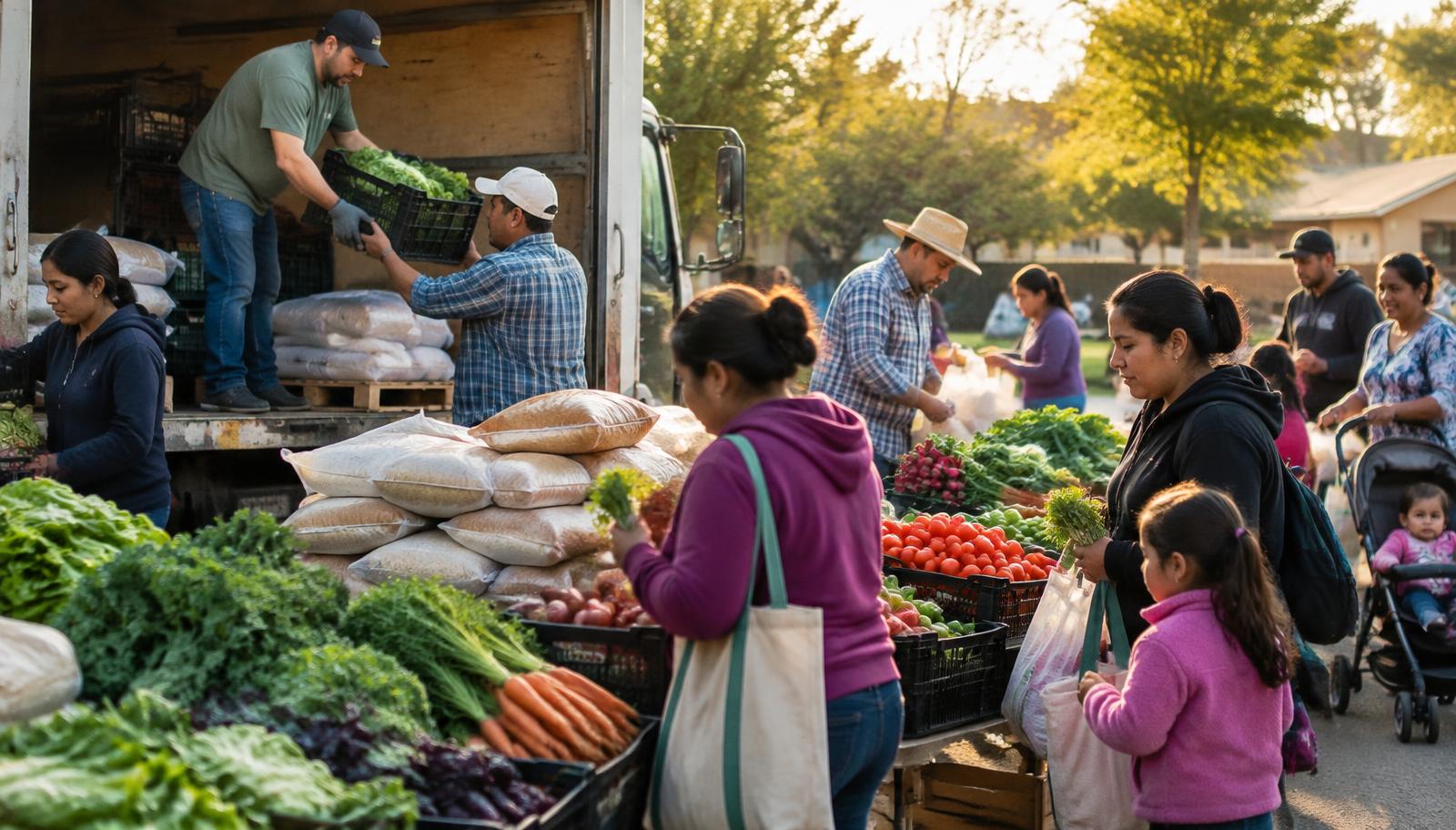
Global hunger in 2025 (UN estimates, published 2026)
These are different measurements of overlapping groups — they cannot be added together.
Trusted sources:
- FAO — The State of Food Security and Nutrition in the World 2026
- FAO — Global Hunger Statistics and Trends
- World Food Programme — State of Food Security and Nutrition in the World
- UNICEF — SOFI 2026 Data and Key Findings
Bob Geldof, Band Aid and Live Aid: Have We Fed the World?
There is a song that many people in Britain will recognise immediately.
Do They Know It's Christmas?
Released in November 1984, the song was organised by Bob Geldof and Midge Ure in response to the devastating Ethiopian famine.
It brought together some of the biggest musical artists of the time under the name Band Aid.
The following year, Live Aid took place on 13 July 1985, with major concerts at Wembley Stadium in London and JFK Stadium in Philadelphia.
The performances were broadcast internationally and attracted an enormous global audience.
The objective was to raise money and public awareness to help people experiencing famine.
For many people, these events became defining moments in the history of celebrity-led humanitarian fundraising.
But more than four decades later, we have to ask a difficult question:
Have we actually made meaningful progress towards the objective of feeding the world?
What did Band Aid and Live Aid achieve?
It is important not to dismiss the campaign simply because global hunger has not been eliminated.
The events:
- Raised substantial funds for humanitarian relief.
- Brought international attention to the Ethiopian famine.
- Demonstrated the power of collective action.
- Encouraged public engagement with humanitarian issues.
- Helped establish large-scale celebrity-led fundraising as a major force.
- Contributed to emergency assistance for people facing severe deprivation.
Emergency humanitarian aid can save lives.
When people are starving, the immediate priority is to provide food, water, medical assistance and protection.
It would be wrong to suggest that this work is pointless simply because it cannot solve every structural cause of poverty.
What didn't it achieve?
Band Aid and Live Aid did not eradicate global hunger.
They did not eliminate the structural causes of poverty.
They did not prevent future famines.
They did not resolve the political, economic and agricultural problems that leave communities vulnerable to food insecurity.
That was never something a fundraising campaign could achieve on its own.
The wider lesson is that emergency relief and long-term development are different activities.
Both are necessary, but they solve different problems.
The criticism of the campaign's portrayal of Africa
There is another aspect of Band Aid that deserves attention.
The campaign's portrayal of Africa has been criticised for presenting an entire continent as helpless, deprived and dependent on Western generosity.
Africa is a continent containing many different countries, histories, cultures, economies and political systems.
Ethiopia has a long and distinctive history, including an ancient Christian tradition.
The song's title and lyrics have therefore been criticised by some Ethiopians as inaccurate or insensitive.
A 2024 BBC retrospective revisited the campaign and included criticism of how Ethiopia and Africa were represented, while also acknowledging the humanitarian impact of the response.
This creates an important discussion.
How can humanitarian campaigns raise money and save lives while avoiding narratives that reduce entire populations to helpless victims?
The answer requires greater attention to local voices, national agency, historical context and the people working within affected communities.
Emergency relief versus long-term development
There are three different levels of response worth distinguishing.
1. Feeding somebody today
Emergency food assistance is essential when people are starving.
2. Helping people produce food tomorrow
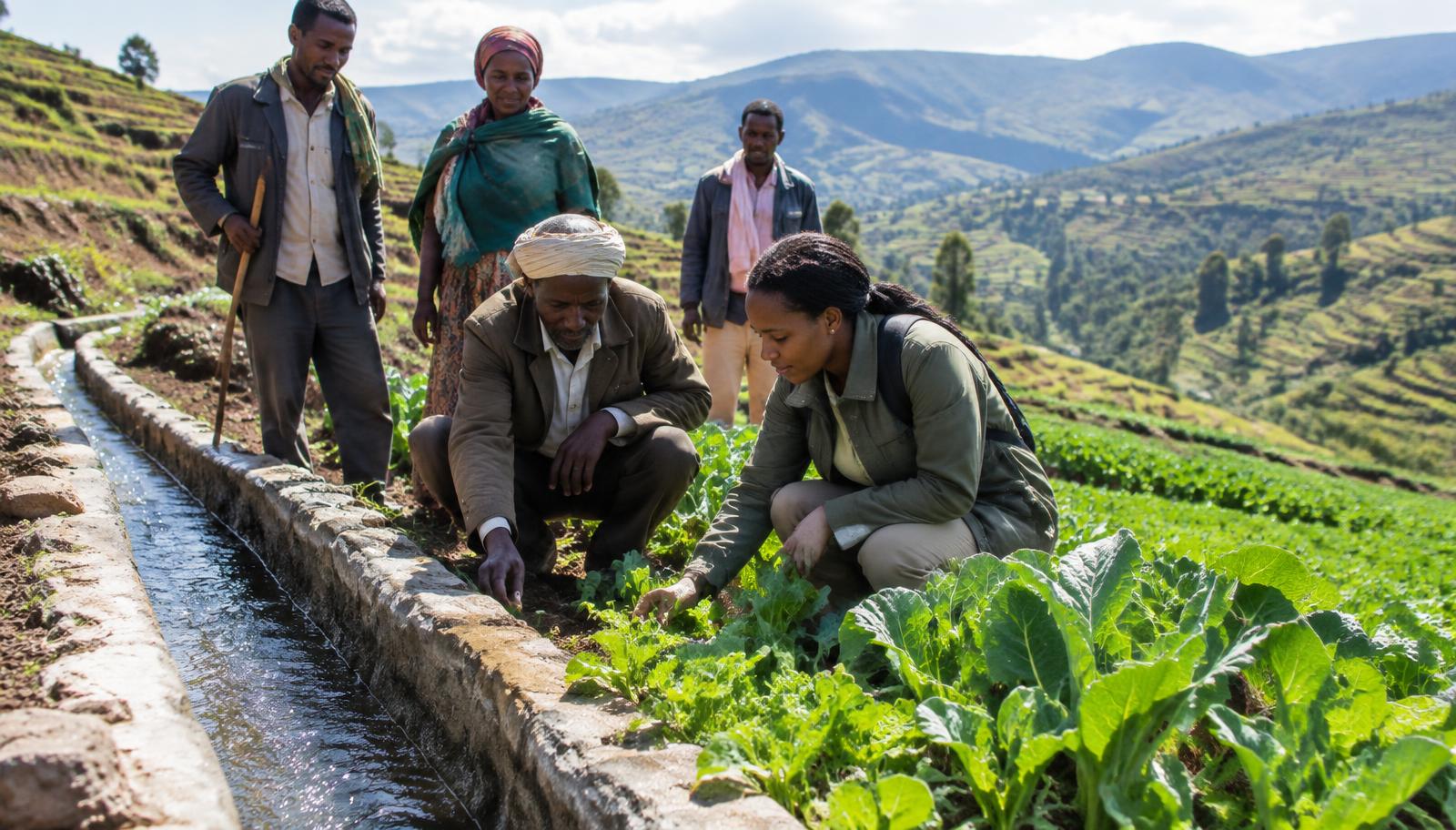
Agricultural support, seeds, tools, training, irrigation, storage and transport can help communities become more resilient.
3. Building an economy in which people can afford food for the future
This requires employment, productive industries, infrastructure, functioning institutions, education and reliable access to markets.
All three matter.
The first can save lives immediately.
The second can improve local food production and resilience.
The third addresses some of the wider economic conditions that determine whether people can reliably obtain food over the long term.
This brings us directly back to China.
China's poverty reduction was not primarily a fundraising exercise.
It involved changing the economic conditions in which hundreds of millions of people lived.
That does not make humanitarian aid unimportant. It shows that charity and development should not be confused.
Emergency assistance can help people survive a crisis. Long-term development aims to reduce the conditions that make people vulnerable to future crises.
Have we made progress since 1985?
The answer is mixed.
There has been enormous progress in global living standards over the longer term, including reductions in extreme poverty and improvements in life expectancy, education and access to services.
But hunger has not been eliminated.
The latest 2026 global food security figures show that approximately 645 million people still experienced hunger in 2025.
This is a serious reminder that progress is not guaranteed and that improvements can be reversed by conflict, economic shocks, climate events and political instability.
The question should not be whether humanitarian campaigns alone have failed to feed the world.
It should be whether the international community has done enough to build the conditions in which people can feed themselves and their families.
Trusted sources:
- BBC — Band Aid at 40: The History and Criticism of the Campaign
- Band Aid — Official Website
- World Food Programme — Ending Hunger
- FAO — The State of Food Security and Nutrition in the World 2026
Maslow's Hierarchy: Why Basic Needs Matter to Human Potential
This is where the discussion returns to the central philosophy of Get Out Rat Race.
Psychologist Abraham Maslow is widely associated with the hierarchy of needs.
His work provides a useful way to think about the relationship between basic human needs and personal development.
The traditional five-level representation is:
- Physiological needs.
- Safety needs.
- Love and belonging.
- Esteem.
- Self-actualisation.
The model is often shown as a pyramid, although Maslow's original work was more nuanced than the rigid pyramid representation commonly used in modern diagrams.
Level 1: Physiological needs
These include the fundamental requirements of human survival:
- Food.
- Water.
- Sleep.
- Shelter.
- Basic physical needs.
Without these, everyday life can become dominated by the immediate struggle to survive.
Level 2: Safety
Once basic survival is more secure, other needs become important:
- Personal safety.
- Health.
- Financial stability.
- Protection.
- Predictability.
- Security of living conditions.
People need some degree of stability to plan for the future.
Level 3: Love and belonging
Human beings are social.
Relationships, friendships, family, community and a sense of belonging are important dimensions of wellbeing.
Material wealth alone cannot replace meaningful human relationships.
Level 4: Esteem
Esteem includes confidence, competence, achievement, respect and a sense of value.
It can involve developing skills, contributing to society and gaining recognition for meaningful work.
Level 5: Self-actualisation
Self-actualisation is associated with the development and expression of human potential.
It can involve:
- Creativity.
- Personal growth.
- Learning.
- Purpose.
- Meaningful work.
- Developing talents.
- Understanding oneself.
- Contributing to something beyond oneself.
This is where the connection to Get Out Rat Race becomes particularly important.
Two people, two very different starting points
Imagine two people.
Person A
Wakes up every morning wondering whether they will have enough food for their family.
They have limited access to healthcare, education and reliable employment.
Their immediate circumstances make long-term planning difficult.
Person B
Has secure accommodation, sufficient food, healthcare, education and some disposable income.
They can spend time developing interests, learning new skills, building relationships and pursuing meaningful ambitions.
Both have human potential.
But their circumstances provide very different opportunities to realise it.
That is the connection.
Economic development is not simply about increasing income.
It can expand the conditions in which people are able to develop their capabilities and make meaningful choices.
An important qualification: Maslow is not a rigid law
We should not suggest that self-actualisation is impossible for somebody experiencing poverty.
People pursue meaning, creativity, relationships, spirituality and purpose even in extremely difficult circumstances.
Nor does every person move through the hierarchy in exactly the same order.
Maslow's framework is a useful psychological model, not a scientifically established sequence that every person must complete.
Nevertheless, secure access to basic needs generally provides a stronger foundation for personal development and wider opportunity.
The bigger philosophical question
If the objective of economic development is simply to increase GDP, what happens when a country becomes wealthy but many people remain dissatisfied, isolated, stressed or unable to pursue meaningful lives?
Conversely, if a country successfully reduces extreme poverty, is that enough to say it has achieved human flourishing?
Neither is sufficient.
Economic development should create the conditions for human flourishing, not become the definition of human flourishing itself.
Maslow's hierarchy of needs
A useful psychological framework, not a rigid universal sequence.
Can Other Countries Learn From China's Development?
This is probably the most important practical question in the article.
I would resist the idea that other countries should simply copy China.
China has particular characteristics:
- A very large population.
- A specific historical and political structure.
- Extensive central government authority.
- A large domestic market.
- Particular geographical and industrial advantages.
- A distinctive relationship with international trade.
- A long period of state-directed development.
Other countries have different starting points.
However, they can learn from particular policies and principles.
Lessons from China's experience
Agricultural reform
Give farmers incentives, knowledge, resources and access to markets.
Manufacturing expansion
Create productive employment beyond subsistence agriculture.
Infrastructure investment
Prioritise electricity, roads, water, communications and transport.
Education
Invest in human capital, technical skills and practical education.
International trade
Connect domestic businesses to wider markets while developing productive capacity.
Targeted poverty programmes
Identify disadvantaged communities and address their specific needs.
Long-term coordination
Maintain development priorities beyond short political cycles, while preserving the ability to review and correct policies.
But there are important questions
Can these policies work within democratic political systems?
How can governments reduce corruption and improve accountability?
How can countries industrialise without destroying their environment?
How can economic growth be distributed more fairly?
Can countries develop without accumulating unsustainable debt?
How can international trade benefit poorer countries rather than simply extracting their resources?
How can governments create conditions for enterprise while ensuring that the benefits of development reach ordinary households?
These questions matter because development is not simply about copying a successful country's policies.
It is about understanding why those policies worked in a particular context and whether the underlying principles can be adapted elsewhere.
Resources do not automatically create prosperity
There is no reason why countries with agricultural land, minerals, natural resources and young populations should automatically remain economically disadvantaged.
But possessing resources and developing the institutions, infrastructure and productive capacity to benefit from them are two very different things.
A country may possess valuable minerals but lack the infrastructure to process them domestically.
It may export agricultural products but have limited food-processing capacity.
It may have a young population but insufficient opportunities for education and employment.
The challenge is to transform potential into productive opportunity.
What should governments prioritise?
Rather than becoming attached to one economic ideology, we can assess policies through their outcomes.
Do they provide the population with basic necessities?
Do they improve living standards?
Do they create productive employment?
Do they expand education and healthcare?
Do they distribute opportunities fairly?
Do they protect individual freedoms?
Do they create a sustainable environment for future generations?
Do they allow people to develop their potential?
No political or economic system should be exempt from these questions.
Six foundations of poverty reduction
Is Economic Growth the Same as Human Progress?
We frequently measure national success through GDP, GDP per capita and economic growth.
These measurements matter.
GDP measures the value of goods and services produced within an economy over a particular period.
GDP per capita divides economic output by the population, providing a broad measure of average output per person.
Economic growth can help governments raise revenue, businesses expand and households improve their living standards.
But what do these measurements actually tell us about the quality of human life?
Consider the following distinctions.
| Economic measurement | Wider human development question |
|---|---|
| GDP growth | Are people's lives improving? |
| Average income | Are households financially secure? |
| Employment rate | Is work safe, meaningful and adequately paid? |
| Industrial output | Is development environmentally sustainable? |
| Educational enrolment | Are people receiving a good education? |
| Healthcare expenditure | Are people actually healthier? |
| National wealth | Is opportunity widely accessible? |
This is not an argument against GDP.
Economic output matters enormously, particularly when people lack basic necessities.
But GDP alone cannot tell us whether people are living meaningful lives, whether opportunity is fairly distributed or whether development is sustainable.
There are other frameworks that help us examine progress more broadly.
The Human Development Index
The United Nations Development Programme's Human Development Index (HDI) considers three broad dimensions:
- A long and healthy life.
- Access to knowledge.
- A decent standard of living.
It uses indicators relating to life expectancy, education and income.
The HDI is not a complete measurement of human flourishing.
It does, however, provide a broader perspective than economic output alone.
A country can have substantial economic wealth while facing weaknesses in health, education or the distribution of opportunity.
The Sustainable Development Goals
The United Nations adopted 17 Sustainable Development Goals as part of the 2030 Agenda.
Several are particularly relevant to this discussion:
- Goal 1: No Poverty.
- Goal 2: Zero Hunger.
- Goal 3: Good Health and Well-being.
- Goal 4: Quality Education.
- Goal 6: Clean Water and Sanitation.
- Goal 7: Affordable and Clean Energy.
- Goal 8: Decent Work and Economic Growth.
- Goal 10: Reduced Inequalities.
- Goal 16: Peace, Justice and Strong Institutions.
These goals recognise that development involves more than increasing economic output.
They also demonstrate how interconnected different aspects of human wellbeing can be.
Amartya Sen and the capability approach
Another particularly useful perspective comes from economist and philosopher Amartya Sen.
Sen's capability approach examines development in terms of people's real freedoms and opportunities to live lives they have reason to value.
This is a powerful distinction.
Two people may have the same income but very different opportunities.
One may have access to education, healthcare, transport and a stable environment.
Another may face disability-related barriers, discrimination, insecurity or a lack of public services.
Their financial resources alone do not tell us everything about what they are actually able to do.
The capability approach shifts attention from resources alone to the real opportunities people have.
For example:
- Can someone access education?
- Can they obtain healthcare?
- Can they participate in society?
- Can they choose the kind of work they want to pursue?
- Can they participate in political and community life?
- Can they develop their interests and capabilities?
This connects directly to self-actualisation.
It is not just about how much money somebody has.
It is about what they are actually able to do with their life.
Economic growth vs human development
Trusted sources:
- UNDP — Human Development Reports
- United Nations — Sustainable Development Goals
- Amartya Sen — Development as Freedom, Oxford University Press.
- UNDP — Human Development Index
From Survival to Human Flourishing: A Framework for Development
We can bring these ideas together into a framework for evaluating economic and social development.
This is a conceptual framework developed for this article. It is not a scientifically established sequence that every individual or country must follow.
It helps us consider what development should ultimately make possible.
Stage 1: Survival
People need access to:
- Food.
- Clean water.
- Basic shelter.
- Essential clothing.
- Basic healthcare.
Without these necessities, people can face immediate threats to their lives and wellbeing.
Stage 2: Security
People need:
- Personal safety.
- Stable living conditions.
- Reliable livelihoods.
- Access to education.
- Protection from severe economic shocks.
- Basic public services.
Security allows individuals and households to plan beyond the immediate moment.
Stage 3: Opportunity
People need access to:
- Employment.
- Enterprise.
- Skills development.
- Education.
- Infrastructure.
- Markets and economic participation.
This is where people begin to have more meaningful choices about how they support themselves and their families.
Stage 4: Freedom
People need the ability to make meaningful decisions about their lives.
This can involve:
- Choosing their work.
- Expressing ideas.
- Participating in society.
- Developing relationships.
- Making personal decisions.
- Having a voice in the institutions that affect them.
Freedom is not simply the absence of material deprivation.
It also concerns the real opportunities people have to shape their lives.
Stage 5: Human flourishing
Human flourishing involves more than survival, security or income.
It includes opportunities to develop:
- Knowledge.
- Creativity.
- Purpose.
- Relationships.
- Confidence.
- Capabilities.
- Personal potential.
- Meaningful contributions to society.
This is where the connection to self-actualisation becomes particularly clear.
The objective is not simply to survive.
It is to create the conditions in which human beings can flourish.
The five stages as an evaluation framework
From survival to human flourishing
The stages overlap — people can experience several at once.
How can we use this framework to evaluate economic systems?
Instead of asking only whether a system is capitalist, socialist, communist or something else, we can ask:
- Does it provide the population with basic necessities?
- Does it improve living standards?
- Does it create opportunities?
- Does it distribute those opportunities fairly?
- Does it protect individual freedoms?
- Does it provide a sustainable environment for future generations?
- Does it allow people to develop their potential?
This does not mean that economic ideologies are irrelevant.
Different systems have different assumptions about ownership, markets, government, incentives and the distribution of resources.
But labels alone do not tell us whether a particular policy is working.
We should examine outcomes, evidence and trade-offs.
No system should be exempt from scrutiny.
The Bigger Question: What Should Economic Systems Actually Be For?
This brings us to a much bigger philosophical question.
What is the purpose of an economy?
Is it to maximise production?
To generate wealth?
To increase national power?
To provide employment?
To raise living standards?
Or should it ultimately create the conditions in which people can live healthy, secure, meaningful and fulfilling lives?
These objectives are not necessarily in conflict.
Economic growth can help finance healthcare, education, infrastructure and social protection.
Businesses can create employment, develop products and provide services that improve people's lives.
International trade can expand opportunities and make goods more accessible.
Government investment can help build the infrastructure that allows communities and businesses to participate in economic activity.
But economic growth is a means, not necessarily an end in itself.
A society could become wealthier while still experiencing:
- Loneliness.
- Poor mental wellbeing.
- Environmental damage.
- Inequality.
- Political exclusion.
- Insecure employment.
- A lack of meaningful opportunity.
Similarly, a society can achieve progress in reducing poverty while still having considerable work to do in areas such as freedom, equality and quality of life.
This is why evaluating economic systems solely through GDP or ideological labels is insufficient.
The relationship between society and the individual
Get Out Rat Race is built around the idea that people should have the opportunity to become who they were born to be.
But this raises a question that goes beyond individual motivation.
What happens when people are not given the basic conditions required to pursue their potential?
It is easy to tell someone to develop their talents, build a business, learn new skills or find their purpose.
But those suggestions mean something very different to someone who is struggling to feed their family or access basic healthcare.
Personal development does not take place in a vacuum.
It is influenced by economic circumstances, education, family life, health, culture, institutions and opportunity.
That does not mean individuals have no responsibility for their choices.
It means that individual potential and social conditions are connected.
The responsibility of development
A successful society should not simply ask how much wealth it can generate.
It should also ask:
- Are people healthier?
- Are children receiving a good education?
- Can families meet basic needs?
- Are people able to find productive and meaningful work?
- Do people have genuine opportunities to improve their circumstances?
- Are individual freedoms protected?
- Are resources used sustainably?
- Can people participate in decisions that affect their lives?
- Are future generations likely to inherit better conditions?
These questions are relevant to every country, regardless of its political or economic system.
They are also relevant to individuals.
Because the same principle applies at both levels:
Having more resources does not automatically mean living a better life.
Resources create possibilities. What matters is what people are able to do with them.
Conclusion: What Are We Really Trying to Achieve?
China's transformation demonstrates that poverty is not an inevitable condition.
Through decades of economic change, agricultural reform, industrialisation, infrastructure investment, education, international trade and targeted poverty programmes, China achieved one of the largest reductions in extreme poverty in modern history.
But the story also includes serious failures, inequality, environmental challenges and restrictions on individual freedoms.
That is why it should be examined rather than simply celebrated or dismissed.
Other countries facing severe poverty have different histories and circumstances.
There is no single solution that can be copied without adaptation.
But China's experience provides valuable lessons about the importance of agricultural productivity, infrastructure, productive employment, education, trade and long-term development.
The global hunger figures also remind us that progress remains incomplete.
In 2025, an estimated 645 million people experienced hunger, while approximately 2.1 billion experienced moderate or severe food insecurity.
These are not simply economic statistics.
They represent people whose opportunities, health, security and futures are affected by the conditions in which they live.
Band Aid and Live Aid showed the power of collective humanitarian action.
China's development demonstrates the potential of long-term economic transformation.
Maslow's work helps us understand why basic needs matter to personal development.
Amartya Sen's capability approach reminds us that development should expand people's real freedoms and opportunities.
Together, these ideas point towards a broader understanding of progress.
The objective should not simply be to move people from poverty into employment, or from low income into higher income.
It should be to create societies in which people have the opportunity to live healthy, secure, meaningful and fulfilling lives.
That does not mean everyone will pursue the same ambitions.
Some people will want to build businesses. Others will want to raise families, develop their creativity, work in science, serve their communities, pursue knowledge or live a quieter life.
Human flourishing is not one prescribed lifestyle.
It is about having the conditions and freedom to pursue a life that has meaning and value.
Perhaps the greatest measure of human progress is not simply how wealthy our societies become.
It is how successfully we create the conditions in which every human being has the opportunity to flourish.
And that brings us back to the central philosophy of Get Out Rat Race:
Become Who You Were Born To Be.
The Rat Race Ends Within.
But before we can meaningfully discuss self-actualisation, we must recognise that not everyone has been given the same opportunity to begin that journey.
The question is not only how individuals can improve their own circumstances.
It is also how the economic, political and social systems around them can create greater opportunities for human development.
After all, what is the point of economic progress if it does not ultimately improve the lives of the people it is supposed to serve?
Frequently Asked Questions
How did China lift nearly 800 million people out of poverty?
China's poverty reduction resulted from several decades of economic transformation. Important factors included agricultural reform, manufacturing expansion, infrastructure investment, international trade, education and targeted poverty alleviation. The World Bank estimates that close to 800 million people were lifted out of extreme poverty over approximately 40 years using historical international poverty measures.
When did China start reducing poverty?
China's development began before the economic reforms of 1978. However, the reform and opening-up period beginning in 1978 was particularly important in accelerating economic growth and poverty reduction through market reforms, agricultural incentives, industrialisation and international trade.
Did China completely eliminate poverty in 2020?
No. China declared that it had eliminated extreme poverty under its national rural poverty standard in 2020. This was a significant achievement, but it did not mean that all forms of poverty, inequality or financial insecurity had disappeared.
What is the difference between absolute poverty and relative poverty?
Absolute poverty concerns the inability to afford fundamental necessities such as food, water and basic shelter. Relative poverty concerns having substantially fewer resources than the typical person in a particular society, making it difficult to participate in ordinary social and economic life.
What is the World Bank's extreme poverty line?
Following its June 2025 update, the World Bank's international extreme poverty line is $3.00 per person per day in 2021 purchasing power parity international dollars. It is designed to support international comparisons and is not simply a direct currency conversion.
Why do some countries remain extremely poor?
There is no single explanation. Factors can include conflict, political instability, weak infrastructure, limited access to education, low agricultural productivity, economic dependence on commodities, debt, climate vulnerability and international economic conditions. Their relative importance differs between countries.
Why does Africa still experience high levels of poverty and hunger?
Africa is not a single economy or political system. Different countries face different circumstances, including conflict, climate pressures, infrastructure limitations, governance challenges and unequal access to resources. Many countries have also experienced significant development progress. The continent should not be treated as one uniform case.
How many people experienced hunger in 2025?
The 2026 State of Food Security and Nutrition in the World report estimated that approximately 645 million people experienced hunger in 2025. Around 2.1 billion people experienced moderate or severe food insecurity.
Did Band Aid and Live Aid solve world hunger?
No. Band Aid and Live Aid raised substantial funds and awareness and contributed to humanitarian relief during the Ethiopian famine. However, they did not eliminate the structural causes of global hunger. Emergency assistance and long-term economic development address different but complementary needs.
What does Maslow's hierarchy have to do with poverty?
Maslow's hierarchy provides a useful framework for understanding how basic physiological and safety needs relate to wider personal development. When people struggle to secure food, shelter and safety, they may have fewer opportunities to concentrate on longer-term ambitions. The hierarchy is not a rigid universal sequence, but it helps explain why material security can support human potential.
Is economic growth the same as human development?
No. Economic growth measures increases in economic output, while human development considers broader dimensions such as health, education and living standards. Economic growth can support human development, but GDP alone cannot measure freedom, meaningful opportunity or overall wellbeing.
What is human flourishing?
Human flourishing is a broad concept concerning the conditions that allow people to live healthy, meaningful and fulfilling lives. It can include security, relationships, education, creativity, freedom, purpose and the opportunity to develop one's capabilities.
Further Reading and Trusted Sources
The following sources provide the research foundation for this article. They include international development institutions, official statistics, academic research and primary organisational material.
China and poverty reduction
World Bank — Lifting 800 Million People Out of Poverty
An overview of China's poverty-reduction achievement and the lessons identified by the World Bank.
World Bank — Four Decades of Poverty Reduction in China
The detailed research report examining the drivers of China's poverty reduction, economic transformation and lessons for other countries.
World Bank — China Overview
Background on China's economic development and current challenges.
https://www.worldbank.org/en/country/china/overview
Poverty measurement and international development
World Bank — June 2025 Update to Global Poverty Lines
Explains the updated $3.00 international extreme poverty line and purchasing power parity.
https://www.worldbank.org/en/news/factsheet/2025/06/05/june-2025-update-to-global-poverty-lines
World Bank — Poverty and Equity Data
International poverty data and country-level comparisons.
UNDP — Human Development Reports
Research and data on human development, health, education and living standards.
UNDP — Global Multidimensional Poverty Index
Examines poverty through overlapping disadvantages beyond income alone.
https://hdr.undp.org/content/2025-global-multidimensional-poverty-index-mpi
Global hunger and food security
FAO — The State of Food Security and Nutrition in the World 2026
The latest joint UN report on hunger, food insecurity and the affordability of healthy diets.
FAO — Global Hunger Statistics
Global estimates and explanations of hunger and food insecurity.
World Food Programme — State of Food Security and Nutrition in the World
International reporting on food security and hunger.
https://www.wfp.org/publications/state-food-security-and-nutrition-world-sofi-report
United Nations — Sustainable Development Goals
The international development framework, including No Poverty and Zero Hunger.
Human development and psychology
Amartya Sen — Development as Freedom
A major work exploring development through people's real freedoms and capabilities.
Oxford University Press.
UNDP — Human Development Index
An explanation of the index and its underlying dimensions.
https://hdr.undp.org/data-center/human-development-index
Maslow, A. H. (1943) — A Theory of Human Motivation
The original academic paper outlining Maslow's theory of human motivation.
https://doi.org/10.1037/h0054346
Band Aid and Live Aid
Band Aid — Official Website
Background on the campaign and its history.
BBC — Band Aid at 40
Historical retrospective and discussion of the campaign's legacy and criticisms.
Associated Press — Live Aid Archive and Photography
Historical coverage of the 1985 concerts.
Related reading
- Maslow, the Rat Race and Fulfilment — how basic needs shape the life we live.
- Abraham Maslow, Success and Self-Actualisation — becoming who you were born to be.
- The History of the Rat Race — how economic systems shaped modern work.
- Who Creates the Money We Live By? — the system behind economic life.
- Who Really Owns the Future? — Burkina Faso, wealth and power.
- What Is My Purpose? — purpose and meaning beyond survival.