The Importance of Women: Human Flourishing Begins With Respect
Women do not need to be placed above men to be recognised as equal in dignity. From religious teachings to global human-rights movements, discover why mutual respect matters to human flourishing.
Throughout human history, people have recognised something that should never have needed explaining.
Women matter.
Not because women are better than men. Not because men are better than women. But because human flourishing requires us to recognise the dignity, potential and contributions of every human being.
Women are not simply mothers, wives, sisters or daughters. They are individuals with their own ambitions, talents, ideas, identities and aspirations. They are scientists, entrepreneurs, artists, teachers, leaders, carers, innovators and builders of communities.
And they deserve to be treated with dignity and respect, not because of their relationship to somebody else, but because they are human beings in their own right.
Yet throughout history, there has often been a considerable gap between the principles societies claim to believe in and the way people actually behave. Religious teachings can speak about kindness while people behave cruelly. Governments can declare equality while excluding entire groups from power. Societies can celebrate women’s contributions while placing unnecessary barriers in the way of their ambitions.
That contradiction is worth examining. Because if we genuinely care about human flourishing, we cannot build a flourishing society while treating half of humanity as somehow lesser.
The Prophet Muhammad: The Importance of How We Treat Women
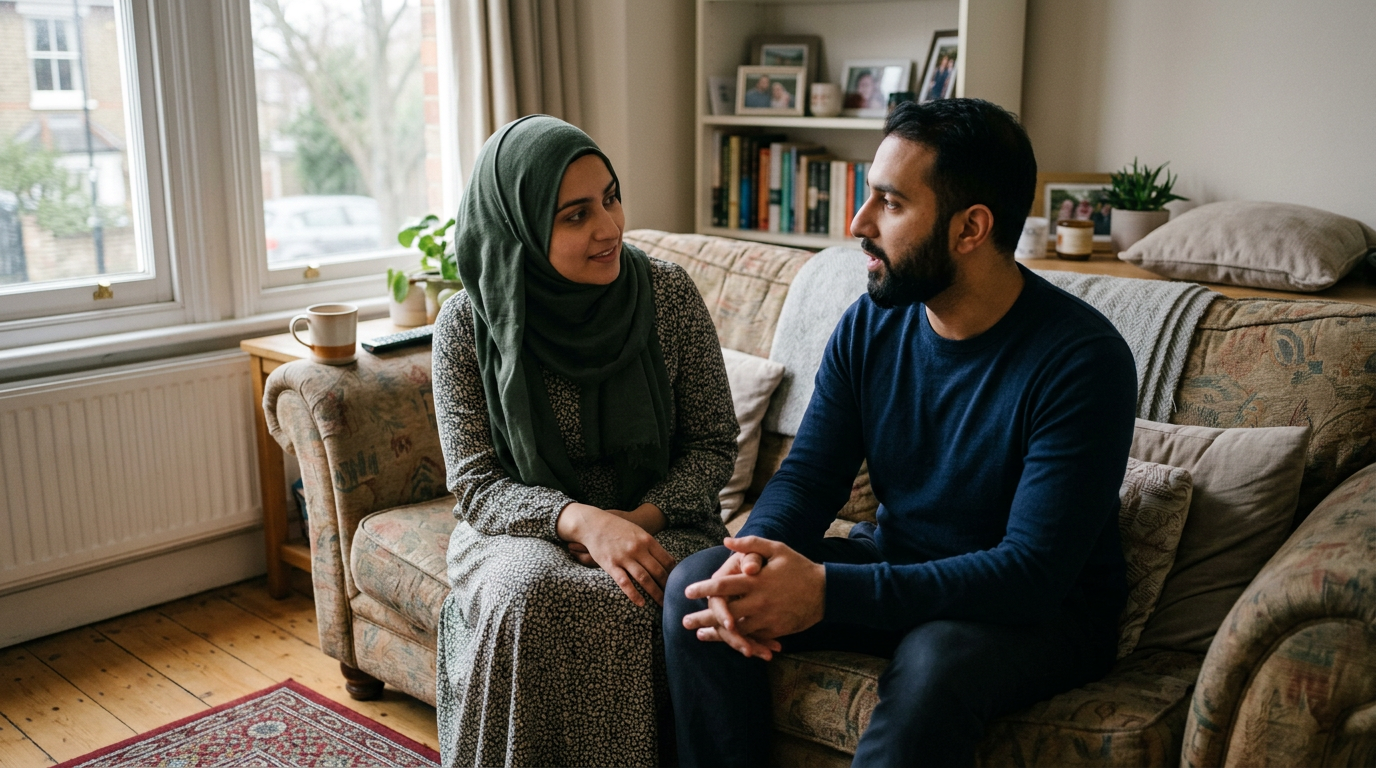
In the transcript that inspired this post, there is a reference to the Prophet Muhammad and his teachings about how Muslims should treat their spouses.
One relevant narration, recorded in Jamiʿ at-Tirmidhi, states that the best among people are those who are best to their wives. Read the narration.
The emphasis is significant: how a person treats their spouse is presented as a reflection of their character. Respect is not simply something we demonstrate in public while behaving differently behind closed doors. It is revealed in how we speak to people, how we listen to them, how we handle disagreements and how we treat those with whom we share our lives.
This is a principle that can be appreciated beyond any single religious tradition. However, we should distinguish between a teaching and the behaviour of everyone who claims to follow it. Religious traditions are interpreted in different ways, and the actions of individuals and societies do not always reflect the principles they profess.
That is not unique to Islam. It is a recurring feature of human history. There can be a considerable gap between what people are taught and how they actually behave.
The important question is whether we are willing to examine that gap honestly. Do our actions reflect the values we claim to hold? And do we judge the worth of other people by their humanity, or by the expectations we have decided they must fulfil?
Thomas Sankara: A Revolution Cannot Flourish Without Women
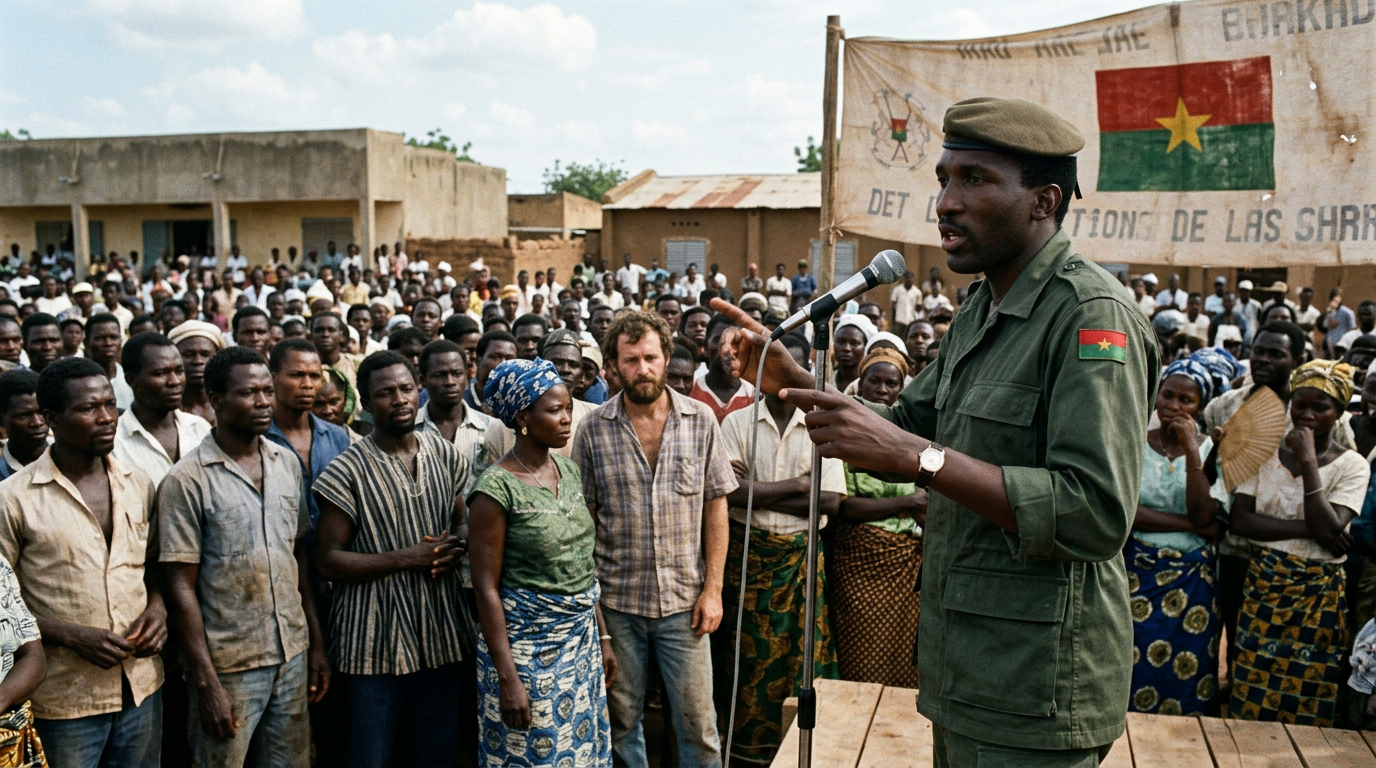
Another example comes from Burkina Faso in West Africa. On 8 March 1987, International Women’s Day, Thomas Sankara delivered a speech titled The Revolution Cannot Triumph Without the Emancipation of Women.
Sankara argued that a revolution could not achieve its aims while women remained excluded from meaningful participation in society. He connected women’s emancipation with the wider transformation of Burkina Faso. Read the speech.
His argument went beyond simply praising women or acknowledging their contributions. It challenged the idea that a society could claim to be progressing while leaving women behind.
This is an important distinction. A society may celebrate its achievements, economic development or political transformation. But if a significant part of its population is denied meaningful opportunities to participate, that progress remains incomplete.
Sankara’s speech is a historical example of that argument. It does not mean that every policy of his government achieved its stated objectives, or that the society he led had resolved the inequalities he criticised. The value of examining his words lies in the question they raise.
Can a society genuinely flourish if it prevents women from participating fully in its development?
That question applies far beyond Burkina Faso. It applies wherever ability is overlooked, opportunity is restricted or a person’s potential is judged by their sex rather than their individual qualities.
Hansa Mehta: When Human Rights Had to Include Women
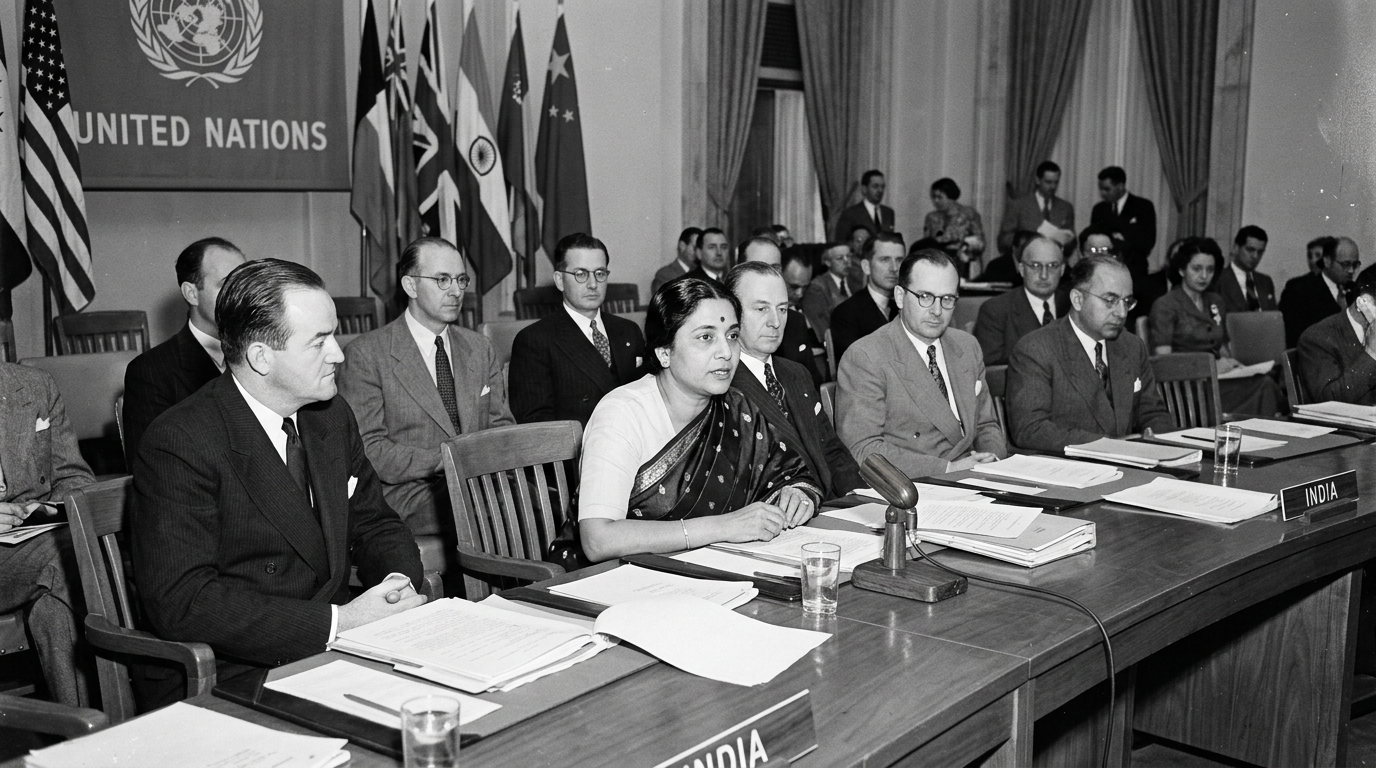
In the late 1940s, representatives from different countries worked to establish an international statement of fundamental human rights. One of the women involved was Hansa Mehta, an Indian diplomat, educator and advocate for women’s rights.
Mehta is widely credited with helping change the wording of Article 1 of the Universal Declaration of Human Rights from the draft phrase “All men are born free and equal” to “All human beings are born free and equal in dignity and rights.” Read more at the United Nations.
The change matters because language helps define who is included in a principle. If we say that rights belong to everyone, our words should not suggest that one sex is the default human being and the other an exception.
The Universal Declaration was adopted by the United Nations General Assembly on 10 December 1948. It established a common international standard of human rights, although its adoption did not mean that every country immediately upheld those rights in practice. Read the Declaration.
Mehta’s contribution reminds us that progress sometimes depends on examining the assumptions hidden inside apparently ordinary language. Who is included? Who is left out? And what needs to change for a principle to apply to everyone it claims to protect?
These questions are relevant to human rights, but they also apply to workplaces, families, education, business and everyday relationships. Equality becomes meaningful when the principle extends to the people who were previously overlooked.
Eleanor Roosevelt: Turning Principles Into a Shared Standard
Hansa Mehta was not working alone. Eleanor Roosevelt chaired the United Nations Commission on Human Rights during the development of the Universal Declaration and played a major role in securing its adoption.
The declaration emerged from negotiations involving people with different national, cultural, religious and political backgrounds. It was not the work of one individual or one country. Read about the history of the Declaration.
Roosevelt’s role illustrates an important aspect of progress: principles have to be translated into shared standards that people can use to challenge injustice. A declaration does not automatically change behaviour. A statement of equality does not guarantee equal treatment. But establishing a common standard gives societies a reference point against which their actions can be examined.
The Universal Declaration states that all human beings are born free and equal in dignity and rights. That principle does not require us to pretend that everyone is identical. Men and women can have different experiences, needs, interests and circumstances. Individuals within each sex also differ enormously from one another.
Recognising equal human dignity does not mean denying those differences. It means that differences should not be used to justify treating people as inherently inferior or denying them the opportunity to develop their abilities.
This is where the idea of human flourishing becomes important. We are not trying to create a world in which everyone lives the same life. We are trying to create conditions in which people have the dignity and opportunity to develop their own potential.
Wangari Maathai: Women, Community and the Environment
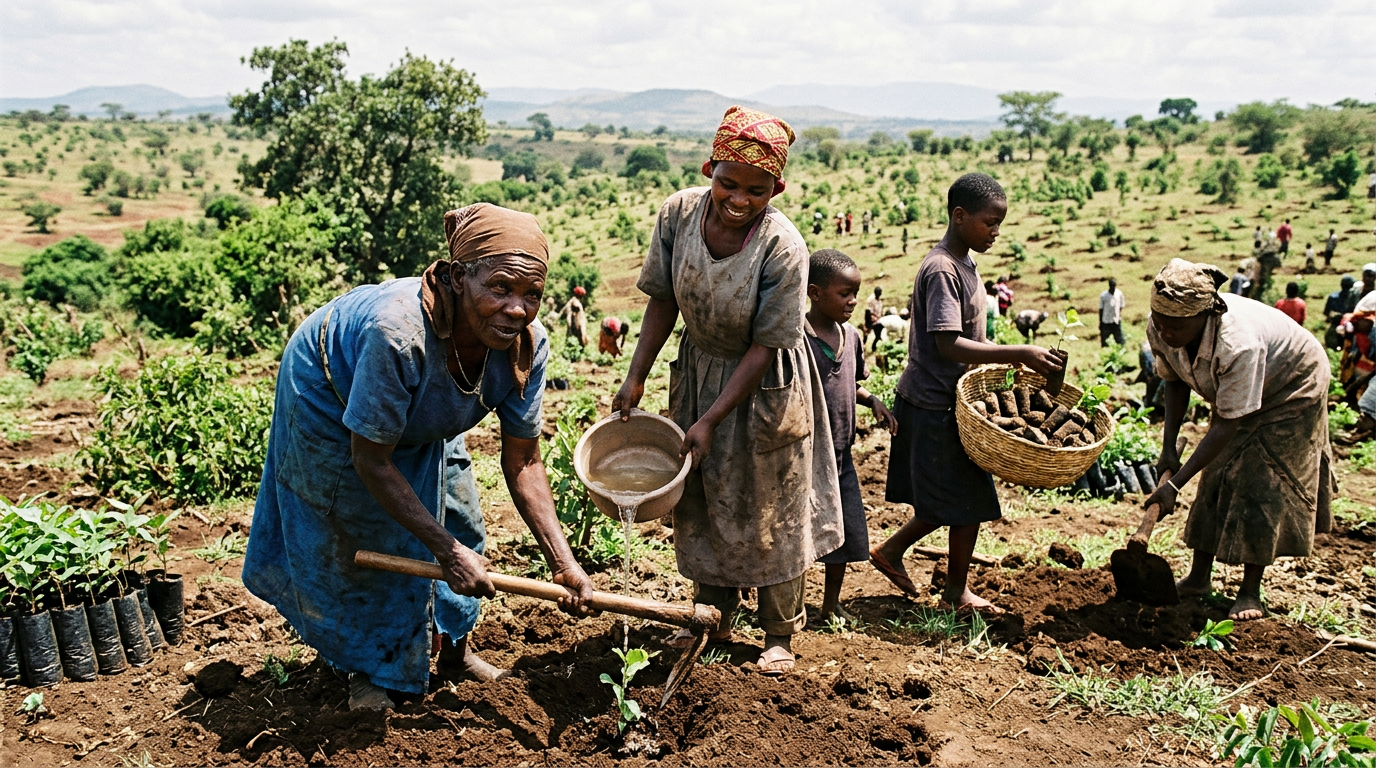
Wangari Maathai provides another example of what women’s participation can make possible. Born in Kenya in 1940, Maathai was a biologist, environmental campaigner and founder of the Green Belt Movement. She received the Nobel Peace Prize in 2004 for her contribution to sustainable development, democracy and peace. Read her Nobel Prize profile.
The Green Belt Movement mobilised women to plant trees and respond to environmental problems affecting their communities. But the work was about more than planting trees. Environmental degradation can affect people’s livelihoods, access to resources and the daily work required to sustain households. By organising women around environmental restoration, the movement connected practical community action with wider questions of development, rights and participation.
Maathai’s example is particularly relevant to the idea of human flourishing because it brings several dimensions together. The environment matters. Communities matter. Economic and social conditions matter. And the people most affected by a problem should have opportunities to participate in solving it.
Her work demonstrates that women’s contributions are not limited to one sphere of life. They can influence environmental protection, public life, education, community organisation and the future of entire societies. It also reminds us that meaningful progress does not always begin with a powerful institution or a grand declaration. Sometimes it begins with people organising locally, identifying a problem and working together to address it.
And Then There Are the Women Whose Names History Never Recorded
Historical figures can help us understand important ideas. But it is easy to overlook the people whose contributions never became famous. Our mothers. Our grandmothers. Our sisters. Our daughters. Our wives and partners. Our friends, colleagues, neighbours and the women who have helped shape our lives.
Women who raised children, built families, worked, created, cared, taught, led, organised and supported the people around them. Some made extraordinary sacrifices. Others changed lives through small, everyday acts that may never be publicly recognised. Many did both.
Their contributions should not be romanticised as though every woman is naturally destined to care for others, or as though a woman’s value depends on motherhood, marriage or sacrifice. Women are individuals. Some choose to become mothers; others do not. Some prioritise family, some pursue demanding careers, and many combine responsibilities and ambitions in ways that cannot be reduced to a single description.
A woman’s worth does not depend on how useful she is to someone else. Her contribution deserves recognition, but her dignity does not need to be earned through service.
That distinction matters. We can appreciate the women who have helped build our families and communities while also recognising every woman’s right to determine the direction of her own life. Respect should not depend on whether a woman fulfils somebody else’s expectations. It should be present before those expectations even arise.
Why Turn the Relationship Between Men and Women Into a Battle?
Today, conversations about men and women can become intensely adversarial, particularly in online spaces. Some influencers build audiences by presenting relationships between the sexes as a struggle for dominance, status or control.
Women are sometimes reduced to stereotypes about appearance, behaviour or perceived value. Men can be reduced to stereotypes about money, masculinity or what they are expected to provide. These narratives can turn genuine questions about relationships, fairness, responsibility and social change into a competition in which one sex must lose for the other to win.
That is a poor foundation for mutual understanding. It is also important to distinguish between legitimate criticism and misogyny. Discussing harmful behaviour, unequal treatment or disagreements about relationships is not inherently an attack on either sex. The problem arises when people are reduced to stereotypes, subjected to hostility or treated as lesser because they are women or men.
UN Women has documented how online abuse and gendered attacks can silence women and undermine their participation in public discussion. Read the UN Women report.
That does not mean every disagreement between men and women is misogyny, or that men cannot face unfair expectations and harmful stereotypes of their own. It means we should be capable of addressing real problems without turning entire groups of people into enemies.
We can discuss men’s challenges without dismissing women’s experiences. We can discuss women’s rights without treating men as collectively responsible for every injustice. We can acknowledge differences without using them to justify contempt. And we can challenge harmful behaviour without claiming that every member of a sex behaves the same way.
We don’t need another battle between the sexes. We need the maturity to recognise each other’s humanity.
What Should We Teach the Next Generation?
If we want a society in which women and men can flourish, the lessons begin long before people enter adult relationships. We need boys to understand that strength does not require domination. Respect does not make someone weak. Listening does not mean surrendering your identity. And being confident in yourself does not require making somebody else feel inferior.
We also need girls to grow up knowing that their value does not depend on being somebody’s possession, decoration or source of approval. They should be encouraged to develop their abilities, express their ideas, establish boundaries and make informed choices about their futures.
Both boys and girls need to learn how to communicate, manage disagreement, recognise unhealthy behaviour and take responsibility for their actions. They should be taught that healthy relationships require mutual respect, honesty, accountability and the freedom to say no. And they should understand that people are individuals rather than representatives of a stereotype.
These lessons are not about pretending that men and women have identical experiences. They are about giving the next generation the tools to build relationships in which differences can be discussed without becoming reasons for humiliation, control or hostility.
Human Flourishing Requires More Than Winning
At Get Out Rat Race, our central question is how people can become who they are capable of becoming. That involves more than financial success or professional achievement. It involves purpose, relationships, health, creativity, security, personal development and the opportunity to contribute something meaningful to the world.
But individual flourishing does not happen in isolation. Our relationships influence our lives. Our families shape our experiences. Our communities create opportunities and constraints. The culture around us influences what we believe is possible.
If we encourage people to see one another as competitors in a permanent battle for dominance, we make cooperation more difficult. If we teach people that respect is weakness, we undermine the trust on which healthy relationships depend. And if we tell half of humanity that their ambitions, ideas or independence make them less worthy of respect, we limit the potential of the society as a whole.
This is not an argument that men and women must always agree, or that every relationship will be harmonious. Disagreements are inevitable. People have different priorities, expectations and beliefs. The question is how we handle those differences.
Can we disagree without dehumanising one another? Can we challenge unfairness without becoming unfair ourselves? Can we acknowledge the difficulties experienced by one group without denying those experienced by another? Can we build relationships in which neither person has to surrender their dignity for the other to feel powerful?
These are questions about character as much as culture. And they matter in our homes, workplaces, communities and public life.
What Kind of Society Allows Both Men and Women to Flourish?
We began with a simple statement. Women matter. Not because women are better than men. Not because men are better than women. But because every human being deserves dignity, and a society that restricts people’s potential because of their sex is limiting what its members can contribute.
The examples we have explored come from different parts of the world and different historical contexts. The Prophet Muhammad’s teachings offer a reference point for discussing kindness towards spouses within Islam. Thomas Sankara argued that women’s emancipation was essential to the transformation of society. Hansa Mehta helped shape the language of universal human rights. Eleanor Roosevelt played a central role in the development and adoption of the Universal Declaration. Wangari Maathai demonstrated how women could mobilise communities around environmental restoration, democracy and development.
These individuals were different. Their motivations and contexts were not identical. Their work did not resolve every inequality, and no single person can represent the experience of all women. But their stories give us different ways to consider a shared question: what becomes possible when women’s dignity, participation and potential are taken seriously?
And we should remember the countless women whose names will never appear in history books, but whose lives have shaped families, communities and generations.
The lesson is not that men and women must be the same. It is that difference does not require hierarchy, and respect does not require uniformity. We don’t need to defeat each other to flourish.
We need relationships built on dignity. We need communities that recognise individual potential. We need boys and girls to grow up knowing that their worth is not determined by their ability to dominate somebody else. And we need a society in which both women and men have the freedom, security and opportunity to develop their abilities and make meaningful contributions.
Because if we genuinely care about human flourishing, the question is not:
“Who is more important — men or women?”
The better question is:
“What kind of society allows both men and women to become who they were born to be?”
Perhaps that is where real progress begins.
The Rat Race Ends Within.
Become Who You Were Born To Be.
Trusted Sources and Further Reading
- United Nations — Women Who Shaped the Universal Declaration of Human Rights
- United Nations — Universal Declaration of Human Rights
- Thomas Sankara — The Emancipation of Women (1987)
- Sunnah.com — Jamiʿ at-Tirmidhi 3895
- Nobel Prize — Wangari Maathai
- UN Women — Tipping Point: Online Violence Against Women
Continue Exploring
Frequently Asked Questions
Why are women important to society?+
What did Thomas Sankara say about women's emancipation?+
What was Hansa Mehta's contribution to human rights?+
What does Islam teach about treating women?+
Who was Wangari Maathai?+
What is the difference between equality and treating everyone identically?+
How can parents teach boys to respect women?+
Can we support women's rights without being against men?+
Unity Without Uniformity: Can Unity Bring Us Closer to God?
Respecting differences without turning them into reasons for hostility.
CornerstonesThe Freedom We Inherited: How Generations Before Us Challenged Power
Human rights, equality and the people who helped shape international standards.
PurposeWhat Does It Mean to Live Well? Understanding Human Flourishing
Relationships, dignity and the ancient question of the good life.
This article was developed with assistance from AI tools. AI was used to help with research, organisation and/or drafting. The content was reviewed and edited before publication, and responsibility for the final article rests with Get Out Rat Race.
Find Your Spark™
You've been exploring the ideas. Now explore yourself.
The Free Spark Score is a simple starting point to help you reflect on your interests, experiences, strengths and what might genuinely matter to you.