
Do you really need a website to build a successful online business?
It's a question worth asking, especially if you're starting out with limited time, money or technical experience.
You might have seen creators building audiences, selling products and attracting customers entirely through social media. They publish videos, share their work, answer questions and turn their following into a source of income.
They may not have a traditional website at all.
And for some businesses, that approach works.
So why would you need a website?
Is it an essential part of every business, or have we simply become accustomed to thinking that every business must have one?
At Get Out Rat Race, we believe it's important to question assumptions rather than repeat conventional advice. The objective is not to tell everyone to build a website for the sake of it. It's to help people understand their options and make informed decisions about what they're building.
Social media can provide remarkable opportunities. It can help you reach people, demonstrate your skills, build an audience and make sales.
But combining social media with a website and direct customer relationships may give your business more flexibility as it develops.
The real question isn't whether social media or a website is universally better.
It's this: how can you use the tools available to build a business that serves your customers and gives you more control over its future?
1. Can you build a successful business using social media alone?
Yes. A website is not a universal requirement for starting or operating a business.
Consider a fitness coach who shares training advice on Instagram. People watch the videos, ask questions and book coaching sessions through the platform's messaging tools.
Or imagine a craftsperson who showcases handmade products on social media and receives commissions directly from customers.
A musician might teach lessons online. A photographer might attract clients by publishing their portfolio. A creator might sell digital products or operate a paid community through a platform that provides the tools they need.
In each case, social media can play a central role in discovery, communication, marketing and sales.
Some businesses can operate successfully this way for years. Others may use social media as their primary business channel because their customers already spend time there and the available tools meet their needs.
There are several advantages to starting this way:
- Low initial complexity. You may be able to begin with a profile, a phone and a useful offer.
- Access to an audience. Social platforms can help your content reach people who have never heard of you.
- Direct interaction. Comments and messages can help you understand questions, needs and customer feedback.
- Content-led discovery. Useful, entertaining or educational content can introduce people to your work.
- Built-in tools. Depending on the platform, you may have access to product listings, booking features, payments or community functions.
These are genuine advantages. For somebody testing a new idea, they can make it easier to get started without spending money on a website before knowing whether the business has potential.
The important thing is to recognise that a business is defined by the value it provides and how it operates, not by whether it owns a website.
If social media helps you reach customers, deliver your offer and earn a sustainable income, it may be doing exactly what you need it to do.
But there is another question to consider as the business grows.
How much of your success depends on a platform whose rules and systems you do not control?

2. The power — and limitations — of social media
One of the greatest opportunities social media offers is discovery.
You don't necessarily need an established reputation, a large network of contacts or an expensive marketing campaign to begin publishing useful content.
You can share something today and potentially reach somebody on the other side of the world tomorrow.
That is a significant opportunity for ordinary people who want to share their knowledge, develop a business or introduce a product to the market.
However, social media platforms operate according to their own rules, systems and commercial priorities.
Their algorithms influence how content is distributed. Their features and policies can change. Their services may be interrupted, and accounts can sometimes be restricted, compromised or suspended.
Your content might reach fewer people than it once did. A feature you rely on might change. A platform might become less effective for your particular audience.
None of these outcomes is inevitable. Many businesses continue to grow through social media, and a platform can remain valuable for a long time.
The issue is dependence, rather than social media itself.
Imagine two businesses.
The first receives almost all its enquiries through one social media account. Its content performs well, customers contact the owner through direct messages and most sales come from that source.
The second also uses social media, but has a website where customers can learn about its services, a separate way to receive enquiries and a direct communication channel for customers who have chosen to hear from it.
Both businesses face risks. The second still depends on technology providers, and its website may receive little traffic without effective marketing.
However, the second business has additional ways for people to discover it and engage with its offers.
That difference may become valuable if one channel becomes less effective.
The lesson is not to fear social media or assume that success there is temporary.
The lesson is to understand where your business is vulnerable and avoid relying on one source of opportunity when sensible alternatives are available.
3. What does a website actually add to a business?
A website can provide something social media profiles do not always offer as effectively: a central place to organise the different parts of your business around your customers' needs.
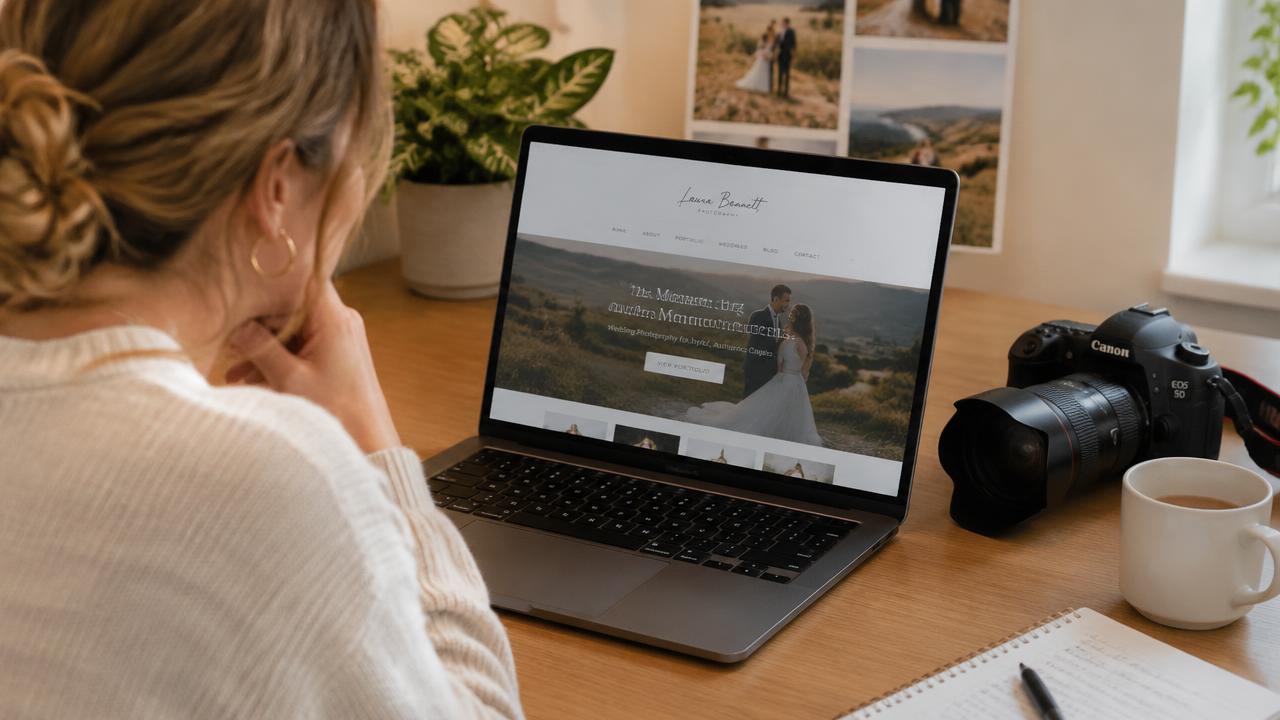
Think about a photographer who uses Instagram to share images.
The photographs help people discover the photographer's work. But somebody looking to book a wedding photographer or commission commercial images may want more information before making a decision.
A website could provide:
- A portfolio organised by type of work.
- An explanation of services and packages.
- Information about the photographer's experience and approach.
- Customer testimonials, where genuine and appropriately used.
- Answers to common questions.
- A contact form or booking enquiry.
- Details about the next steps in the buying process.
The website gives potential customers somewhere to explore the business in greater depth.
The same principle applies to a teacher selling an online course, a consultant offering professional services, or a creator developing digital products.
Social media might introduce people to the business. The website can explain what is offered, who it is for, how it works and how to take the next step.
Depending on how it is built, a website can also support online payments, bookings, digital downloads, memberships, articles, resource libraries and other functions.
Another potential advantage is search visibility.
People don't only discover businesses while scrolling through social media. They also search for services, products, answers and solutions.
A useful website can give your business another opportunity to be discovered when people are actively looking for what you offer.
That does not mean a website automatically attracts visitors. Search visibility takes time and depends on factors including relevance, competition, technical accessibility and the quality of the content. You may also need other marketing channels to bring people to it.
But it creates another route through which potential customers can find and understand your work.
A website is not a magic source of traffic. It is a platform you can shape around the needs of your business.
4. Social media and your website can work together
The choice doesn't have to be between social media and a website.
Often, the more useful question is how the two can complement one another.
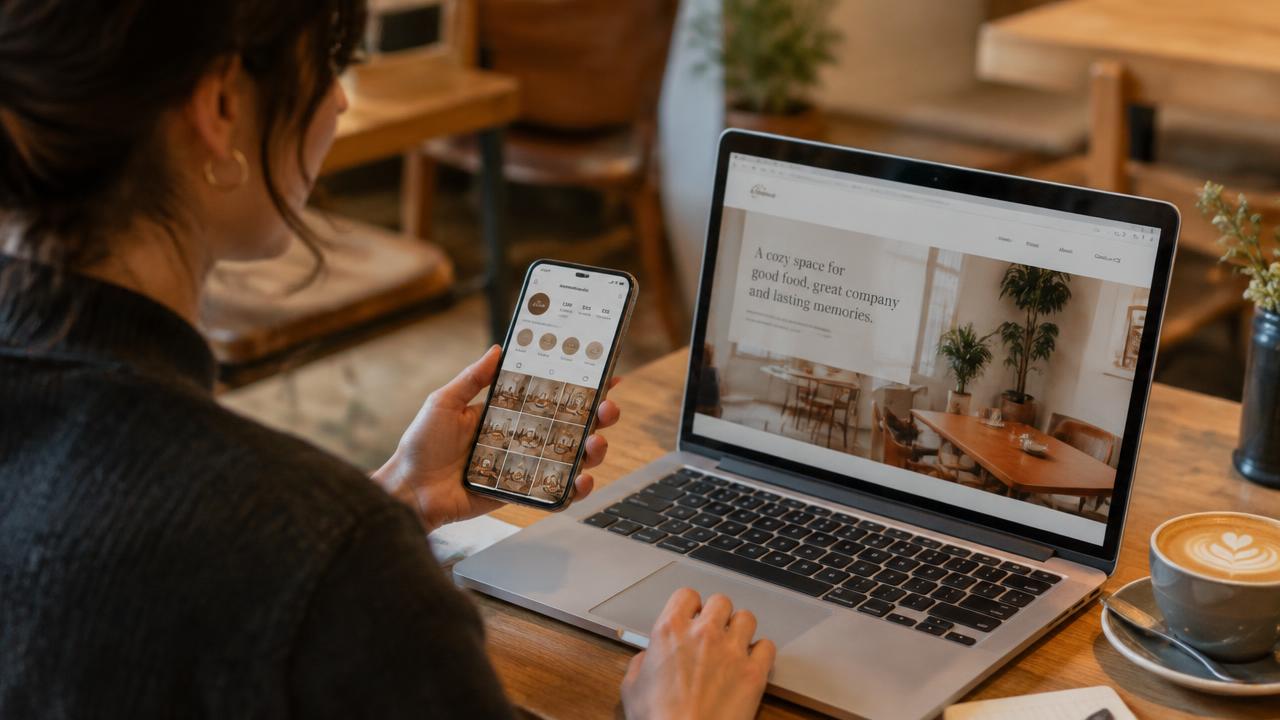
Social media can help people discover you. Your website can give them more information. A direct communication channel can help you maintain relationships with people who want to hear from you.
Let's use a gardener as an example.
The gardener publishes a video explaining how to grow vegetables in a small garden. Someone watches it and wants to learn more.
The video directs interested viewers to a website, where they can find a free beginner's guide.
If a visitor chooses to provide their email address, the gardener can deliver the guide and, where appropriate permission has been obtained, send further useful advice.
Over time, the gardener might introduce a paid guide, a course or a consultation service.
The journey could look like this:
Social media content → Website → Useful resource → Direct relationship → Relevant offer
Each step has a different purpose.
Discovery: Social media introduces your work to new people.
Information: Your website helps interested visitors understand what you offer.
Relationship: An email list or another appropriate communication channel gives people a way to stay connected.
Value: Your product or service provides a solution that customers choose to pay for.
Not every business needs every step. A local tradesperson might simply need a social media presence, a clear website and an easy way to request a quote. A creator with a paid community may use a different route. Some businesses can continue selling directly through social platforms.
The point is to choose a system that makes sense for your customers, rather than building a complicated funnel because somebody says you should.
You can start small and add tools when they solve a real problem.
If social media is already bringing you customers, you might first create a simple website that explains your offer and answers common questions. Later, you could add a resource library, booking system or email newsletter if there is a genuine reason to do so.
The aim is not to collect digital tools.
It is to make the tools you choose work together.

5. Followers are not the same as direct customer relationships
A large social media following can be valuable, but the number of followers does not tell the whole story.
Some followers may regularly engage with your content. Others may rarely see it. Some may be interested in your subject without ever becoming customers.
That doesn't make followers unimportant. It simply means that an audience and a customer relationship are not the same thing.
On social media, your ability to reach followers is influenced by the platform's systems and rules. Publishing a post does not guarantee that every follower will see it.
An email list can provide another way to communicate with people who have chosen to receive messages from your business.
For example, you might use email to:
- Send a resource somebody requested.
- Share useful advice or new articles.
- Explain a new product or service.
- Tell customers about relevant updates.
- Ask for feedback that helps improve your offer.
The value comes from maintaining a useful relationship, not from sending as many messages as possible.
An email list is not automatically a valuable business asset just because it contains many addresses. People need a reason to stay subscribed, and your communication should be relevant, respectful and consistent with their preferences.