What if the business idea you have been searching for is closer than you think?
When people hear the words start an online business, they often imagine revolutionary inventions, technology companies, complicated business models or entrepreneurs who seem to have discovered a secret nobody else knows.
But business does not always begin with a completely new idea.
Sometimes it begins with something much more familiar.
Something you have spent years learning.
Something you enjoy doing.
Something you have figured out through experience.
Something people already ask you for help with.
Or something you understand that another person is struggling to understand.
A teacher might know how to explain a difficult subject. A gardener might know how to grow vegetables successfully. A musician might understand how to help beginners learn an instrument. A photographer might know how to create images that businesses need.
None of these people necessarily needs to invent something new.
They may simply need to discover how to make their knowledge useful to someone else.
That is one of the simplest starting points for building an online business.
At Get Out Rat Race, we explore the connection between purpose, meaningful work and entrepreneurship. The aim is not to tell everybody to abandon their job or turn every hobby into a source of income. It is to help people recognise their potential and explore practical ways to build something of their own.
And one useful place to begin is with a question:
What do I already know that could help somebody else?
1. You don't need the next big business idea
There is a common misconception about entrepreneurship: that successful businesses begin with brilliant ideas nobody has ever thought of before.
Sometimes they do. Innovation can create entirely new markets, industries and opportunities.
But many businesses begin by solving familiar problems in useful ways.
They save people time. They make a difficult task easier. They provide a service, teach a skill, create a product or help somebody achieve a result.
Consider a few everyday examples:
- A plumber understands how to diagnose and repair plumbing problems.
- A photographer knows how to create professional images.
- A teacher knows how to explain a subject clearly.
- A mechanic understands how to identify faults in a vehicle.
- A gardener knows how to grow plants and maintain outdoor spaces.
- A designer knows how to communicate ideas visually.
- A musician understands how to develop a skill through practice.
These abilities have value because other people need them.
Some customers want the work done for them. Others want to learn how to do it themselves. Some need a product, while others need advice, guidance or ongoing support.
The opportunity is not necessarily to invent something new. It may be to connect an existing ability with a person who needs it.
That gives us a simple foundation:
Knowledge + a real need + a useful solution = the beginnings of a business opportunity.
This is a starting framework, not a guarantee of commercial success. You still need to establish whether there is demand, whether people will pay for the solution and whether you can deliver it sustainably.
But it gives you a more practical place to begin than waiting for a revolutionary idea to arrive.
2. Your knowledge may be more valuable than you realise
One of the most overlooked assets people possess is knowledge gained through experience.
That does not mean everybody is qualified to teach every subject, and it does not mean every personal experience should become a product. Some areas require formal qualifications, professional accreditation or specialist safeguards.
But there is a great deal people learn outside formal education.
You might have learned how to repair something, develop a creative skill, organise a project, overcome a practical obstacle, care for a garden or navigate a process that initially seemed confusing.
Perhaps you have made mistakes and discovered how to avoid them.
Perhaps you have spent years practising something that now feels natural.
Perhaps friends, colleagues or family members regularly ask you for advice about a particular subject.
Because you have become familiar with that knowledge, you might underestimate its value.
Think about somebody who has played guitar for twenty years. They might no longer remember how confusing the first chords felt. To a beginner, however, understanding how to position their fingers, practise effectively and move between chords could make the difference between giving up and continuing.
The experienced gardener might take soil preparation for granted. A beginner might be struggling to understand why their plants keep failing.
The experienced photographer might understand lighting intuitively. A small business owner might simply need better photographs for their website.
What feels ordinary to you may be genuinely useful to somebody who has not learned it yet.
The important question is not whether you know more than everybody else. It is whether you understand something that can help a particular person make progress.
That is a much more accessible way to begin exploring your potential.
3. Knowledge becomes valuable when it solves a problem
There is an important distinction between knowing something and having a business.
You can know an enormous amount about a subject without having a commercially viable offer.
Why? Because a business is not simply about what you know. It is about the value another person receives from what you know.
A teacher is not valuable to a student merely because the teacher possesses information. The value comes from helping the student understand it.
A gardening guide is not valuable simply because it contains facts about plants. Its value may come from helping a beginner grow their first vegetables without wasting money on unsuitable equipment or making avoidable mistakes.
A photographer's service is valuable when it provides images that meet a customer's needs.
The same principle applies across different industries.
Before deciding what to sell, ask yourself what problem your knowledge could help solve.
Could it help somebody:
- Learn a skill they have been struggling with?
- Save time on a difficult task?
- Avoid common mistakes?
- Make a better-informed decision?
- Create something they could not easily produce themselves?
- Improve a process at work or at home?
- Achieve a goal they care about?
- Enjoy an experience they would otherwise find difficult to access?
The clearer the problem, the easier it becomes to understand what a useful solution might look like.
For example, “I know a lot about gardening” is broad.
“I help beginners grow their first vegetables in a small garden without spending money on unnecessary equipment” is much more specific.
The second statement identifies a potential audience, a need and an outcome.
It gives you something you can investigate.
You can speak to people who fit that description, learn what they struggle with and discover whether your proposed solution would genuinely help them.
This is where knowledge starts to become value — and where a business idea can begin to take shape.
4. Turn what you know into an offer
Once you have identified a useful skill or body of knowledge, the next question is:
How could I package it so another person can access it?
The internet provides several possible ways to do this. You do not need to choose every format, and you do not need to build a complicated business from the beginning.
Here are some examples.
Teacher → online course
A teacher with a strong understanding of a subject could develop a structured online course, revision resources or beginner's guide.
The offer might help a particular group understand a difficult topic or prepare for a specific assessment.
The value lies not merely in presenting information, but in organising it in a way that helps learners make progress.
Gardener → digital guide
A gardener could create a practical guide such as How to Grow Your First Vegetable Garden.
It might cover choosing a location, preparing soil, selecting suitable crops, watering and avoiding common beginner mistakes.
The guide could be sold as a digital product, offered as a free introductory resource or used to introduce people to a more comprehensive service.
Musician → lessons
A musician could offer one-to-one lessons, group sessions, prerecorded tutorials or a structured beginner programme.
They could start by helping a small number of learners and develop additional resources as they discover which questions come up most often.
Fitness enthusiast → educational content or coaching
Someone with appropriate knowledge and qualifications could create educational content, beginner training resources or coaching services within their competence.
They should be careful not to make unsupported health claims or present personal experience as a substitute for professional expertise where that expertise is required.
Photographer → services
A photographer could provide product photography, portraits, event coverage or images for local businesses.
They might also create educational resources for people who want to improve their own photography.
Craftsman → physical products
A craftsperson could sell handmade products through an online shop, take custom orders or create kits that help customers make something themselves.
The business model would depend on production costs, materials, time, delivery and the level of demand.
Knowledgeable hobbyist → membership or community
A person with a deep interest in a particular subject might build a community around shared learning, resources and discussion.
A paid membership could eventually offer structured content, events or additional support if members genuinely value those benefits.
These are possibilities rather than guaranteed business models. Each would need to be tested against customer needs, competition, costs and the creator's ability to deliver.
Notice what changes across these examples.
The knowledge does not necessarily change. The format through which people receive it changes.
You are taking something you have learned and finding a practical way to make it accessible to someone else.
That is what it means to package your knowledge.
5. One skill can lead to several opportunities
You do not have to decide the entire future of your business on the first day.
In fact, trying to plan every product, service and income stream before speaking to a potential customer can become a way of delaying the work that matters most.
A more useful approach is to start with one manageable offer and learn from the response.
Imagine a gardener who begins by sharing useful videos about growing vegetables.
People start asking questions. The gardener notices that many beginners struggle with the same things: choosing seeds, preparing soil, knowing when to water and understanding why plants fail.
The gardener could use those questions to develop a simple free guide.
From there, the journey might look like this:
Gardening knowledge → useful videos → free beginner's guide → optional email updates → paid guide → online course → consultations or products
Each stage offers an opportunity to learn more about what people need.
The gardener might discover that people are particularly interested in growing food in small spaces. That could lead to a guide specifically for balconies and patios.
Alternatively, customers might want help choosing equipment. The gardener could develop a suitable starter kit.
Perhaps the audience values personal advice more than downloadable resources. Consultations might make more sense.
Or the gardener may discover that people enjoy the free content but are not willing to pay for the proposed products. That is useful information too.
The point is not that every idea will work. It is that you can use real feedback to improve your direction.
You can start small, listen, refine and develop the business gradually.
Your first idea does not have to be your final business. It needs to be useful enough to test.
6. Passion is the raw material, not the finished business
This brings us back to a central idea explored throughout Get Out Rat Race: monetising your passion.
Passion can be a powerful starting point because it gives you a reason to keep learning, practising and exploring a subject.
But passion alone does not automatically create a business.
A person can love music without wanting to teach it. Someone can enjoy gardening without wanting to sell gardening products. A hobby may be valuable precisely because it offers enjoyment without commercial pressure.
There is no need to turn every interest into a side hustle.
However, if something matters to you, you have developed useful knowledge and other people could benefit from it, there may be an opportunity worth exploring.
One way to understand the journey is:
PASSION → KNOWLEDGE → PROBLEM → VALUE → OFFER → BUSINESS
Passion gives you a reason to explore.
Learning develops your knowledge.
Knowledge can help you solve problems.
Solving a real problem can create value.
A useful offer gives people a way to access that value.
And if there is sufficient demand and the economics work, that offer may develop into a business.
Every step matters.
You may need to learn more before offering a service. You may need to test different formats before finding one people want. You may discover that your interest is better kept as a hobby.
All of those outcomes are legitimate.
The wider point is that meaningful work can begin by recognising what you care about, understanding what you can contribute and exploring whether that contribution can support you economically.
Money is not the ultimate measure of a passion's worth. But where a genuine need and a sustainable offer meet, earning an income can help you continue doing something that matters to you.
7. Start with what you already have
If you are sitting there thinking, “I don't have a business idea,” try changing the question.
Instead of asking what business you should start, begin by examining your own experience.
Use the following questions as a practical exercise.
Step 1: What do you know?
Think about your work, hobbies, interests and life experience.
What have you spent time learning? What can you do now that you could not do five years ago? What have you learned through trial and error?
Do not limit yourself to qualifications or job titles. Consider practical skills, creative abilities, specialist knowledge and problems you have learned to solve.
Step 2: What do people ask you for help with?
Look for recurring questions.
Do people ask you to explain something, fix something, recommend something or help them make a decision?
This is not proof that people will pay for your help, but it can reveal a problem worth investigating.
Step 3: Who could benefit from your knowledge?
Be specific.
Rather than trying to help everyone, identify the people who might benefit most from what you know.
Are they beginners? Small business owners? Parents? Students? Hobbyists? People trying to solve a particular problem?
The clearer your audience, the easier it becomes to investigate their needs.
Step 4: What problem could you help them solve?
Describe the problem in plain language.
What is frustrating them? What are they trying to achieve? What have they already tried? What would a useful result look like?
Try to understand the problem from their perspective rather than assuming that your preferred solution is what they need.
Step 5: How could you package your knowledge?
Consider the simplest suitable format.
It might be a service, a lesson, a guide, a physical product, a workshop, a course or a community.
Choose a format that fits the problem and your abilities. You do not need to build an elaborate online course if a straightforward service would serve people better.
Step 6: How could you test the idea?
Before investing heavily in branding, software, equipment or advertising, speak to people who represent your potential customers.
Ask about their experiences and needs. Find out what they currently do to solve the problem. Research competing solutions and prices. Where appropriate, offer a small pilot service or prototype and gather honest feedback.
The UK government's business guidance recommends researching customers, competitors, demand and willingness to pay when testing an idea. See Testing and validating your business idea.
A few encouraging comments from friends are not the same as evidence of market demand. Look for real-world signals that people value the solution.
8. You do not need to build everything at once
Another common mistake is assuming you need a perfect brand, a large audience, an expensive website and a complete range of products before you can begin.
You may eventually need some of those things. But they do not all need to exist at the start.
A simple first version could involve:
- Choosing one problem you understand.
- Identifying a specific group of people who experience it.
- Creating one useful offer.
- Explaining clearly what the offer helps them do.
- Finding a practical way to reach potential customers.
- Asking for feedback and improving the offer.
For some people, that first offer may be a service they deliver directly. For others, it may be a small digital product or a simple workshop.
You can build a website as your ideas develop, using it to explain what you do, publish useful information and give people a place to learn more. This connects with the previous Get Out Rat Race article, Why Everyone With a Passion Needs Their Own Platform, which explores why a website can become the central home for your work.
The important thing is to avoid confusing preparation with progress.
You can spend months choosing a logo and planning a business that nobody has tested. Alternatively, you can spend a smaller amount of time understanding a real problem and discovering whether your proposed solution helps.
A practical business grows through learning and delivery, not planning alone.
9. Build something of your own while you are still working
For many people, the idea of starting a business feels risky because they imagine it requires an immediate leap away from employment.
That is not the only route.
If your circumstances allow it, you may be able to explore an idea alongside your existing work. You could use a few hours each week to develop your skills, speak to potential customers, create a small offer or learn how to build an online presence.
Your available time, financial responsibilities and energy will influence what is realistic. Some ideas require significant upfront investment, professional qualifications or more time than you can reasonably give them. Others can be tested on a smaller scale.
There is no universal timetable.
The objective is not to add so much work to your life that you become trapped in a different kind of rat race. It is to explore whether you can gradually create more choice and build work that reflects your interests, abilities and values.
That may mean developing a small additional income stream. It may mean creating a business that eventually becomes your main occupation. It may simply mean discovering that your knowledge is useful in ways you had not previously considered.
The outcome will depend on your circumstances and what you learn along the way.
But you do not have to know the final destination before taking a sensible first step.
10. From knowledge to ownership
There is a deeper reason to explore this process.
When you identify what you know, find a way to help somebody and begin developing an offer, you are doing more than searching for a business idea.
You are learning how to turn your abilities into something tangible.
That might begin with one customer, one guide, one service or one small experiment. Over time, it could develop into a wider body of work: articles, videos, resources, products, services and relationships with people who value what you create.
Ownership does not mean complete independence from every platform, supplier or external system. Every business depends on resources and relationships beyond itself.
But building something of your own can give you more influence over the direction of your work, the value you create and how you choose to develop it.
That is why the Get Out Rat Race philosophy is not simply about escaping employment.
It is about recognising your potential and exploring how you might contribute something meaningful to the world.
You may not have a billion-pound idea.
You may not need one.
You may already possess something valuable that another human being needs.
The challenge is to recognise it, test it honestly and find a useful way to share it.
Because perhaps the question is not:
“What business should I start?”
Perhaps the better question is:
“What do I already have that could help someone else?”
And that may be where your next chapter begins.
A practical exercise: Find the beginnings of your business idea
Take ten minutes and write down your answers. You do not need to have a complete business plan.
- What do I know? List skills, interests, experience and things you have learned.
- Who could I help? Name the people who might benefit from that knowledge.
- What problem could I solve? Describe one specific difficulty or desired outcome.
- What could I offer? Choose a possible service, guide, lesson, product or other solution.
- How could I test it? Identify one small step you can take to learn whether people genuinely need it.
The aim is not to prove that you have a business immediately. It is to identify a possibility worth investigating.
Frequently asked questions
How can I turn my knowledge into an online business?
Start by identifying something you know or can do that could help a particular group of people. Understand the problem they face, choose a suitable way to deliver your solution and test whether they find it useful. Depending on the subject, your offer could be a service, course, guide, digital product, physical product or membership.
What can I sell online if I don't have a unique idea?
You do not necessarily need a unique invention. You could sell a useful service, teach a skill, create a practical resource or provide a product that meets an existing need. What matters is whether your offer provides value, reaches the right audience and gives people a reason to choose it.
Can I monetise a hobby?
Potentially, yes. A hobby could lead to lessons, products, content, workshops or a community. However, enjoying something does not automatically mean you should commercialise it. Consider whether there is a real customer need and whether turning the activity into work would still fit the life you want.
Do I need qualifications to sell my knowledge online?
It depends on the subject and the service. Some activities require particular qualifications, registration or compliance with professional rules. In other areas, practical experience may be relevant, provided you describe your competence honestly and do not misrepresent your credentials. Always check the requirements for regulated or safety-sensitive work.
Do I need a website before I start?
Not necessarily. You can begin by researching an idea, speaking to potential customers and testing a simple offer. A website can become increasingly useful as you develop your business because it gives you a central place to explain your work, publish resources and connect with customers.
How do I know whether people will pay for my knowledge?
You cannot know for certain without testing the idea. Research your audience and competitors, speak to potential customers beyond friends and family, and investigate what people currently pay to solve the problem. Where appropriate, test a small offer and use actual customer behaviour, not compliments alone, to guide your decisions.
Can I start an online business while working full-time?
For some people, yes. You may be able to research an idea and test a small offer alongside employment, depending on your responsibilities and the time available. Check any relevant employment restrictions, and be realistic about the effort and costs involved. There is no need to assume you must leave your job before exploring an idea.
Does monetising your passion guarantee financial freedom?
No. A passion-based business still faces the same challenges as other businesses, including competition, customer demand, costs, cash flow and the time required to deliver. The aim should be to test opportunities responsibly and build something sustainable, rather than assume that passion automatically produces income.
Trusted sources and further reading
These resources provide practical guidance for researching and developing a business idea. They support the article's practical recommendations; they do not guarantee that any particular idea will succeed.
1. Business.gov.uk — Testing and validating your business idea
UK government-backed guidance on researching customers, competitors, demand and whether people are willing to pay for a proposed solution.
https://www.business.gov.uk/support/ideas-planning-strategy/testing-and-validating-your-business-idea/
2. Business.gov.uk — How to start a business in the UK
A broader starting point for business models, planning, finances and developing a business idea.
https://www.business.gov.uk/start/
3. Google Search Central — Creating helpful, reliable, people-first content
Official guidance for creating useful website content that serves an audience rather than writing primarily to manipulate search rankings.
https://developers.google.com/search/docs/fundamentals/creating-helpful-content
4. Information Commissioner's Office (ICO) — Direct marketing using electronic mail
UK guidance on electronic marketing, including requirements that may apply when collecting email addresses and sending marketing messages. Check the rules that apply to your circumstances before launching an email list.
https://ico.org.uk/for-organisations/direct-marketing-and-privacy-and-electronic-communications/guidance-on-direct-marketing-using-electronic-mail/
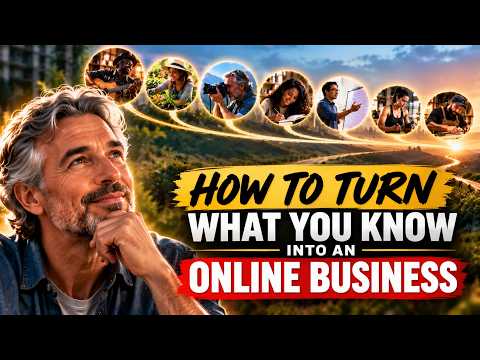
Watch the video
How to Turn What You Know Into an Online Business
Watch the Get Out Rat Race video and explore how skills, knowledge and experience can become the starting point for something of your own.
Explore more from Get Out Rat Race
If this article has helped you think differently about your skills and experience, continue exploring the ideas behind purpose, practical action and ownership.
Suggested related articles:
- Your Passion Might Be More Valuable Than You Think — explore how interests, skills and lived experience can become the starting point for meaningful work.
- Why Everyone With a Passion Needs Their Own Platform — discover how a website can provide a central home for your ideas, content and offers.
- 100 True Fans: Why a Small Audience Can Be Enough — consider why a smaller, engaged audience can sometimes be more useful than a large but disconnected following.
- The Power of Asking Better Questions — learn how better questions can help you recognise opportunities and challenge assumptions.
Your next step
You do not have to transform everything you know into a business. You do not need to rush, and you do not need to have every answer today.
Start by looking at what you already know, who it could help and what problem you might be able to solve.
Then take one practical step to find out whether the idea has value beyond your own enthusiasm.
Become Who You Were Born To Be.
The Rat Race Ends Within.
Get Out Rat Race — Purpose. Build. Reality.